Audi A6 Common Engine Faults by Year A Generation-by-Generation Guide (C5–C8)
Your Audi A6 has just thrown up a warning light, or maybe you're eyeing up a used one and want to know exactly what you're getting into before you hand over your money.
Your Audi A6 has just thrown up a warning light, or maybe you're eyeing up a used one and want to know exactly what you're getting into before you hand over your money. Either way, generic "top 10 problems" lists won't help much, because the faults that plague a 2006 C6 3.0 TDI are completely different from what trips up a 2015 C7 with the EA888 2.0 TFSI.
This guide breaks the Audi A6 down by generation, engine code, and typical mileage, so you know exactly which faults apply to your car, what they cost to fix, and what to check before you buy.
Audi A6 Engine Reliability by Generation
Audi has built the A6 across four major generations, the Audi A6 C5, C6, C7, and C8, and reliability has shifted considerably between them as Audi introduced new engine families like the EA888, EA837, and EA897. Understanding which generation you're dealing with is the first step in diagnosing or preventing an engine fault.
Which Audi A6 Engine Is Most Reliable?
Among Audi A6 engines, the older, simpler diesel units tend to have the strongest reputation for long-term durability. The 2.7 TDI and early 3.0 TDI engines fitted to the C6 generation are widely regarded as some of the most dependable, provided servicing has been kept up to date, these engines predate much of the more complex emissions hardware that causes headaches in later models.
On the petrol side, the C6-generation 3.2 FSI and 2.8 FSI V6 engines have a solid track record, though they're less common on UK roads than their diesel counterparts. Later EA888 petrol engines are more powerful and refined but carry known oil consumption and timing chain concerns that older units don't share.
Which Audi A6 Year Should You Avoid?
If there's one period that draws the most complaints, it's the early C7 generation (2011–2015), particularly cars fitted with early revisions of the EA888 2.0 TFSI. Excessive oil consumption and timing chain tensioner wear were common enough during this window that many specialists recommend either avoiding early C7 TFSI models or budgeting for preventative timing chain work shortly after purchase.
Early C8 models (2018–2020) have also seen a cluster of complaints related to the mild-hybrid electrical system and infotainment software, though these tend to be less mechanically serious than the C7's engine issues.
Petrol vs Diesel, Which Has Fewer Engine Problems?
There's no universal answer here, since it depends heavily on generation and specific engine code. As a general pattern:
- Diesel engines (2.7 TDI, 3.0 TDI) tend to have fewer core mechanical failures but are more prone to emissions-related faults, DPF clogging, EGR valve issues, and AdBlue system faults, particularly on higher-mileage cars used mainly for short journeys
- Petrol engines, especially the EA888 family, are less likely to suffer emissions system faults but carry a higher risk of oil consumption and timing chain wear on certain model years
If you do a lot of motorway driving, a diesel A6 is likely to serve you well. If your mileage is mostly short urban trips, a petrol model may actually suit you better, provided you're aware of the specific timing chain and oil consumption risks on early EA888 units.
Common Audi A6 Engine Faults by Year
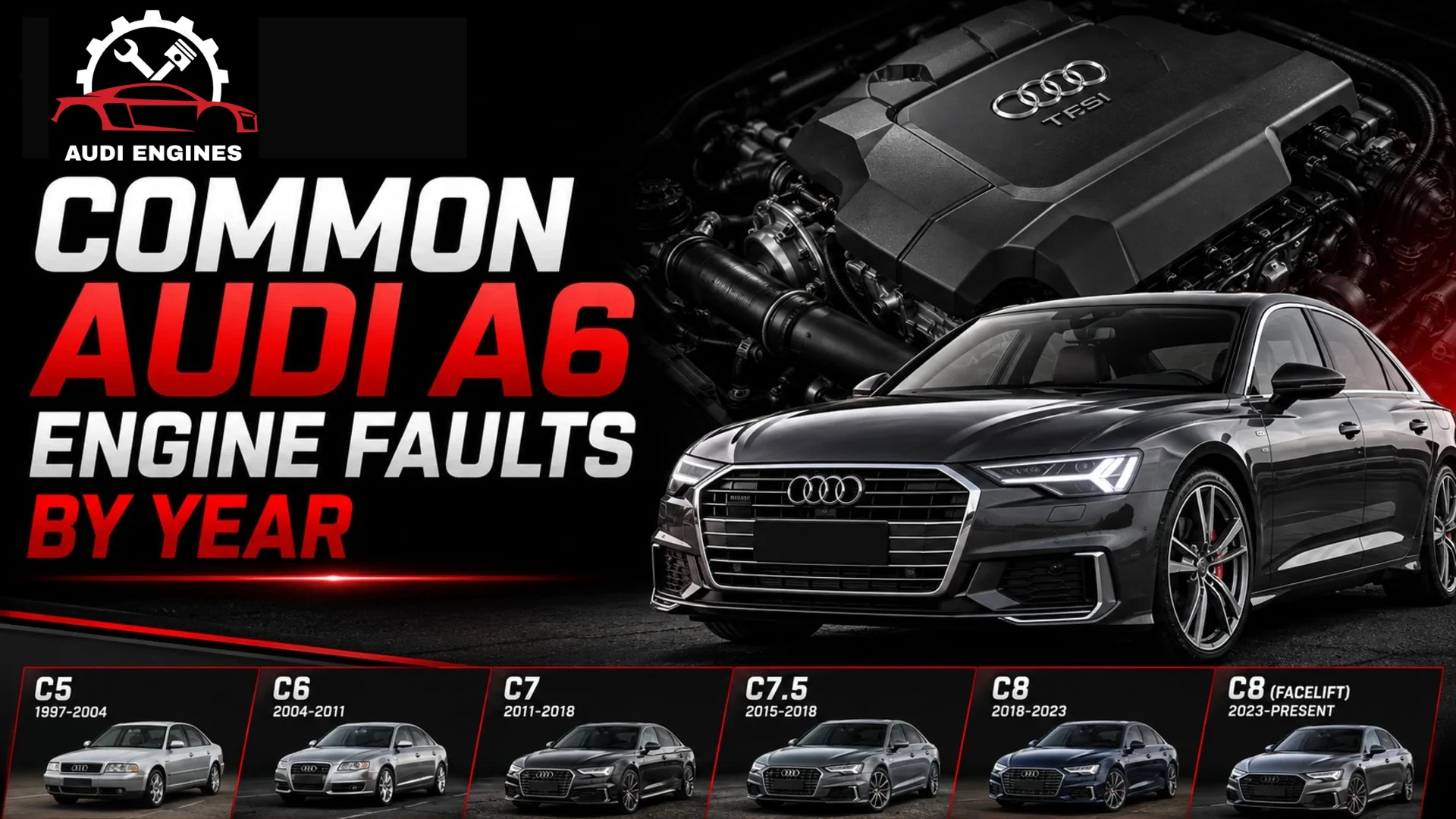
Here's the breakdown that matters most, what actually goes wrong, generation by generation.
Audi A6 C5 Engine Problems (1997–2004)
The C5 is now well into classic territory, and most surviving examples have covered significant mileage. Common issues at this age include worn engine mounts, oil leaks from ageing gaskets, and general wear consistent with a car of this vintage.
Timing Belt and Oil Leak Issues
Unlike later generations, many C5 engines use a timing belt rather than a chain, meaning replacement at the manufacturer-recommended interval is critical, a snapped belt on an interference engine causes catastrophic internal damage. Oil leaks, often from the PCV valve or rocker cover gasket, are also common at this age and are generally straightforward, affordable repairs if caught early.
Audi A6 C6 Engine Problems (2004–2011)
The C6 generation introduced more powerful and refined engines but also brought some specific fault patterns worth knowing about.
2.7 TDI and 3.0 TDI Common Faults
The 2.7 TDI and 3.0 TDI engines are generally well-regarded, but watch for:
- Contaminated transmission fluid, an issue that can affect gearbox shifting quality if not addressed
- Worn propshaft bearings, which typically present as vibration or a clunking noise, particularly on quattro models
- Oil leaks, often from the same areas as the C5 but sometimes linked to a worn oil separator
- Faulty starter motor relays, an electrical fault that can leave the car failing to start intermittently
None of these are catastrophic engine problems, but left unaddressed, several can lead to more expensive repairs down the line.
Audi A6 C7 Engine Problems (2011–2018)
This is where things get more technical, and where buyers need to pay closest attention to engine code and production year.
EA888 2.0 TFSI Oil Consumption and Timing Chain Issues
The EA888 engine, fitted to petrol C7 models, is well documented for two related issues:
- Excessive oil consumption, often caused by worn piston rings allowing oil past into the combustion chamber, sometimes visible as blue smoke from the exhaust under load
- Timing chain tensioner wear, which can cause a rattling or ticking noise on startup and, in severe cases, chain slip that leads to serious internal engine damage
Both issues are more common on earlier production years within the C7 range, with Audi making running changes to address them over time. If you're looking at a C7 TFSI, checking oil consumption history and listening carefully for chain noise on cold start is essential.
3.0 TDI Injector and EGR Valve Problems
C7 diesel models, particularly those fitted with the 3.0 TDI, commonly develop:
- Fuel injector wear, leading to rough idle, misfires, or increased fuel consumption
- EGR valve malfunction, often triggering warning lights and reduced performance
- DPF clogging on cars used mainly for short journeys, sometimes compounded by EGR issues feeding more soot into the exhaust system
Audi A6 C8 Engine Issues (2018–Present)
The current-generation A6 introduces mild-hybrid technology across most of the range, bringing a new category of potential faults alongside more traditional mechanical wear.
Mild-Hybrid System and AdBlue Faults
Common C8 complaints include:
- Mild-hybrid electrical system faults, sometimes linked to the 48-volt system that supports the engine's stop-start and energy recovery functions
- AdBlue system faults, which can trigger warning messages and, if ignored, eventually prevent the car from starting
- Infotainment glitches, more of an annoyance than a mechanical concern but frequently reported
- Faulty sensors, an umbrella issue covering everything from parking sensors to engine management sensors triggering false warnings
Turbo failure has also been reported on some C8 examples, though generally at higher mileage rather than as an early-life fault.
How to Spot an Engine Fault Before It Gets Expensive
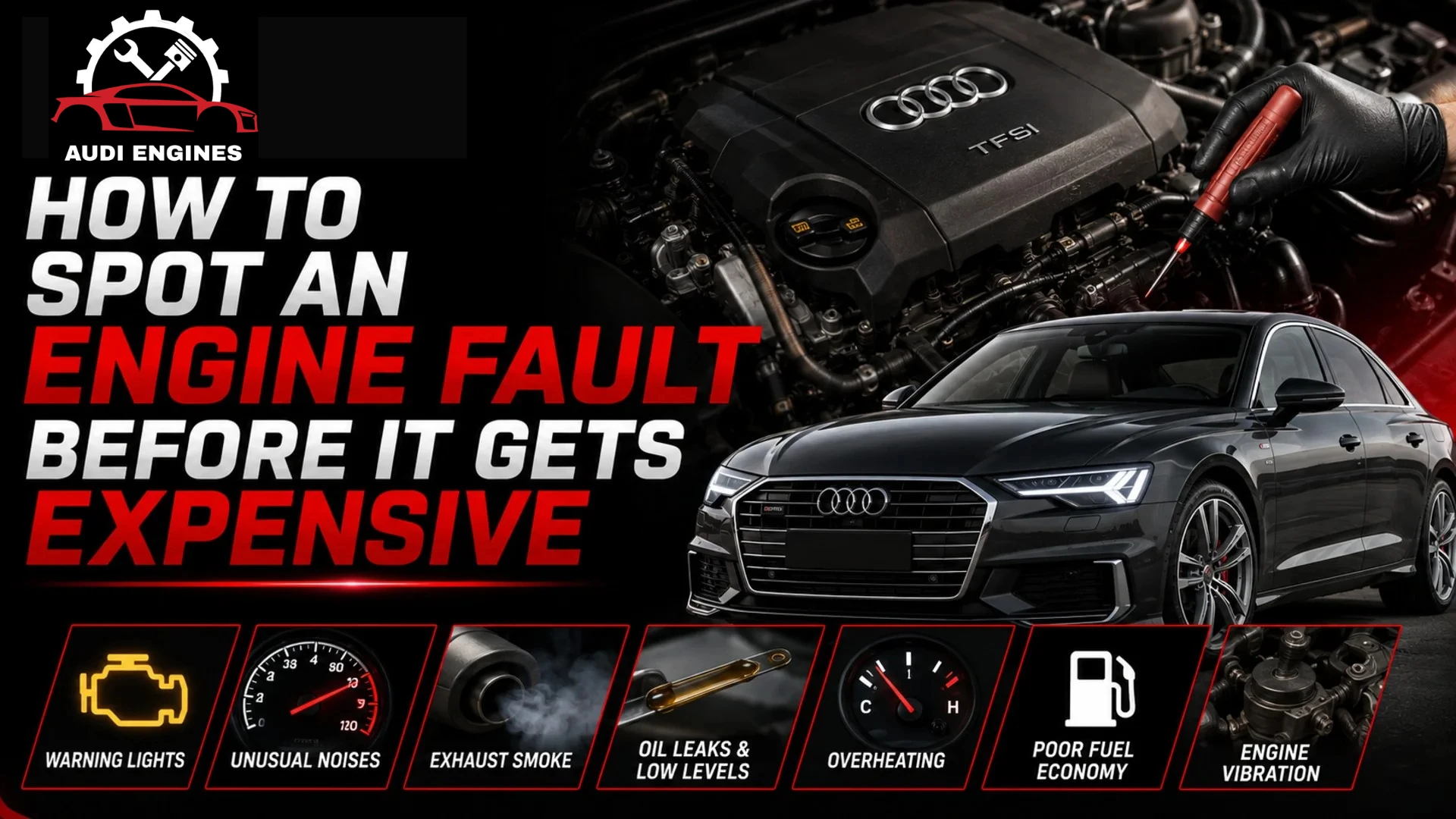
Catching a fault early is almost always cheaper than waiting for it to escalate. Here's what to watch for.
Warning Signs: Rough Idle, Misfires & Warning Lights
A rough idle or misfire is rarely random, it usually points to a specific, diagnosable cause such as worn spark plugs, a failing ignition coil, or an injector fault. Similarly, the engine warning light or EPC light illuminating isn't something to ignore, even if the car seems to be running fine; modern Audi engines often detect problems well before they become noticeable to the driver.
Why Is My Audi A6 Burning Oil or Losing Coolant?
Oil consumption, as covered above, is most often linked to piston ring wear on EA888 engines, though it can also stem from a failing PCV valve or turbo seal. Coolant loss typically traces back to a failing water pump, a cracked thermostat housing, or a leaking hose, all common wear items as Audi engines age, particularly past 80,000–100,000 miles.
If you're topping up coolant regularly with no visible external leak, it's worth having the system pressure tested, since a slow internal leak into the combustion chamber can otherwise go unnoticed until it causes more serious damage.
Turbo Failure and Timing Chain Symptoms to Watch For
Turbo problems typically build gradually, showing up as:
- A whining or whistling noise under acceleration
- Reduced power or slower acceleration than expected
- Blue or white smoke from the exhaust
- Warning lights related to boost pressure
Timing chain issues, particularly on EA888-equipped cars, tend to present as a rattling noise on cold start that quietens as the engine warms up, a sound worth taking seriously rather than dismissing as "normal for the age."
Typical Repair Costs by Fault Type
Fault | Typical Repair | Relative Cost |
| Oil leak (gasket/seal) | Gasket or seal replacement | Low |
| EGR valve malfunction | Valve cleaning or replacement | Low–Moderate |
| Injector fault (single injector) | Injector replacement and coding | Moderate |
| Timing chain tensioner wear | Chain and tensioner replacement | Moderate–High |
| Turbo failure | Turbo replacement | High |
| Excessive oil consumption (piston rings) | Partial or full engine rebuild | High |
These figures are a general guide, always get a proper diagnostic and quote before committing to any repair, since the actual cost depends heavily on the specific engine code and how the fault presents.
Buying, Maintaining & Repairing Your Audi A6 Engine
Whether you're buying used or keeping your current A6 running well, a bit of planning goes a long way.
Used Audi A6 Buying Checklist by Engine Code
Before buying a used Audi A6, work through this checklist based on the specific engine code you're looking at:
- Confirm the exact engine code (not just "2.0 TDI" or "TFSI," but the full code) and check it against known issues for that specific unit
- Review the service history for evidence of timing chain or timing belt work at the correct interval
- Check for oil consumption records, particularly on EA888-equipped C7 models
- Listen for chain rattle on a cold start, ideally before the engine has been run that day
- Check for EGR, DPF, or AdBlue warning history on diesel models, and ask whether any related work has been carried out
Preventative Maintenance Schedule
Staying ahead of common faults is far cheaper than reacting to them. A sensible maintenance approach includes:
- Regular oil changes using the correct specification, particularly important on EA888 engines prone to oil consumption
- Timing chain or belt inspection at recommended intervals, even if there's no obvious symptom yet
- Coolant system checks, including water pump condition, especially past 80,000 miles
- EGR and DPF care, including occasional longer motorway runs on diesel models to help keep the DPF clear
Rebuild, Repair or Replace, What's Right for Your Engine?
If you're facing a significant fault, a failed timing chain, serious oil consumption, or turbo failure, the decision between repair, rebuild, or full replacement depends on the car's overall condition and the cost of parts and labour involved. A targeted repair (a single injector, an EGR valve, a turbo) is usually the right call when the rest of the engine is healthy. A full rebuild or replacement engine becomes more sensible when multiple issues compound, or when the cost of repeated repairs starts approaching the value of a replacement unit.
Get an Audi A6 Engine Diagnostic or Repair Quote
If you're dealing with a warning light, an unusual noise, or you're simply not sure what a used A6 needs before you buy it, a proper diagnostic assessment takes the guesswork out of the decision. Understanding exactly which fault you're dealing with, and which engine code it applies to, is the difference between an accurate quote and an expensive guess.
Frequently Asked Questions
What are the most common Audi A6 engine faults?
It depends heavily on generation and engine code, but recurring issues include oil consumption and timing chain wear on EA888 petrol engines, EGR and DPF problems on diesel models, and mild-hybrid or AdBlue faults on newer C8 cars.
Which Audi A6 year should I avoid?
Early C7 models (roughly 2011–2015) fitted with early EA888 2.0 TFSI engines are the most commonly flagged, due to oil consumption and timing chain tensioner concerns.
Which Audi A6 engine is most reliable?
The C6-generation 2.7 TDI and early 3.0 TDI diesel engines have a strong reputation for long-term durability, provided servicing has been maintained properly.
Does the Audi A6 have timing chain problems?
Yes, particularly the EA888 2.0 TFSI fitted to early C7 models. Earlier generations using a timing belt have a different maintenance requirement, belt replacement at the correct interval rather than chain-related wear.
Why does the Audi A6 burn oil?
Excessive oil consumption on EA888-equipped models is most often linked to worn piston rings, though a failing PCV valve or turbo seal can also contribute.
Why is my Audi A6 losing coolant?
Common causes include a failing water pump, a cracked thermostat housing, or a leaking hose, all fairly typical wear items as these engines age past 80,000–100,000 miles.
Is the Audi A6 expensive to repair?
It varies significantly by fault and engine. Minor issues like EGR valves or gaskets are relatively affordable, while major work like timing chain replacement or a partial engine rebuild can be considerably more costly.
What mileage do Audi A6 engines last?
With proper maintenance, most Audi A6 engines, particularly the diesel units, can comfortably exceed 150,000–200,000 miles. EA888 petrol engines can also achieve high mileage but are more sensitive to oil consumption monitoring along the way.
Is the Audi A6 2.0 TFSI reliable?
Later revisions of the EA888 are considerably improved over early C7 versions, which had more pronounced oil consumption and timing chain issues. Checking production year and service history is essential when assessing reliability.
Should I buy a high-mileage Audi A6?
A well-maintained, high-mileage diesel A6 with full service history is often a safer bet than a lower-mileage example with gaps in its records, consistent servicing matters more than the odometer figure alone.
Final Thoughts
The Audi A6 has evolved considerably across its four generations, and so have its common faults, from timing belt care on the C5, through transmission and propshaft wear on the C6, into the well-documented oil consumption and timing chain concerns on early C7 TFSI models, and now mild-hybrid and AdBlue faults on the C8. Knowing which generation and engine code you're dealing with turns a vague worry into a specific, manageable checklist.
Not sure exactly what's causing your A6's fault, or want a second opinion before buying a used one? Get in touch with our team for a proper diagnostic assessment and an honest, engine-code-specific quote before you spend a penny on repairs.