Audi A7 3.0 TDI Timing Chain Rattle Causes: What's Making the Noise and What to Do About It
Your A7 rattles for a second or two on a cold start, then settles down and drives perfectly. It's easy to shrug it off. But the nagging worry is fair, because the timing chain on this engine is not a cheap thing to get wrong.
Your A7 rattles for a second or two on a cold start, then settles down and drives perfectly. It's easy to shrug it off. But the nagging worry is fair, because the timing chain on this engine is not a cheap thing to get wrong.
Here's the short answer. The most common Audi A7 3.0 TDI timing chain rattle causes are a tensioner that loses pressure, a stretched chain, worn or broken guides, and poor oil supply. How much it costs to put right depends almost entirely on how early the fault is caught.
If the rattle lingers once the engine is warm, the car runs roughly, or a timing-related fault code appears, stop driving and get it diagnosed. A chain that skips on this engine can do serious internal damage.
Want it checked before it gets worse? Book a timing chain inspection with our team using the form on this page.
What Causes a Timing Chain Rattle on an Audi A7 3.0 TDI?
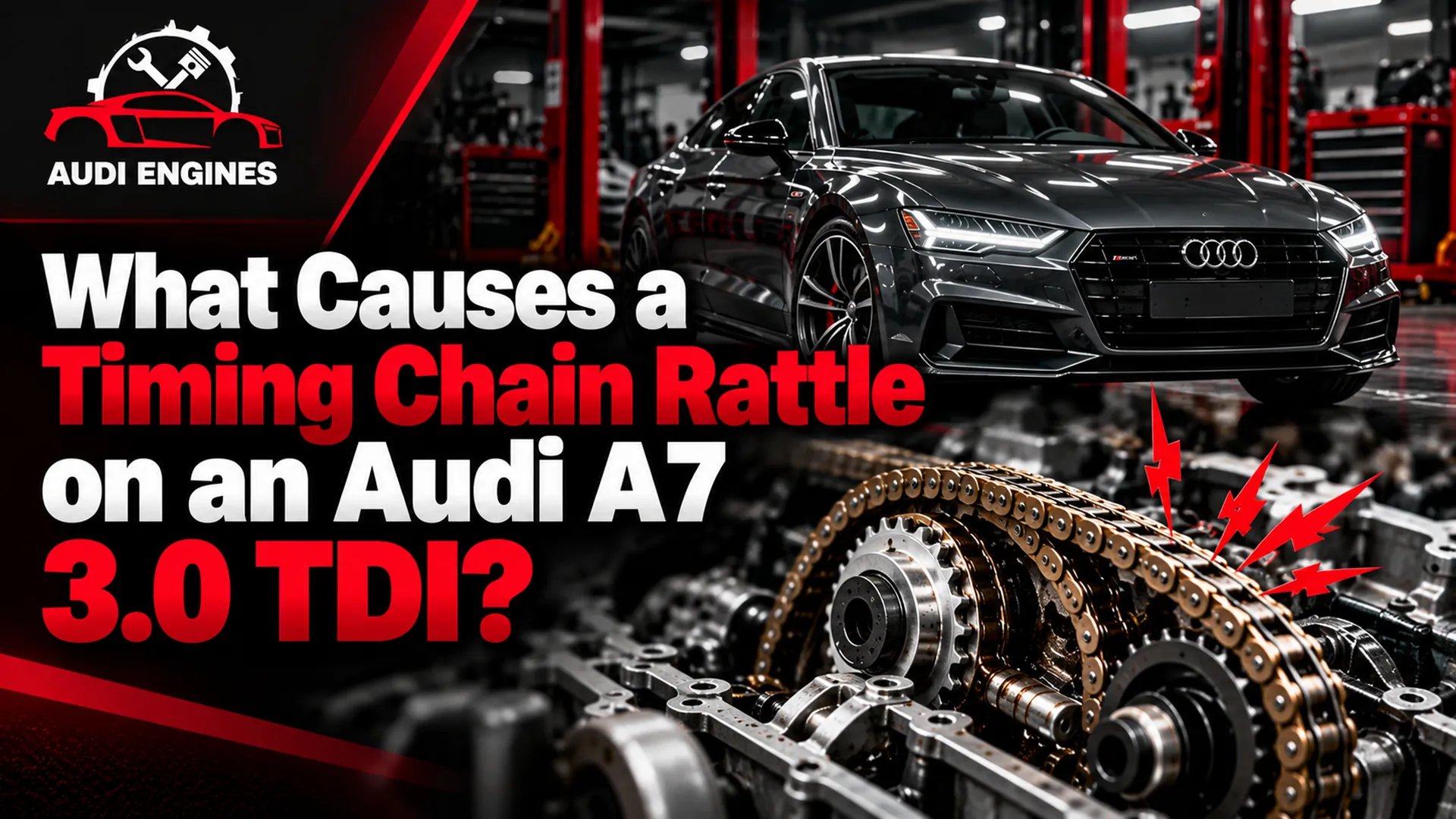
A timing chain rattle usually means slack in the chain drive. The chain, tensioners and guides are meant to run tight and controlled. When something loses tension, wears or breaks, the chain moves more than it should and slaps against its guides. That's the noise you hear.
The 3.0 TDI is a V6 diesel, and its timing drive sits at the back of the engine, at the gearbox end. That layout matters for two reasons. The rattle can be hard to place by ear, and any work on the chain drive involves significant labour because access is limited. It's one reason early diagnosis pays off.
Timing chain rattle causes and how they show up
Cause | Typical sound or symptom | How serious | How it's confirmed |
| Tensioner bleed-down (upper or lower) | Brief rattle on cold start, often a second or two | Moderate, rising if ignored | Inspection of tensioners, timing correlation data |
| Stretched chain | Persistent or growing rattle, timing correlation codes | Serious | Chain stretch measurement and fault data |
| Worn or broken guides | Louder rattle, sometimes rough running, plastic debris | Serious to severe | Physical inspection, debris in oil or sump |
| Low oil pressure or neglected oil changes | Rattle plus oil warning or sluggish tensioner response | Serious | Oil pressure check, oil condition |
| Short trips and frequent cold starts | Repeated cold-start rattle, accelerated wear | Moderate | History and inspection |
Several of these feed into each other. A tired tensioner lets the chain run slack, slack wears the guides, and worn guides let the chain stretch further. What starts as a brief rattle can become a chain-drive problem over time.
Why Does My A7 3.0 TDI Rattle for a Few Seconds on a Cold Start?
The usual reason is tensioner bleed-down. Chain tensioners are oil-pressure assisted. When the engine sits overnight, some of that pressure can drain away, so the chain runs slightly slack until oil pressure builds on start-up. Those first seconds are the rattle you hear.
Not every cold-start rattle means the same thing. It helps to separate three situations:
- A brief rattle that never changes: the same short noise for months. Lower risk, but it still deserves an inspection at your next service.
- A rattle that's getting longer or louder: this suggests the tensioner or chain condition is deteriorating. Act on it soon.
- A rattle that stays once the engine is warm: treat this as urgent. Don't keep driving.
You'll hear owners say a cold-start rattle is "normal" on these engines. We'd be cautious about that. A short, stable rattle may be tolerable for a while, but "it's only a cold-start rattle" is not a safe assumption without someone checking.
A scenario we see often: an owner notices a two-second rattle and ignores it for a year because the car drives fine. By the time it's inspected, the rattle has lengthened, the tensioner has weakened further and the guides show wear. A job that might have been a tensioner and chain service has become a bigger repair. The noise didn't change much. The damage behind it did.
Hearing something you're not sure about? Ask about a timing chain check before it gets worse.
How Do You Diagnose a Timing Chain Rattle on an A7 3.0 TDI, and When Should You Stop Driving?
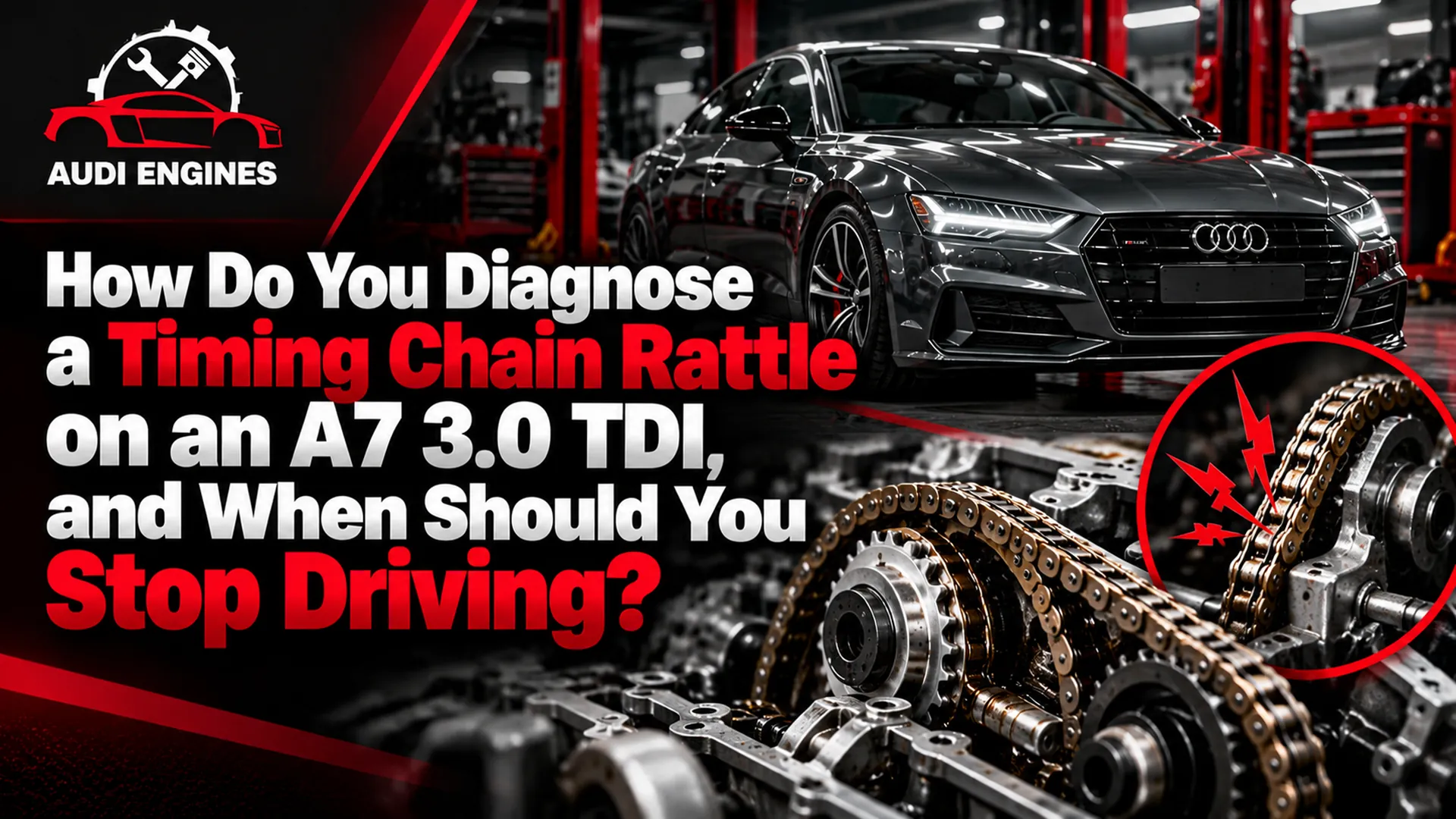
Work in order, from simplest to most invasive. Note when the noise happens, scan for fault codes, check the timing correlation data, inspect the oil and filter for metal or debris, then confirm with a physical inspection. Skipping straight to parts is how money gets wasted.
What symptoms point to a failing timing chain?
Symptom | What it suggests | What to do next |
| Cold-start rattle | Tensioner bleed-down or early chain slack | Book an inspection, monitor for change |
| Rough idle or misfire | Timing is drifting, or chain and guides are worn | Scan for codes and stop long journeys |
| Extended cranking | Possible timing correlation problem | Diagnose before further use |
| Check engine light with timing correlation codes | Camshaft and crankshaft positions no longer agree | Stop driving and diagnose |
| Metallic particles or plastic debris in the oil | Guide or component wear | Do not drive, inspect urgently |
| Loss of power | Timing or mechanical fault | Stop and diagnose |
Camshaft and crankshaft correlation codes deserve particular attention. They mean the engine's computer sees the two shafts out of step. On a chain-driven engine, that points straight at the timing drive.
What tools does a proper diagnosis use?
- Audi-specific diagnostic scan tool (such as VCDS: reads fault memory and live timing data, which a basic code reader can miss.
- Oil and filter inspection: metal fragments or plastic debris tell you what's wearing.
- Physical inspection of the chain drive: where the model allows access, this confirms tensioner and guide condition.
- Oil condition and pressure checks: because oil supply drives tensioner performance.
Is It Safe to Drive an A7 3.0 TDI With a Rattling Timing Chain?
It depends on what the rattle is doing. Here's the honest risk breakdown:
- A short, stable cold-start rattle: lower risk, but get it inspected soon.
- A rattle that's lengthening: higher risk. Limit driving and book diagnosis.
- A rattle that persists when warm, rough running, or a timing fault code: stop driving.
The reason is that this is an interference engine. That means the valves and pistons occupy overlapping space at different moments. If the chain skips a tooth or the timing slips, valves can strike pistons.
What not to do: don't clear fault codes and carry on. Don't pour in thicker oil and hope. Oil change intervals and the right specification matter, but thicker oil does not repair a worn tensioner or stretched chain.
What Does a Failed Timing Chain Do to an A7 3.0 TDI Engine?
When a chain skips or a guide breaks, the timing between the crankshaft and camshafts is lost. Valves open at the wrong moment and can hit the pistons. The result can be bent valves, damaged pistons, and in worse cases cylinder head or block damage. Broken guide fragments can also circulate and cause further harm.
That's why there are really two repair routes:
- Early: deal with the tensioner, chain and guides before anything has been damaged. It's a significant job because of the engine layout, but it's contained.
- Late: deal with the consequences after failure. That can mean a cylinder head rebuild, an engine-out overhaul, or a replacement engine.
We don't quote prices here because they vary by car, condition and what's found. The principle is straightforward: the earlier the fault is caught, the smaller the job.
Should You Repair the Timing Chain, Rebuild the Head or Replace the Engine?
Repair the chain drive when the damage is limited to the tensioner, chain and guides, and inspection shows no internal engine damage. Consider a cylinder head rebuild or a reconditioned replacement when valves, pistons or the block are damaged, or when the engine is high mileage and has other wear that a repair would not address.
A good workshop will test first, show you what it found and explain both options. For wider context, read our guide to Audi engine problems.
How Does Audi A7 3.0 TDI Engine Replacement Work, and What Does a Reconditioned Engine Cost?
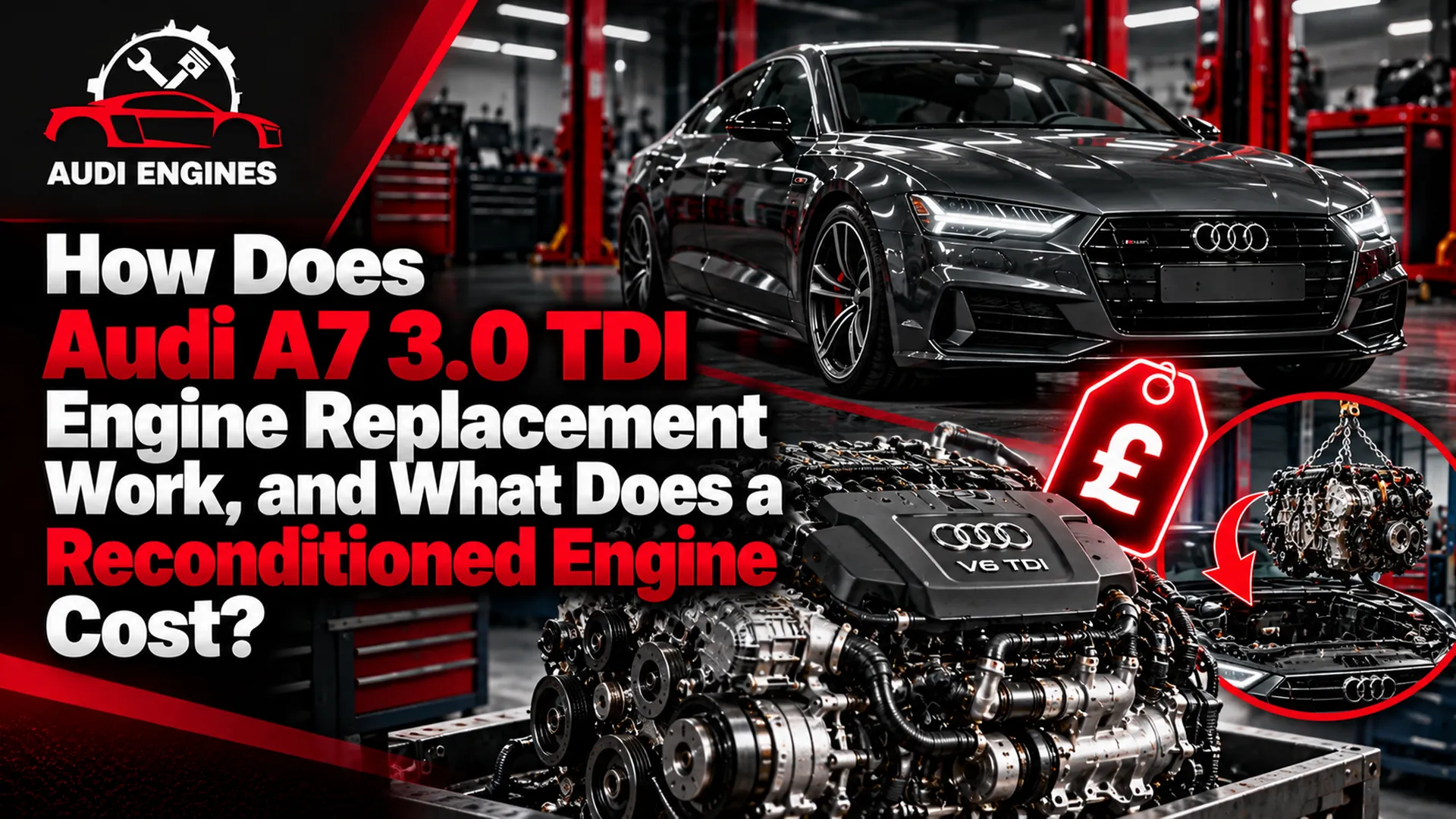
If a chain failure has damaged the engine beyond sensible repair, a reconditioned engine supplied and fitted is often the most practical route. A reconditioned engine has been stripped, cleaned, inspected and measured, with worn parts machined or replaced. It's then reassembled with new bearings, seals and gaskets, and tested. At audiengines.co.uk, we supply the correct engine for your Audi and fit it, so one team handles the job from quote to handover.
Used, reconditioned and rebuilt engines compared
Engine type | What it is | Cost position | Main concern | Best for |
| Used engine | Lifted from a donor vehicle, usually untouched | Lowest | Unknown history and wear | Tight budgets |
| Reconditioned engine | Stripped, inspected, machined, rebuilt with new wearing parts and tested | Mid-range | Quality depends on the rebuild standard | Long-term value |
| Rebuilt engine | Your own engine repaired and reassembled | Mid to higher | The scope of the rebuild must be clearly defined | When the original block is sound |
Reconditioned vs used: a reconditioned engine has been measured and tested, so you know what's inside it. A used engine is a gamble, particularly after a timing failure.
How do we match the correct engine to your A7?
We never quote or supply an engine until it's verified. We use your registration number, VIN and engine code, and we check transmission and specification, because an engine that looks right but doesn't match causes delays and extra cost.
How supply and fit works
- Enquiry: send your registration number, mileage, symptoms and any fault codes.
- Engine match: we verify the engine code and specification before quoting.
- Quote: you receive a clear price showing what's included.
- Recovery or drop-off: if the car can't be driven, talk to us about recovery options.
- Removal and installation: the failed engine comes out, the replacement goes in, and ancillary components are transferred where required.
- Fluids and checks: fluids and filters are renewed as needed, and the lubrication system is primed.
- Diagnostics and ECU checks: a full scan, with adaptation where required.
- Road test: we confirm it idles, pulls and warms up properly.
- Handover: you collect the car with your warranty documents.
How much does engine replacement cost?
The total is the engine, plus labour, plus consumables, plus any ancillary parts the job reveals, plus diagnostics and recovery where needed. Be wary of any quote that gives a single number with no breakdown.
What moves the price:
- Engine specification and availability.
- Condition of ancillaries: worn parts replaced alongside the engine protect the new one.
- Recovery distance: if the car must be collected.
- Additional faults found during diagnosis or fitting.
Our quotes are itemised, so you can compare like with like.
Warranty
A warranty is only as good as its terms. Before you commit, we put these in writing: the length of cover, what parts and labour it includes, how to claim, and what can invalidate it, such as missed servicing, wrong oil, ignored warning lights or overheating.
Why choose audiengines.co.uk?
- Audi focus: we work with Audi engines, so we understand where they fail.
- Diagnosis first: we test before recommending a repair, rebuild or replacement.
- Verified matching: no engine is supplied until the code is confirmed.
- Tested engines: every engine is quality checked and tested before fitting.
- Honest advice: if a repair is all you need, we'll say so.
Audi A7 3.0 TDI timing chain FAQs
Can I drive my Audi with a timing chain rattle?
A brief, stable cold-start rattle is lower risk, but it needs inspection soon. If the rattle persists when warm, the engine runs roughly or a timing fault code appears, stop driving.
Does the A7 3.0 TDI have a timing belt or a chain?
It uses a timing chain. Chains are built to last, but their tensioners and guides can wear, particularly with poor maintenance.
Why does my Audi timing chain rattle on a cold start?
Most often because the tensioner loses oil pressure overnight and takes a moment to firm up. It can also point to chain stretch or guide wear.
What are the signs of a jumped timing chain?
Rough running, misfires, extended cranking, loss of power, timing correlation fault codes and, in severe cases, a no-start condition.
Is a timing chain rattle a serious problem?
It can be. Early on it may be a tensioner issue. Left alone, it can lead to guide failure and engine damage.
How much does timing chain repair cost?
It depends on the car and what's found. Because of the rear-mounted timing drive, labour is significant. Catching it early keeps the job smaller. We explain what's involved before we start.
Can I replace only the tensioner and keep the old chain?
Sometimes, but not always wise. If the chain has stretched or the guides are worn, replacing the tensioner alone may not fix the problem. Inspection decides.
Will thicker oil stop the rattle?
No. The correct oil specification and regular changes matter, but oil won't repair worn components.
Is a reconditioned engine worth it after timing chain failure?
If the engine is damaged beyond sensible repair, often yes. You get a tested engine, a written warranty and a price below new. It makes less sense where the rest of the car is in poor condition.
How long does engine replacement take?
It depends on the engine, parts availability and what's found during fitting. We give you a realistic timescale with your quote.
Do you offer vehicle recovery?
We serve customers across the UK. Get in touch with your location and we'll explain how recovery, delivery and fitting work for you.
Can You Get a Quote for a Timing Chain Inspection or a Reconditioned Engine Supplied and Fitted?
Yes. Send us:
- Your registration number
- Your approximate mileage
- A short description of the noise and when it happens
- Any fault codes you've read
- Your contact details
We'll tell you what we think is going on, whether a repair or an engine replacement makes sense, and what each would involve. There's no obligation, and if a repair is all you need, we'll say so. Book your timing chain inspection or request a reconditioned engine quote using the form on this page, or call our team directly.