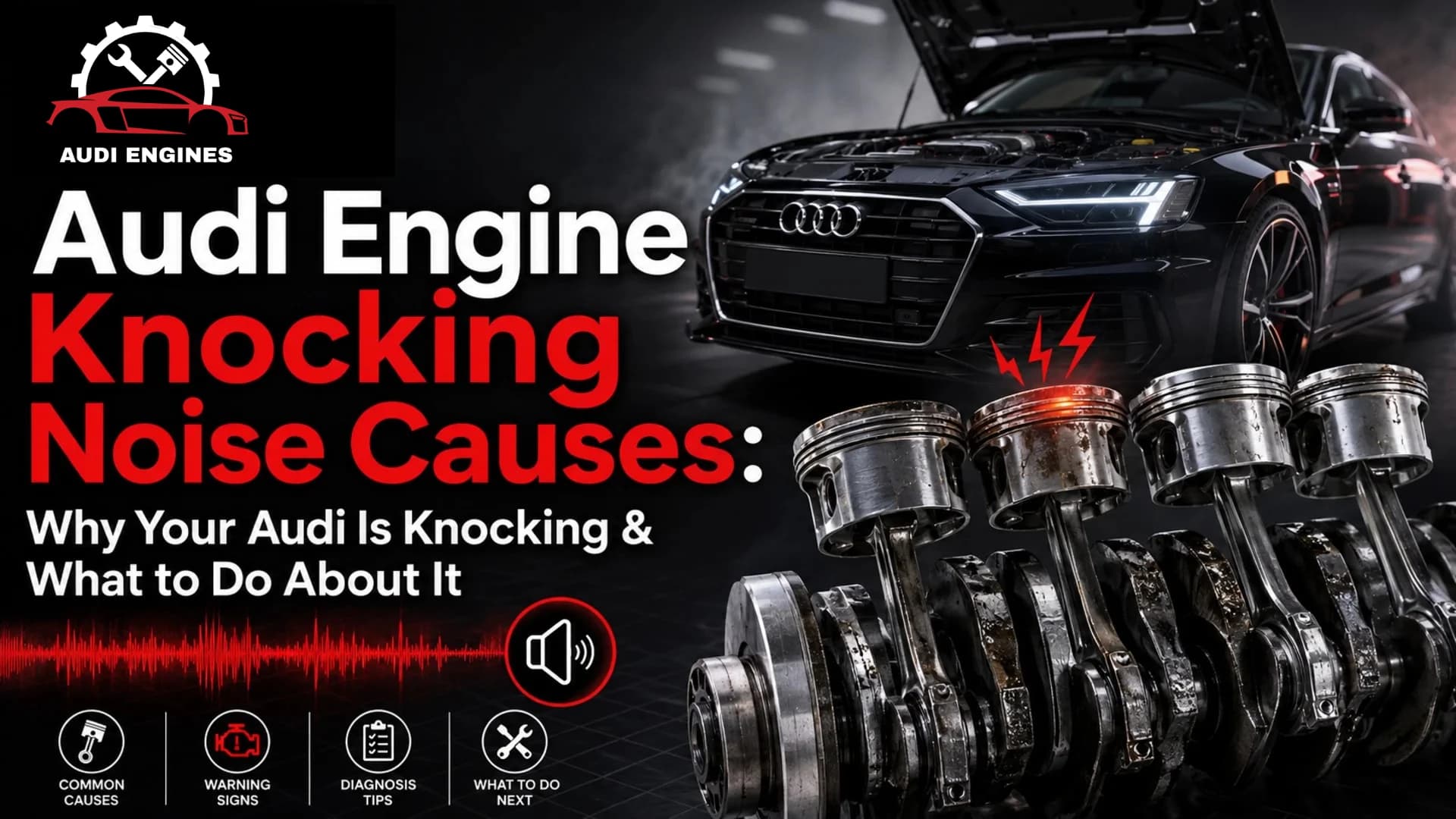
Audi Engine Knocking Noise Causes: Why Your Audi Is Knocking & What to Do About It
That knocking sound didn't used to be there. Now it's the first thing you notice every time you turn the key, and it's getting louder on the motorway. If you're here, you're probably not looking for reassurance, you want to know what's actually wrong, whether it's safe to keep driving, and what it's going to cost to fix.
That knocking sound didn't used to be there. Now it's the first thing you notice every time you turn the key, and it's getting louder on the motorway. If you're here, you're probably not looking for reassurance, you want to know what's actually wrong, whether it's safe to keep driving, and what it's going to cost to fix.
Engine knocking is one of those noises that ranges from "cheap sensor" to "the engine is dying," and the difference matters a lot. This guide walks through what causes an Audi engine knocking noise, how to tell the causes apart, and what your realistic options are, whether that's a straightforward repair or a full engine replacement.
What Does an Audi Engine Knocking Noise Actually Mean?
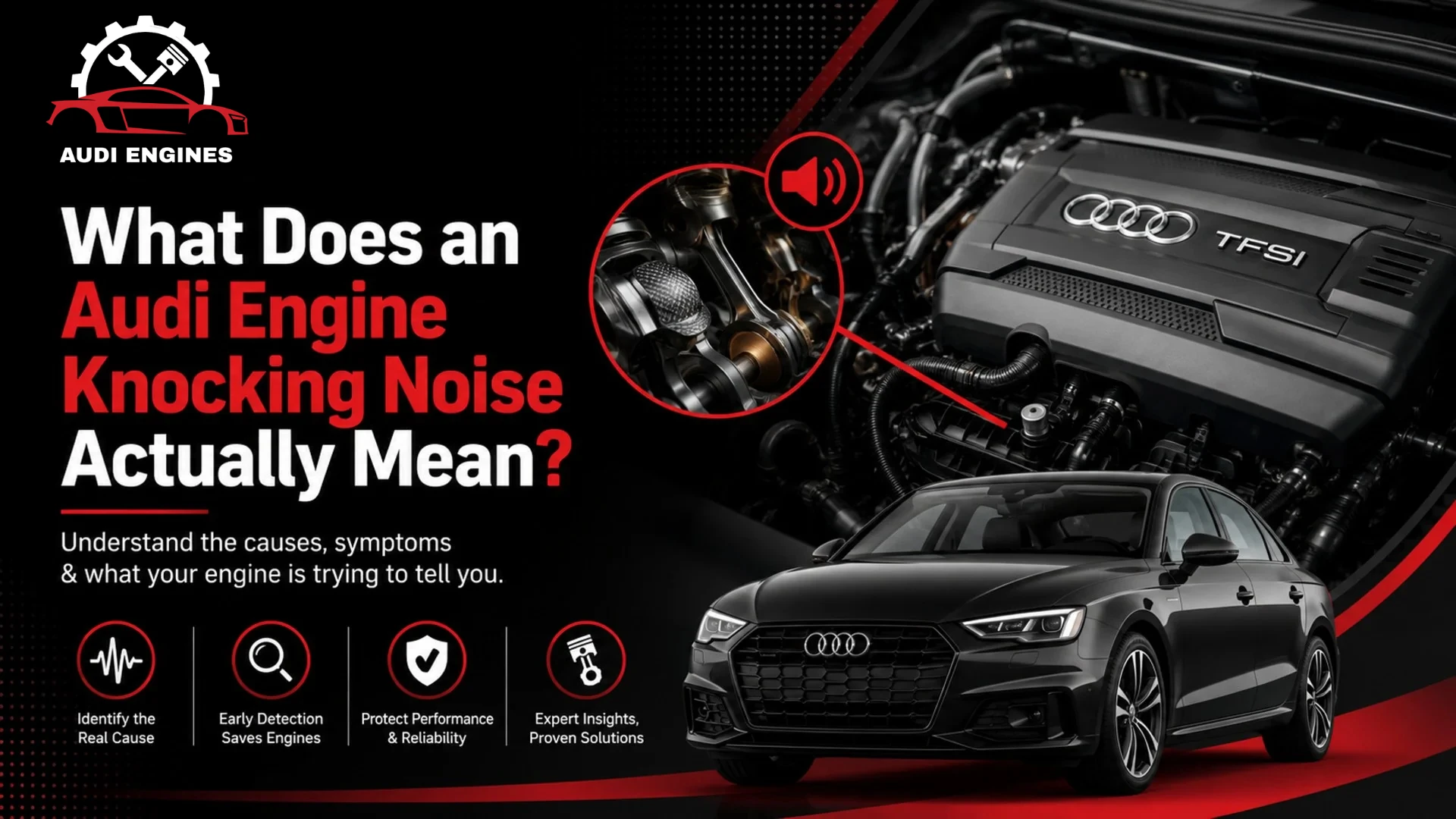
Before jumping to causes, it helps to understand what "knocking" actually refers to, because the word gets used loosely for several very different noises.
In simple terms, engine knock happens when something inside the engine is hitting something else that it shouldn't be, whether that's a piston slapping against a worn cylinder wall, a connecting rod moving in a bearing with too much clearance, or fuel igniting at the wrong moment inside the combustion chamber. Some causes are mechanical wear. Others are related to fuel, ignition timing, or sensors misreporting what's happening inside the engine.
Knocking, Ticking, or Tapping, What's the Difference?
These terms get used interchangeably by drivers, but mechanics draw a real distinction:
- Knocking is a deep, heavy, often metallic sound, usually rhythmic and tied to engine RPM. This is the one associated with rod bearings, piston slap, and detonation.
- Ticking is lighter and faster, often from the top of the engine, commonly hydraulic lifters, valve train components, or injectors.
- Tapping sits somewhere between the two and is frequently linked to timing chain components or worn camshaft followers.
The location and pitch of the noise are two of the biggest clues in diagnosis, which is why simply saying "my engine is knocking" doesn't tell a technician much on its own, it's a starting point, not a diagnosis.
Why Does My Audi Knock When Cold But Not When Warm?
This is one of the most common patterns drivers report, and it's genuinely useful diagnostic information.
Cold start knocking that fades after a few minutes usually points to piston slap or slightly worn bearings. Engine oil is thicker and slower to circulate when cold, so clearances between moving parts are momentarily larger until oil pressure builds and everything is properly lubricated. Once the oil warms up and thins slightly, the clearance tightens and the noise disappears.
Knocking that appears or worsens once the engine is warm points elsewhere, often toward low oil pressure at operating temperature, a failing oil pump, or bearings that have worn enough that even normal running clearance is now too loose.
Is a Metallic Knocking Sound Always Serious?
Not always, but it's never something to ignore. A metallic knock can mean anything from a loose heat shield rattling against the exhaust manifold to serious rod bearing wear. The safest approach is always to have it assessed rather than assume the best-case scenario, particularly because continuing to drive on a genuine rod knock can turn a bearing replacement into a full engine rebuild within a matter of miles.
Common Audi Engines Affected (EA888, TFSI, TDI)
Knocking isn't unique to one engine, but some Audi engine families are more prone to specific issues than others.
Why the EA888 Gen 3 Has a Reputation for Knocking Noises
The EA888 Gen 3, used across the A3, A4, A5, and Q5 in various TFSI forms, is well documented for two particular issues: carbon build-up on the intake valves (a side effect of direct injection, since fuel no longer washes over the valves) and timing chain tensioner wear on higher-mileage examples. Neither of these is unique to Audi, the same EA888 family is shared across the Volkswagen Group, but it's worth knowing your engine's known weak points before assuming the worst.
Common Causes of Audi Engine Knocking (By Type)
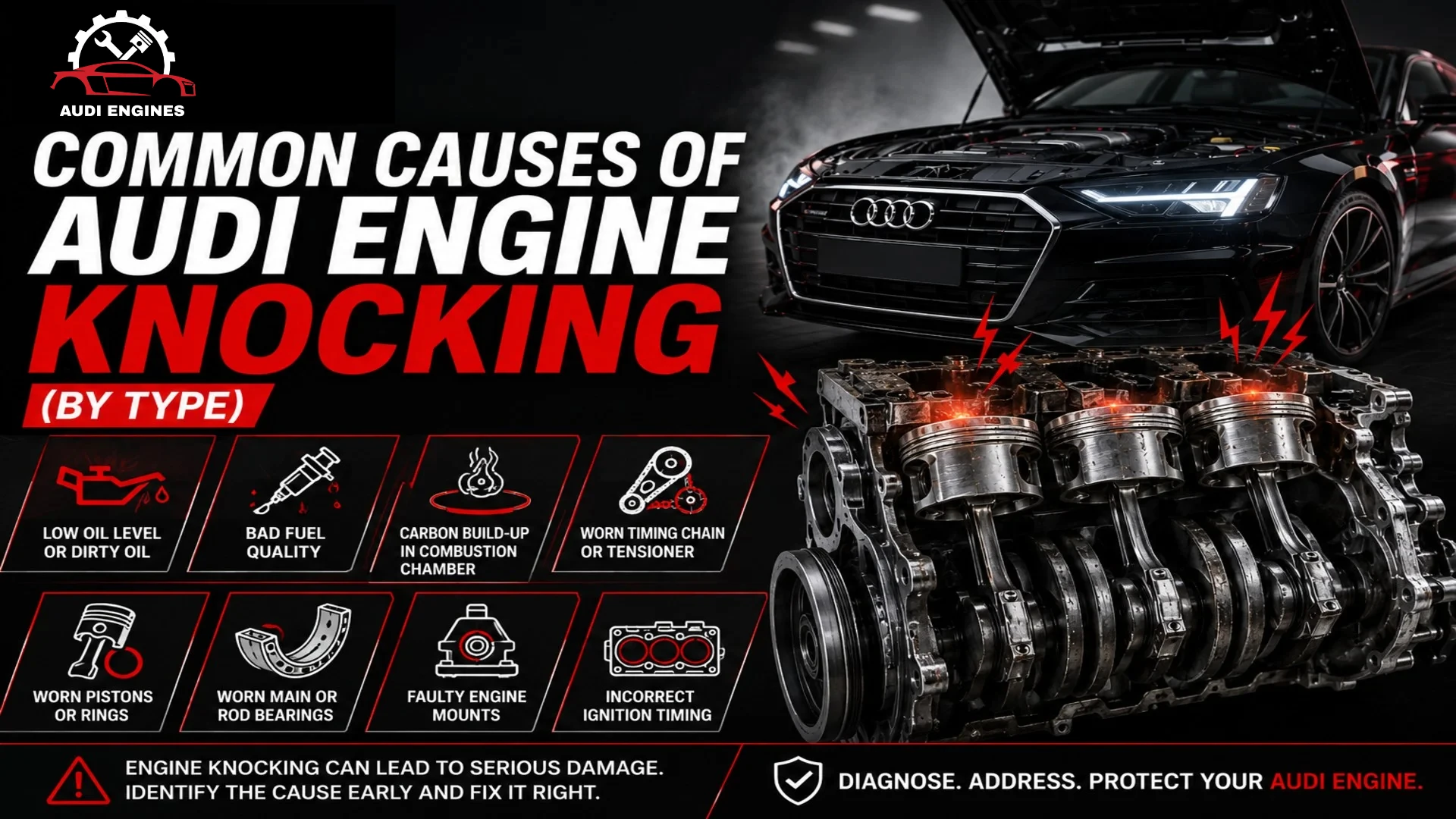
Here's where most competitor guides stop at a generic list. The reality is that different knocking causes have different symptoms, different urgency levels, and very different repair costs — so it's worth understanding each one on its own terms rather than as a single bullet in a list.
- Low oil pressure and worn rod bearings — the most serious and most expensive cause on this list
- Timing chain rattle or tensioner failure — common on higher-mileage EA888 engines
- Carbon build-up — a slower-developing issue linked to direct injection
- Knock sensor faults or incorrect fuel octane — often the cheapest fix, if that's genuinely the cause
- TDI-specific causes, which differ from petrol TFSI knock in a few important ways
Low Oil Pressure & Worn Rod Bearings (Rod Knock)
Rod knock is the noise every Audi owner dreads, and for good reason, it's usually the most expensive cause to fix.
It happens when the bearing that sits between the connecting rod and the crankshaft wears down, increasing the clearance beyond its designed tolerance. Every time that piston fires, the rod hits the crankshaft with a fraction more force than it should, producing a deep, heavy knock that gets faster as engine RPM increases.
Common contributing factors include:
- Oil starvation — running the engine low on oil, or with oil that hasn't been changed on schedule
- Oil sludge — thickened, degraded oil that can't lubricate properly or flow to the bearings fast enough
- A failing oil pump, which reduces pressure across the entire lubrication system
- Extended oil change intervals, particularly on turbocharged, direct-injection engines that put more stress on oil than older naturally aspirated units
What Rod Knock Sounds Like vs Piston Slap
Both are deep, mechanical noises, which is why they're commonly confused:
Symptom | Rod Knock | Piston Slap |
| Sound | Deep, heavy, rhythmic knock | Lighter, hollow "slapping" sound |
| Worsens with RPM | Yes, noticeably | Less pronounced |
| Present when cold | Sometimes | Very commonly, then fades |
| Present when warm | Often worsens | Usually quietens down |
| Urgency | High, stop driving, get it checked | Moderate, monitor, but get diagnosed |
| Typical cause | Worn bearing clearance | Worn cylinder bore or piston skirt |
If you're hearing a noise that gets faster with revs and doesn't fade once the engine warms up, that's the pattern most associated with genuine rod knock, and it's worth treating as urgent.
Timing Chain Rattle & Tensioner Failure
A rattling or tapping noise, particularly on start-up, often points to the timing chain rather than anything deeper inside the engine. The timing chain tensioner is designed to keep the chain under constant tension; once it wears or the chain itself stretches, you get slack, which produces a distinctive rattle, usually most noticeable for the first few seconds after start-up before oil pressure builds and quietens it down.
Left unaddressed, a failing timing chain can jump time on the camshaft, which on an interference engine risks valve-to-piston contact, a far more expensive failure than replacing a tensioner early.
Carbon Build-Up in Direct-Injection Engines
Direct injection improves fuel efficiency and power, but it has one well-known downside: because fuel is sprayed directly into the cylinder rather than over the intake valves, there's nothing to wash away oil vapour and carbon deposits that naturally accumulate on the valves over time.
This build-up doesn't cause knocking directly in most cases, but it does contribute to rough idle, misfires, and reduced combustion efficiency, conditions that can indirectly cause pinging or knocking-like noises, particularly under load or acceleration.
Faulty Knock Sensor or Incorrect Fuel Octane
Sometimes the cheapest possible explanation is the right one, a failing knock sensor.
The knock sensor's job is to detect abnormal vibration in the engine block (the actual sound of detonation) and signal the ECU to retard ignition timing to protect the engine. If the sensor itself fails or reports incorrectly, the ECU may either fail to correct genuine knock, or overcorrect based on a false signal, which can itself produce a noticeable change in how the engine sounds and performs.
Fuel plays a role here too. Audi engines, particularly higher-output TFSI variants, are designed around a specific octane rating. Using fuel below the recommended rating increases the likelihood of detonation, fuel igniting from cylinder pressure and heat before the spark plug fires, rather than in a controlled, timed burn.
Does Premium Fuel Actually Stop Engine Knock?
If your engine is knocking because of genuine mechanical wear, a worn bearing, a stretched timing chain, no fuel grade will fix that. Premium fuel only helps if the underlying cause is genuinely fuel-related, such as running lower-octane fuel than the engine was designed for. It's a useful diagnostic data point, not a universal fix.
TFSI vs TDI, Do They Knock for Different Reasons?
This is a distinction most generic guides skip entirely, but it matters.
TFSI (petrol, direct injection) engines tend to knock due to detonation/pre-ignition, carbon build-up affecting combustion, or mechanical wear in bearings and the timing chain, issues covered above.
TDI (diesel) engines are compression-ignition by design, so a certain amount of "diesel knock" or clatter is completely normal, especially at idle. What's not normal is a change in that noise, a new, louder, or different-pitched knock, particularly one that appears alongside reduced power or a check engine light, which more often points to injector problems, fuel delivery issues, or in more serious cases, bottom-end wear rather than anything fuel-quality related, since diesel doesn't have an octane rating in the same sense petrol does.
How Is an Audi Engine Knocking Noise Diagnosed?
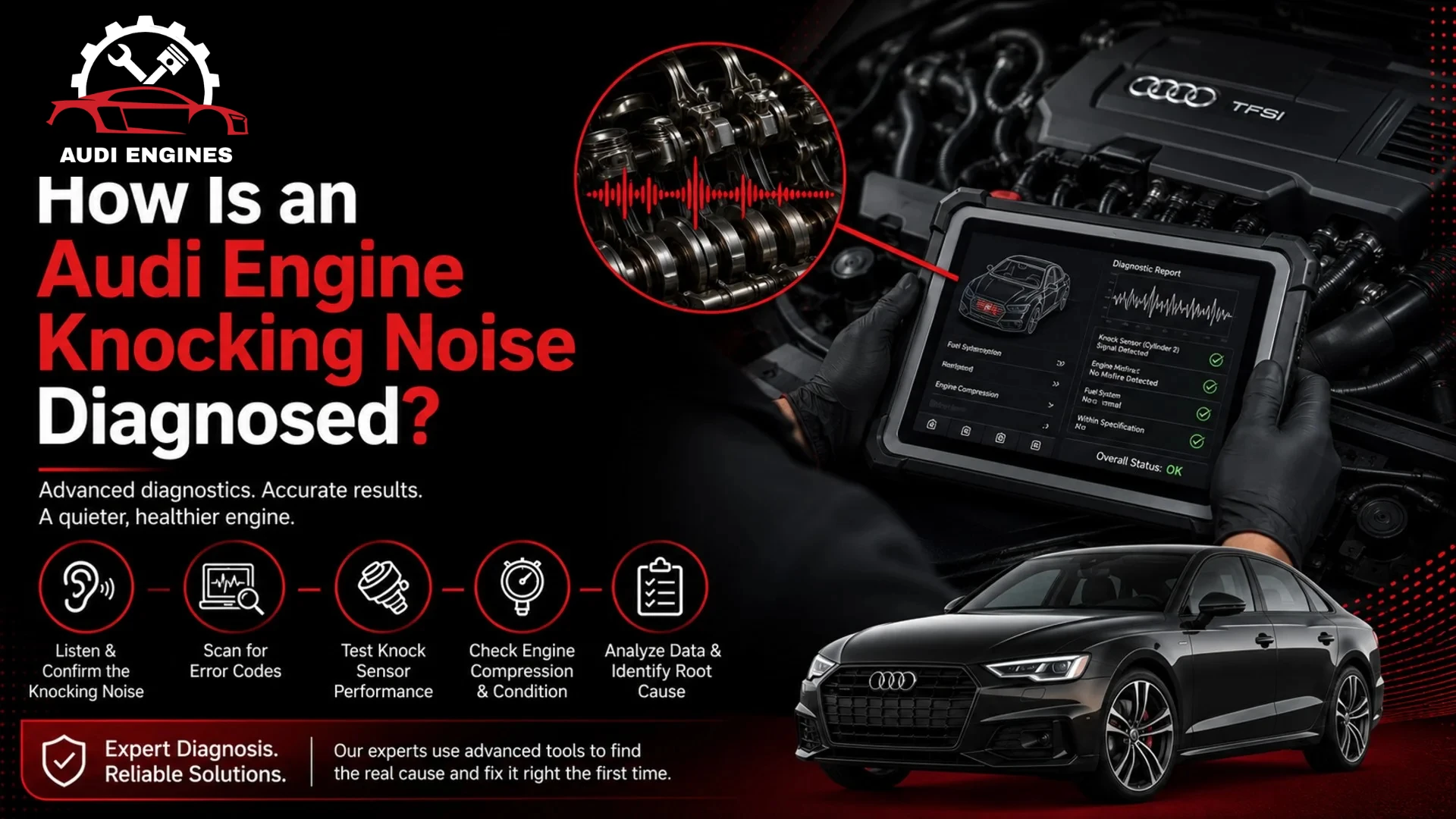
Guesswork is expensive when it comes to engine work. A proper diagnosis narrows down the cause before any parts are ordered or work is booked in, which is exactly where a lot of drivers get burned by shops that quote for a guess rather than a confirmed fault.
What a Proper Diagnostic Check Involves (VCDS, OBD-II, Compression Test)
A thorough diagnostic process typically includes several layers, not just plugging in a code reader and reading whatever comes up:
- OBD-II fault code scanning — a starting point, but codes describe symptoms, not root causes
- VCDS (VAG-COM) diagnostics — Audi-specific software that reads live knock sensor data, ignition timing corrections, and fault history in far more depth than generic OBD-II tools
- Compression testing — measures how well each cylinder holds pressure, helping identify worn rings, valves, or piston damage
- Leak-down testing — pinpoints exactly where compression is being lost (rings, valves, or head gasket)
- Borescope inspection — a camera inserted through the spark plug hole to visually inspect cylinder walls and piston crowns without dismantling the engine
- Listening with a mechanic's stethoscope — old-fashioned but still one of the fastest ways to isolate where on the engine a noise is coming from
This layered approach is exactly the gap in most competitor content, a lot of guides tell you the noise "might be low oil" and stop there. Actually confirming it means combining live sensor data with physical testing.
Can You Drive an Audi With a Knocking Engine?
Short answer: it depends entirely on the cause, but it's not a risk worth taking on assumption.
- If the noise is a light tick or tap that doesn't change with RPM, it's usually safe to book a diagnostic appointment in the near term rather than immediately.
- If the noise is a deep, rhythmic knock that increases with revs, particularly if it's accompanied by a warning light, dropping oil pressure, or reduced power, stop driving and arrange diagnosis as soon as possible. Continuing to drive on genuine rod knock can turn a bearing job into a full engine replacement within a short distance.
When a Noise Isn't the Engine at All (DSG, Turbo, Engine Mounts)
Not every noise that sounds like it's coming from the engine bay is actually the engine. A few common culprits get mistaken for engine knock:
- DSG gearbox noise — a mechanical clatter or whine at idle that's transmission-related, not engine-related
- Turbocharger wastegate rattle — a distinct metallic rattle, particularly noticeable on deceleration
- Worn engine mounts — can cause knocking or clunking sounds during acceleration or gear changes as the engine shifts more than it should
- Heat shields or exhaust components — loose brackets vibrating against other metal parts, often the least expensive cause on this entire list
This is exactly why proper diagnosis matters before any repair quote is accepted, the same symptom description ("a knocking noise when I accelerate") can point to a £50 fix or a £5,000 one.
Fixing an Audi Engine Knock, Repair, Cost & Replacement Options
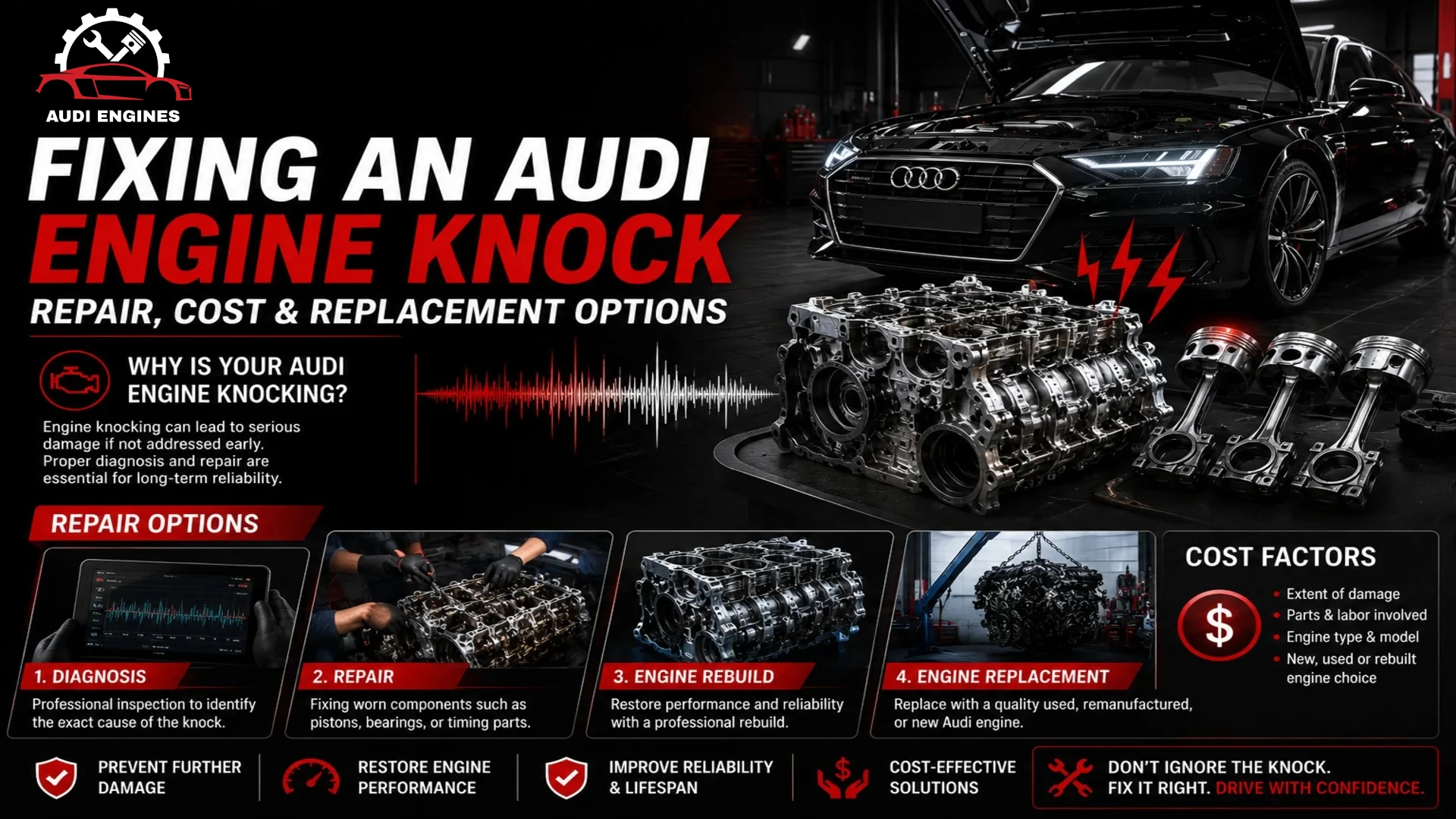
Once the cause is confirmed, the next question is always the same: repair, or replace?
Repair Costs by Cause (Bearings, Timing Chain, Sensor)
Costs vary significantly depending on the model, engine, and labour required to access the affected component:
Cause | Typical Repair Complexity | Relative Cost |
| Knock sensor replacement | Low, often accessible without major disassembly | Lowest |
| Timing chain tensioner | Moderate, accessible but labour-intensive on some engines | Low–Moderate |
| Carbon build-up (walnut blasting) | Moderate, specialist cleaning process | Moderate |
| Timing chain and guides | Higher, often requires significant disassembly | Moderate–High |
| Rod bearing replacement | High, requires opening the bottom end of the engine | High |
| Engine replacement | Highest, full engine swap | Highest |
As a general rule, sensor and timing component repairs sit in the hundreds-of-pounds range, while bottom-end work involving bearings, pistons, or the crankshaft moves into the thousands, which is exactly why an accurate diagnosis before committing to work matters so much.
When Repair No Longer Makes Sense, Replacement Engines Explained
There's a genuine tipping point where repairing an existing engine costs more, and carries more risk, than simply replacing it, particularly on higher-mileage vehicles where one worn component often signals others aren't far behind.
Remanufactured vs Used Audi Engines, Which Is Right for You?
- Remanufactured engines are rebuilt to factory tolerances with new wear components (bearings, seals, gaskets) fitted throughout. They typically come with the strongest warranty and the most predictable long-term reliability, at a higher upfront cost than a used unit.
- Used engines are sourced from donor vehicles, tested for compression and general condition, and cost less upfront, a sensible option on older vehicles where minimising spend makes more financial sense than a full rebuild.
The right choice usually comes down to the vehicle's age, mileage, and how long you plan to keep it, a conversation worth having with a specialist before committing either way.
Preventing Future Knocking With Regular Maintenance
A large proportion of engine knock is preventable with consistent maintenance rather than reactive repair:
- Stick to manufacturer-recommended oil change intervals, don't stretch them, particularly on turbocharged, direct-injection engines
- Use the correct oil viscosity and specification for your specific engine, not just "whatever's cheapest"
- Address small noises early, a light tick investigated today is cheaper than a knock ignored for six months
- Use fuel that meets the manufacturer's minimum octane recommendation
- Have carbon build-up checked and cleaned periodically on direct-injection TFSI engines, particularly past 60,000–80,000 miles
Get a Diagnosis or Quote From an Audi Engine Specialist
If your Audi is making a noise you're not sure about, the safest next step is a proper diagnostic check, not a guess based on a forum thread or a generic mechanic unfamiliar with Audi-specific engine families.
At Audi Engines, we work specifically with Audi engines across the UK, from diagnosing knocking, ticking, and tapping noises to supplying and fitting remanufactured and used replacement engines when repair no longer makes financial sense. Whether you need a diagnostic check, a repair quote, or a full replacement engine, get in touch and we'll talk you through the right option for your specific vehicle and budget.
Frequently Asked Questions
What causes Audi engine knocking?
The most common causes are worn rod bearings (rod knock), timing chain or tensioner wear, low oil pressure, carbon build-up on direct-injection engines, and less commonly, a faulty knock sensor or incorrect fuel octane.
Is engine knocking serious?
It depends on the cause. A light tick from the valve train is far less urgent than a deep, rhythmic knock from worn bearings, which can rapidly worsen if the vehicle keeps being driven.
Can low oil cause knocking?
Yes. Low oil pressure reduces lubrication to the rod bearings, increasing clearance and producing the classic deep knocking sound associated with rod knock.
Can bad fuel cause engine knocks?
Yes, particularly using fuel below the manufacturer's recommended octane rating, which increases the risk of detonation (fuel igniting before the spark plug fires as intended).
Can carbon buildup cause knocking?
Not directly, but it contributes to rough running, misfires, and reduced combustion efficiency, which can produce knocking-like symptoms under load.
Can a timing chain cause knocking?
Yes. A stretched chain or failing tensioner creates slack, producing a rattling or tapping noise, particularly noticeable at start-up.
Is piston slap dangerous?
It's less urgent than rod knock but shouldn't be ignored, since it indicates worn cylinder bores or piston skirts that will typically worsen over time.
What is rod knock?
Rod knock is a deep, rhythmic knocking noise caused by excessive clearance between a connecting rod and the crankshaft bearing, usually from bearing wear or oil starvation.
Can a knock sensor fail?
Yes. A failed knock sensor can prevent the ECU from correctly adjusting ignition timing, which can itself cause knocking or reduce engine protection against genuine detonation.
Should I drive with engine knocking?
Light, RPM-independent noises can usually wait for a scheduled diagnostic appointment. A deep knock that worsens with revs, especially alongside warning lights or reduced power, should be checked immediately rather than driven on.
How do you diagnose engine knock?
Through a combination of OBD-II and VCDS diagnostics, live knock sensor data, compression and leak-down testing, and in some cases a borescope inspection of the cylinders.
Does premium fuel stop knocking?
Only if the cause is genuinely fuel-related, such as running below the recommended octane rating. It won't resolve mechanical wear like bearing or timing chain issues.
Does engine overheating cause knocks?
It can contribute to it, since overheating affects oil viscosity, bearing clearances, and can accelerate wear on internal components.
Is knocking worse when cold?
Often, yes, particularly with piston slap, since oil is thicker and slower to reach full pressure when the engine is cold, temporarily increasing clearances.
Engine knocking is rarely a mystery once it's properly diagnosed, the noise itself is usually telling you exactly where to look, if you know how to read it. What matters most is acting on it early, getting an accurate diagnosis rather than a guess, and making the repair-versus-replace decision based on real data rather than worst-case assumptions.
If your Audi's making a noise that's got you worried, get it checked properly. Reach out to Audi Engines for a diagnostic assessment or a straightforward quote on repair or replacement — before a small noise becomes a much bigger bill.