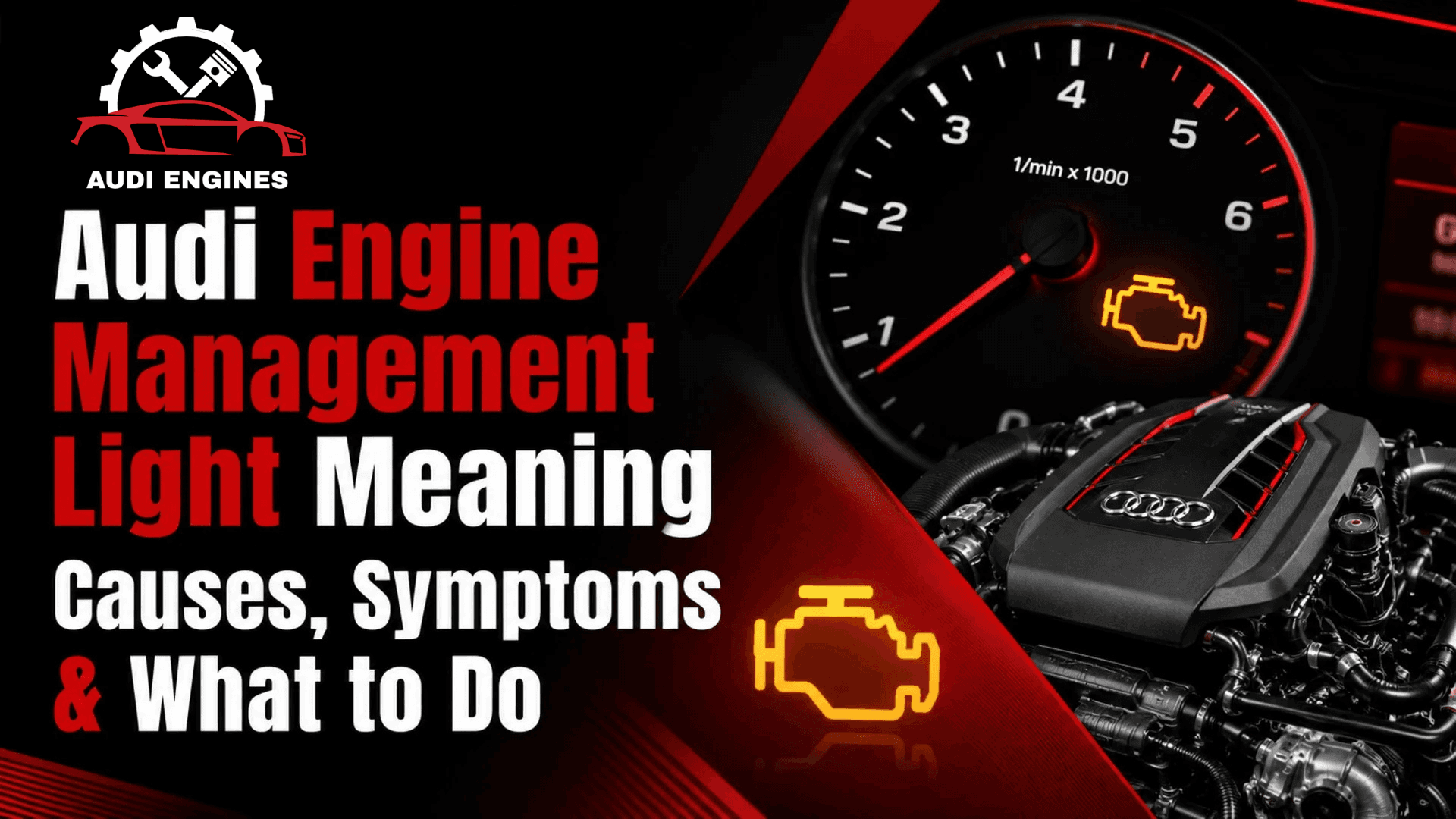
Audi Engine Management Light Meaning Causes, Symptoms & What to Do
A small orange engine symbol just lit up on your dash, and now you're stuck between two instincts, pull over immediately, or carry on and hope it sorts itself out. Neither feels right, and that's because the Audi engine management light doesn't come with an instruction manual. It just comes on.
A small orange engine symbol just lit up on your dash, and now you're stuck between two instincts, pull over immediately, or carry on and hope it sorts itself out. Neither feels right, and that's because the Audi engine management light doesn't come with an instruction manual. It just comes on.
Here's the reassuring part: in most cases, this light isn't telling you your engine is about to fail. It's telling you the engine control unit has detected something outside normal parameters, and it wants that checked before a small issue becomes an expensive one. The tricky part is knowing which category your situation falls into.
This guide walks through exactly what the Audi engine management light means, what typically causes it, how Audi's diagnostic system actually works, and what it's likely to cost to put right, whether you're driving an A3, A4, A5, Q5, or Q7.
What Does the Audi Engine Management Light Mean?
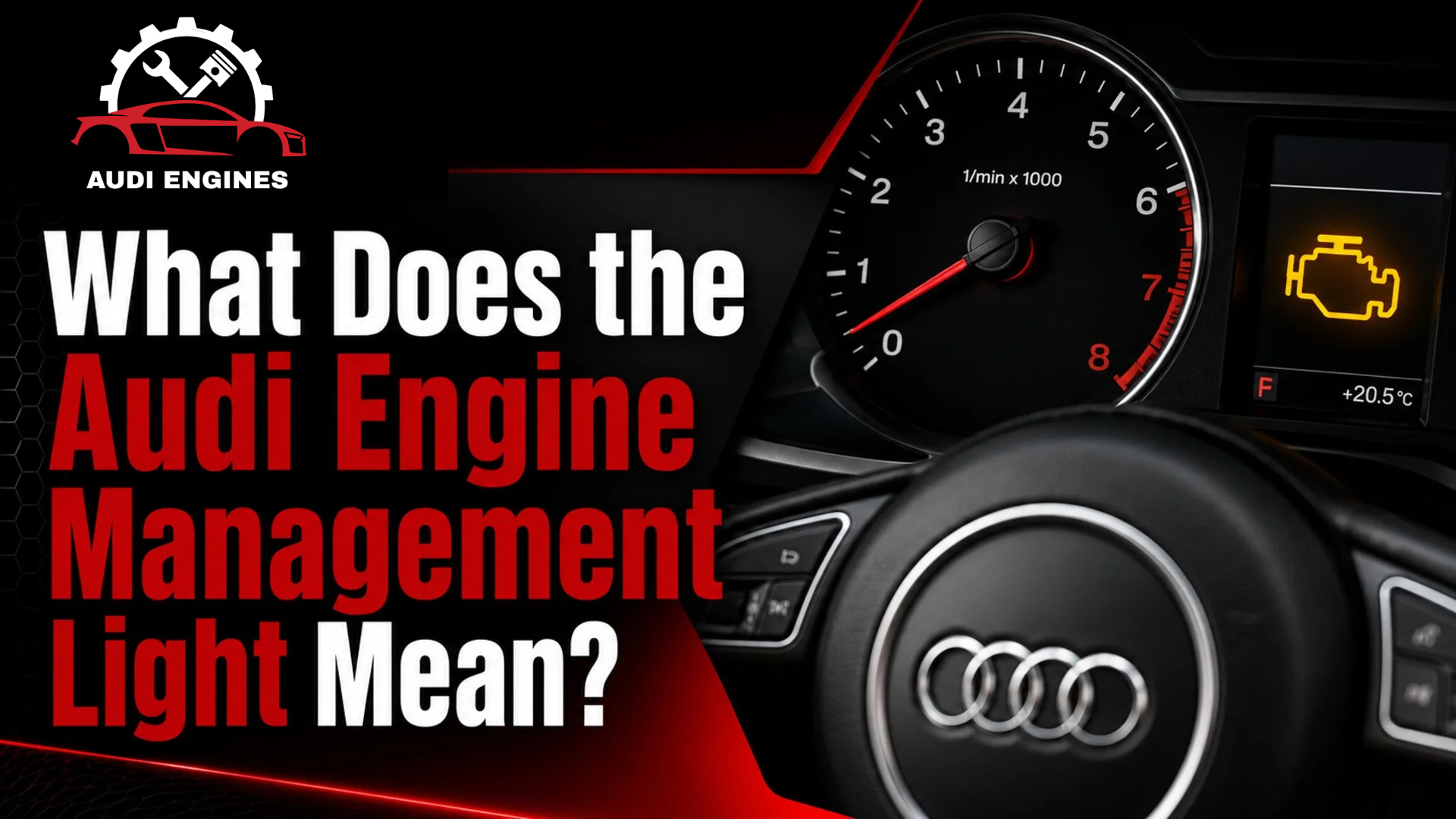
The engine management light, also called the check engine light, malfunction indicator lamp (MIL), or engine fault light, is part of your Audi's onboard diagnostics (OBD-II) system. When the engine control unit (ECU) detects a reading outside its expected range, from a sensor, actuator, or emissions component, it logs a diagnostic trouble code and illuminates this light to flag it.
Think of it as your Audi's way of raising a hand. It doesn't tell you exactly what's wrong on its own, that requires a diagnostic scan, but its behaviour (colour, whether it's flashing or solid) gives you a strong clue about urgency.
Amber vs Flashing vs Red, What Each Warning Level Means
Not all engine warning lights carry the same weight, and this distinction matters more than most drivers realise.
- Amber/orange, solid light: This is the most common presentation. It indicates a fault has been detected, but it's generally not an immediate danger. You can typically continue driving, though you should get it diagnosed soon rather than ignoring it indefinitely.
- Flashing amber light: This is more serious. A flashing engine management light usually points to an active engine misfire, which can allow unburnt fuel into the exhaust system and damage the catalytic converter within minutes of continued driving. Reduce speed, avoid heavy acceleration, and get it checked as soon as possible.
- Red warning light: Rare for the engine management light specifically, but if paired with an oil pressure or temperature symbol, a red light demands you stop the vehicle safely and switch off the engine immediately. This indicates a fault severe enough to risk serious engine damage.
Engine Management Light vs EPC Light, What's the Difference?
These two often confuse Audi owners because they can appear together, and it's a distinction most competitor guides skip entirely.
The EPC (Electronic Power Control) light relates specifically to the throttle system, cruise control, and traction control components, essentially anything affecting how power is delivered from the engine to the wheels. The engine management light is broader, covering the entire engine management system, including fuel delivery, ignition, emissions, and sensor faults.
If both lights appear simultaneously, it often points to a related fault, commonly a throttle body or sensor issue affecting both systems. If only the EPC light appears, the issue is more likely isolated to power delivery components rather than the engine itself.
Can I Drive My Audi With the Engine Management Light On?
In most cases involving a solid amber light with no accompanying symptoms, yes, you can drive cautiously to a garage for diagnostics. However, this comes with real caveats worth taking seriously.
You should stop driving and seek immediate diagnostics if the light is accompanied by:
- Reduced power or the car entering "limp mode"
- Rough idling, stalling, or noticeable misfiring
- Unusual noises, particularly knocking or ticking
- A burning smell or visible smoke
- Loss of steering assistance or braking response
Real-world scenario: An Audi A4 TDI owner noticed the engine management light appear after refuelling at a motorway services. With no other symptoms, the car drove normally for the 40-mile journey home. A diagnostic scan the next day revealed a loose fuel cap, one of the simplest and cheapest causes on this list, resolved without any parts replacement. Not every illuminated light means expensive trouble, but you won't know until it's scanned.
Common Causes of the Audi Engine Management Light
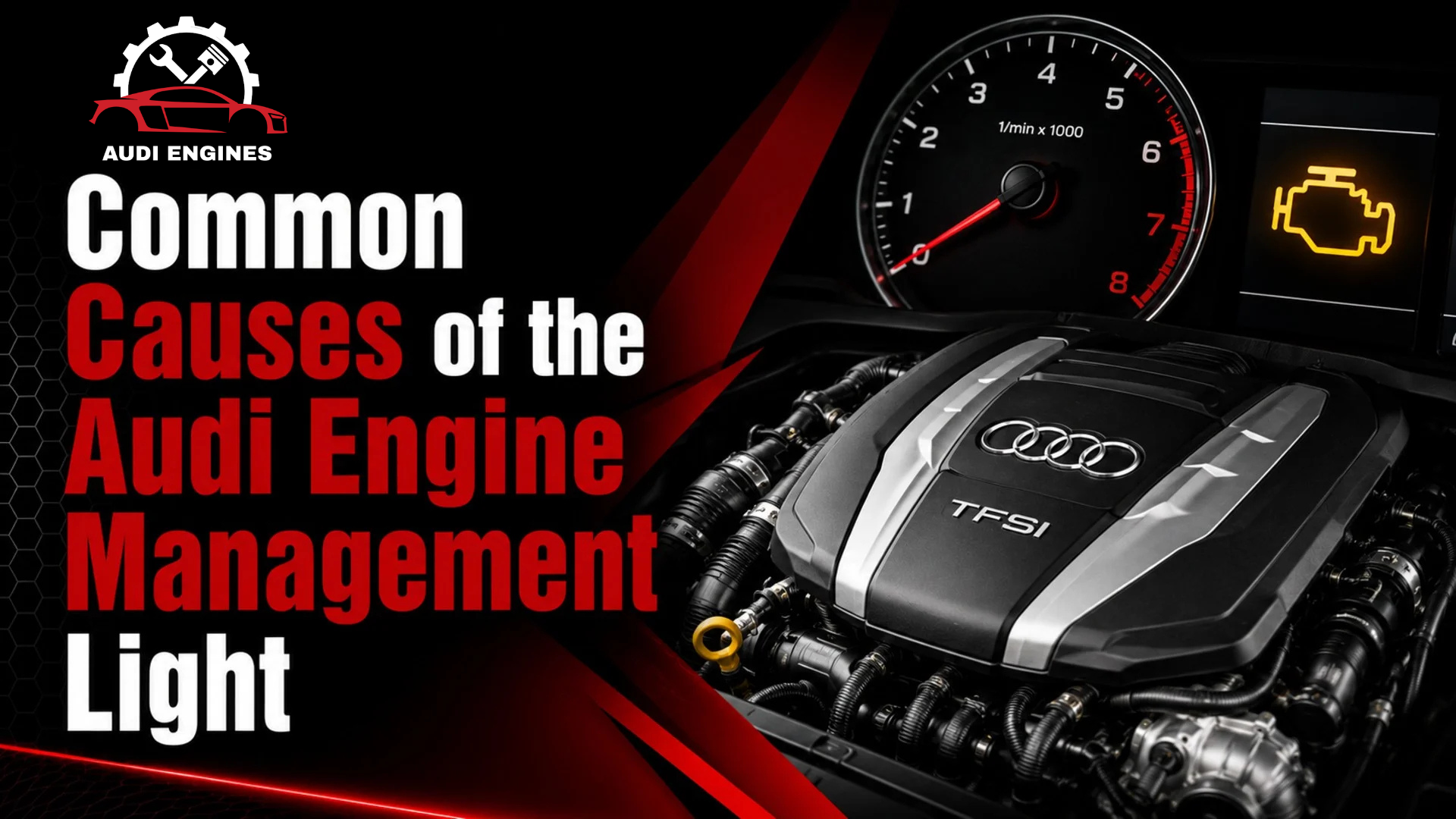
The engine management light can be triggered by dozens of different faults, ranging from a five-minute fix to a component replacement. Below are the causes we see most often across Audi's petrol (TFSI) and diesel (TDI) range.
Faulty Oxygen (Lambda) Sensor
The oxygen sensor, also called the lambda sensor, monitors the air-fuel ratio in the exhaust and reports back to the ECU to fine-tune combustion. When it fails or degrades, the engine control module can't maintain the correct fuel trim, which often triggers a lean or rich condition, commonly logged as a P0171 code (system too lean).
Symptoms include reduced fuel economy, rough idling, and occasionally a sulphur-like exhaust smell. Left unaddressed, a failing oxygen sensor can accelerate wear on the catalytic converter, turning a moderate repair into a considerably more expensive one.
Mass Air Flow (MAF) Sensor Problems
The MAF sensor measures the volume of air entering the engine, allowing the ECU to calculate the correct fuel injection quantity. A dirty or failing MAF sensor sends inaccurate readings, which can cause hesitation during acceleration, poor idle quality, and reduced fuel economy.
In many cases, a MAF sensor issue is caused by contamination rather than outright failure, dirt or oil residue from an aftermarket air filter, for example, and can sometimes be resolved with a specialist cleaning rather than a full replacement.
Ignition Coil & Spark Plug Failure (TFSI/Petrol)
On TFSI petrol engines, worn spark plugs or a failing ignition coil are among the most frequent causes of an engine misfire, often logged as a P0300 code. You'll usually notice this as a rough idle, a distinct loss of power under acceleration, or the engine "shaking" at idle.
Ignition coils typically fail one at a time rather than simultaneously, which is why a diagnostic scan pinpointing the specific cylinder affected is far more useful than guessing and replacing parts blindly.
Diesel Particulate Filter (DPF) Blockage (TDI/Diesel)
If you drive a TDI diesel Audi and do a lot of short journeys or low-speed city driving, DPF-related warnings are a common culprit. The diesel particulate filter traps soot from the exhaust, and it needs periodic regeneration, essentially burning off that trapped soot, which typically requires sustained higher-speed driving to complete.
If regeneration doesn't happen regularly enough, the DPF becomes blocked, triggering both a DPF warning and often the engine management light together. A blocked filter can eventually push the engine into limp mode to protect itself.
AdBlue & SCR System Faults
Many modern Audi TDI models use AdBlue (DEF fluid) as part of the Selective Catalytic Reduction (SCR) system, which reduces NOx emissions. Low AdBlue levels, a faulty AdBlue sensor, or an SCR system fault can all trigger a warning, and importantly, allowing AdBlue to run completely empty can restrict engine performance or prevent restarting as an emissions safeguard.
Checking your AdBlue level is a simple task worth doing regularly, particularly before long journeys, since running low is entirely preventable.
Loose or Faulty Fuel Cap
It sounds almost too simple to be true, but a loose or damaged fuel cap is genuinely one of the most common causes of an illuminated engine management light. The fuel cap maintains pressure within the EVAP (evaporative emissions) system, and even a partial seal failure can trigger a fault code.
Why This Happens After Refuelling or a Recent Service
If your light appeared shortly after filling up or after a recent service, this is the first thing worth checking. Simply ensure the cap is tightened until it clicks, and the light may clear itself after a few drive cycles once the ECU confirms the pressure reading is back to normal. If it persists, the cap's seal may need replacing.
How Audi Engine Diagnostics Work
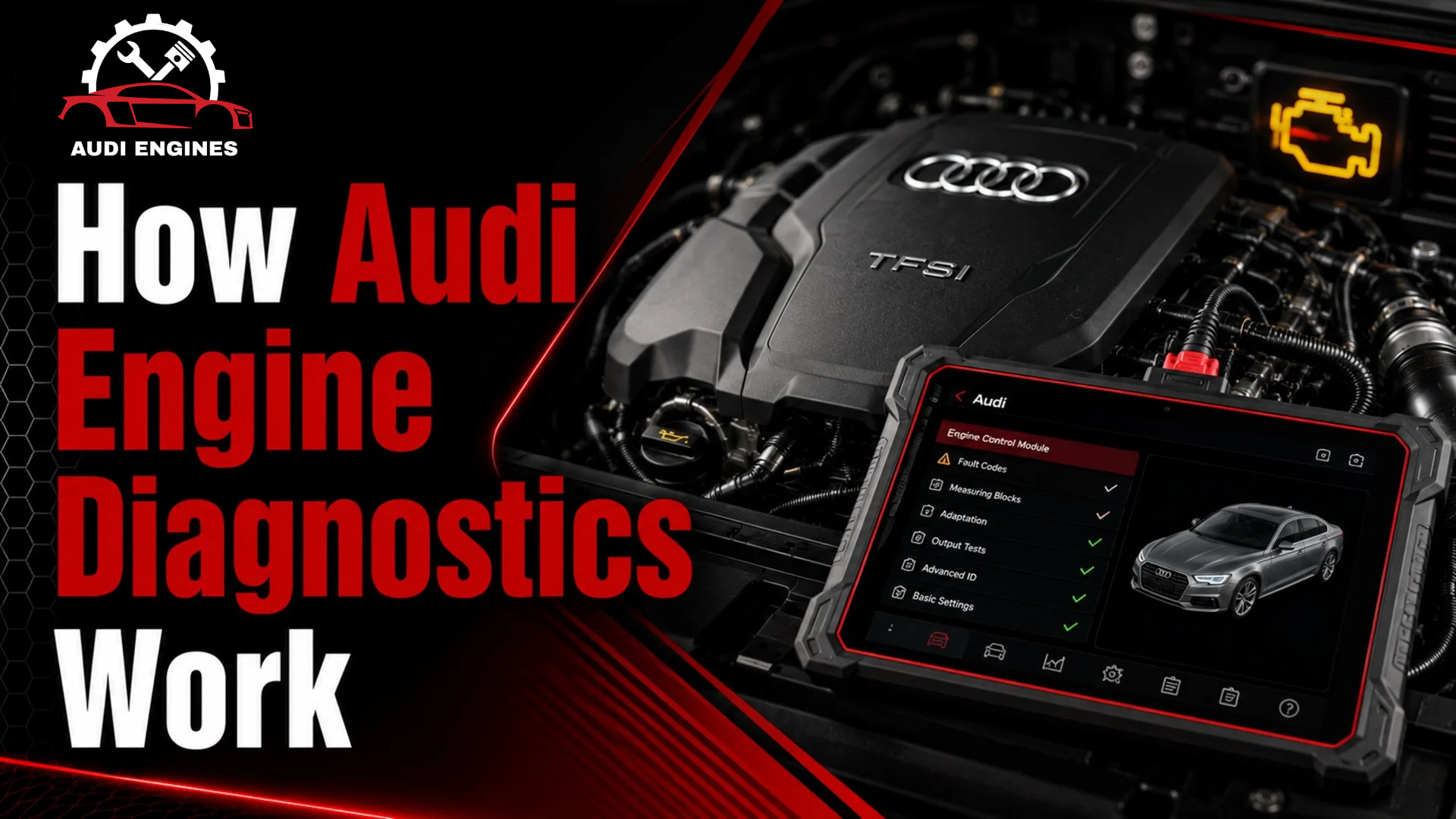
Understanding what happens during a proper diagnostic scan helps you make sense of what a technician tells you, and helps you spot the difference between a thorough diagnosis and a rushed guess.
Understanding Diagnostic Trouble Codes (DTCs)
When the engine management light comes on, the ECU stores one or more diagnostic trouble codes in its fault memory. These codes follow a standardised format (starting with P for powertrain-related faults) and point technicians toward the affected system or component.
Common Audi Fault Codes Explained (P0171, P0300, P0420)
While hundreds of possible codes exist, a handful appear far more frequently than others on Audi models:
Code | Meaning | Common Cause |
| P0171 | System too lean (Bank 1) | Vacuum leak, faulty MAF or oxygen sensor |
| P0300 | Random/multiple cylinder misfire | Worn spark plugs, failing ignition coil |
| P0420 | Catalytic converter efficiency below threshold | Failing catalytic converter, often preceded by an oxygen sensor fault |
| P0401 | EGR flow insufficient | Blocked or faulty EGR valve |
| P2002 | DPF efficiency below threshold | Blocked diesel particulate filter |
It's worth noting that a code points to a symptom, not always the root cause. A P0420 catalytic converter code, for example, is frequently the downstream result of a failing oxygen sensor rather than the converter itself being faulty, which is exactly why proper diagnostic interpretation matters more than simply reading the code off a scanner.
OBD-II Scanning, What a Professional Diagnostic Reveals
A basic OBD-II scanner, the kind widely available for home use, will read stored fault codes and give you a general starting point. A professional diagnostic scan, using Audi-specific diagnostic software, goes considerably further, it can access live sensor data, check for manufacturer-specific fault codes beyond generic OBD-II codes, and identify patterns across related systems that a basic scanner would miss entirely.
This is particularly relevant on Audi vehicles, where the engine management system is tightly integrated with other electronic modules. A specialist diagnostic can distinguish between a genuine sensor failure and a wiring or connector issue causing an inaccurate reading, a distinction that directly affects repair cost.
How to Reset the Engine Management Light Safely
Once the underlying fault has been genuinely repaired, the engine management light typically resets itself after a number of successful drive cycles, or it can be cleared manually using diagnostic equipment.
Why Resetting Without Fixing the Cause Isn't a Real Solution
It's technically possible to clear the fault code and switch the light off without repairing anything. Some cheap high-street services do exactly this. But the underlying issue remains, and the light will almost always return once the ECU detects the same fault condition again, sometimes within a single journey.
Worse, clearing codes without addressing the cause can mask a genuine problem long enough for it to escalate, turning what might have been a straightforward sensor replacement into engine or emissions system damage. If a garage offers to "just reset the light" without diagnosing what caused it, that's a signal to ask more questions.
Engine Management Light by Model, MOT Impact & Repair Costs
Common Issues by Audi Model (A3, A4, A5, Q5, Q7)
While causes vary by individual vehicle, certain patterns show up more frequently on specific Audi models:
- Audi A3: Ignition coil failures and MAF sensor faults are commonly reported, particularly on higher-mileage TFSI engines.
- Audi A4: DPF-related warnings are frequent on TDI variants used mainly for shorter journeys, alongside occasional EGR valve issues.
- Audi A5: Oxygen sensor faults and occasional turbocharger-related warnings, particularly on performance-focused variants driven hard.
- Audi Q5: AdBlue and SCR system faults appear more often here than on smaller models, likely linked to typical usage patterns and towing.
- Audi Q7: Given its size and diesel-heavy range, DPF and EGR issues are the most commonly diagnosed causes.
These are tendencies rather than certainties, the only reliable way to know your specific cause is a proper diagnostic scan.
Will the Engine Management Light Fail an MOT?
Yes, in most cases. If the engine management light is illuminated at the time of your MOT test, it will result in a fail under current UK testing standards, since it indicates the emissions control system may not be functioning correctly. This applies regardless of how minor the underlying cause turns out to be, even a loose fuel cap will fail the test if the light is still on.
This makes it worth resolving the issue well before your MOT is due, rather than discovering it on test day and needing a retest.
Typical Audi Diagnostic & Repair Costs in the UK
Costs vary significantly depending on the fault, but here's a realistic range based on commonly diagnosed issues:
Issue | |
| Diagnostic scan | |
| Loose/faulty fuel cap replacement | |
| Oxygen sensor replacement | |
| MAF sensor replacement/cleaning | |
| Ignition coil replacement (per coil) | |
| DPF cleaning | |
| Catalytic converter replacement | |
| AdBlue sensor/pump repair |
A proper diagnostic scan should always come first. Without it, there's a real risk of paying to replace parts that weren't actually faulty, while the genuine cause remains unaddressed.
Book an Audi Engine Diagnostic Check Today
If your engine management light has come on, guessing isn't worth the risk to your engine, your MOT, or your wallet. A proper diagnostic scan using Audi-specific equipment gives you a clear answer, not just a generic code and a shrug. Our specialists work on Audi engines specifically, day in and day out, which means faster, more accurate diagnosis than a general garage relying on basic OBD-II tools.
Frequently Asked Questions
What does the Audi engine management light mean?
It indicates the engine control unit has detected a fault outside normal parameters, ranging from a minor sensor issue to a more significant mechanical or emissions problem. A diagnostic scan is needed to identify the exact cause.
Can I drive with my Audi check engine light on?
Generally yes, if the light is solid and there are no other symptoms like power loss or unusual noises. If the light is flashing or accompanied by rough running, stop driving and get it checked immediately to avoid further damage.
Why is my Audi engine light flashing? A flashing engine management light typically indicates an active engine misfire, which risks damaging the catalytic converter if driving continues. Reduce speed and seek diagnosis as soon as possible.
What causes the Audi engine warning light?
Common causes include faulty oxygen or MAF sensors, worn ignition coils or spark plugs, DPF blockages on diesel models, AdBlue system faults, and simple issues like a loose fuel cap.
What is EPC on an Audi?
EPC stands for Electronic Power Control, and it relates to the throttle and power delivery system. It's distinct from the engine management light, though both can appear together if a related sensor or component is affected.
How do I reset my Audi engine light?
The light typically resets automatically after the underlying fault is repaired and the vehicle completes several successful drive cycles, or it can be cleared manually with diagnostic equipment once the issue is fixed.
Will the engine management light fail an MOT?
Yes. An illuminated engine management light at the time of testing results in an MOT fail, regardless of how minor the underlying cause is.
Can a low battery cause the engine light to come on?
Yes, a weak or failing battery can cause voltage fluctuations that affect sensor readings and trigger false fault codes, particularly after a recent battery replacement or jump-start.
Can a bad fuel cap trigger the engine management light?
Yes, a loose or damaged fuel cap is one of the most common and cheapest causes, as it affects pressure within the EVAP emissions system.
Does the engine light mean serious engine damage?
Not necessarily. Many causes, like a loose fuel cap or a failing sensor, are minor and inexpensive to fix. However, ignoring the light for an extended period can allow a minor fault to develop into something more serious.
Should I stop driving immediately when the light comes on?
Only if the light is flashing, red, or accompanied by symptoms like power loss, unusual noises, or a burning smell. A solid amber light with no other symptoms generally allows for cautious driving to a garage.
What are the most common Audi fault codes?
P0171 (system too lean), P0300 (cylinder misfire), and P0420 (catalytic converter efficiency) are among the most frequently diagnosed codes across Audi's petrol and diesel range.
Can a faulty oxygen sensor cause the engine light to come on?
Yes, a failing oxygen sensor is one of the most common triggers, as it disrupts the air-fuel ratio calculation the ECU relies on for efficient combustion.
Can a MAF sensor issue trigger the check engine light?
Yes, a dirty or failing mass air flow sensor sends inaccurate air intake data to the ECU, commonly causing hesitation, poor idling, and an illuminated engine management light.
Final Thoughts: Don't Let the Light Become a Guessing Game
An illuminated engine management light isn't something to panic over, but it's also not something worth ignoring indefinitely. The gap between "a £20 fuel cap fix" and "a £900 catalytic converter replacement" often comes down to one thing: how quickly the fault is diagnosed and addressed properly.
Whether you're driving an A3, A4, A5, Q5, or Q7, petrol or diesel, the safest approach is the same, get a proper diagnostic scan rather than guessing, resetting the light without a fix, or hoping it clears itself.
If your Audi's engine management light has come on, our specialists can run a full diagnostic scan using Audi-specific equipment, identify the exact cause, and give you a clear, honest repair recommendation before you spend a penny on parts. Get in touch to book your diagnostic check and get back on the road with confidence.