
Audi Engine Oil Pressure Warning: Causes, Symptoms and Solutions
A red oil symbol has just lit up on your Audi's dashboard, and your stomach has dropped with it. You are wondering whether the engine is about to be wrecked, whether you can limp home and whether this is a cheap fix or a very expensive one.
A red oil symbol has just lit up on your Audi's dashboard, and your stomach has dropped with it. You are wondering whether the engine is about to be wrecked, whether you can limp home and whether this is a cheap fix or a very expensive one.
Start with the safety answer. If the red oil pressure warning appears, stop safely and switch off the engine. Do not keep driving with it on. Driving without adequate oil pressure can cause serious engine damage within minutes. The good news is that the cause is not always the oil pump. A faulty sensor, the wrong oil, a blocked filter or a restricted pickup strainer can all trigger the same Audi oil pressure warning light.
This guide explains what the warning means, what to do first, what causes low oil pressure, how it is properly diagnosed and what affects the repair cost. It also covers when to call a specialist at Vogue Fix My Motor.
What Does the Audi Engine Oil Pressure Warning Mean and What Should You Do First?
Your Audi's engine relies on a pressurised flow of oil. The oil pump draws oil from the sump, pushes it through the oil filter and sends it along oil galleries to the crankshaft and camshaft bearings, the cylinder head and the turbocharger. That film of oil stops metal touching metal.
The red oil pressure warning tells you the engine's monitoring system has detected pressure below the level it needs. It is an engine lubrication warning, not a routine reminder.
What to do when it appears:
- Stop safely. Pull over as soon as it is safe and switch off the engine.
- Check the oil level. Wait a few minutes for the oil to settle, then check it as described in your owner's manual.
- Do not repeatedly restart the engine. Restarting to see whether the light goes out can cause damage.
- Arrange professional help. If the warning stays on with a correct oil level, call a recovery service and have the car taken to a garage.
What Is the Difference Between an Oil Level Warning and an Oil Pressure Warning?
Many owners assume the two are the same. They are not, and the difference matters.
Oil level warning | Red oil pressure warning | |
| What it means | The quantity of oil is low | The pressure in the lubrication system is too low |
| Urgency | Needs attention soon, depending on the message | Stop the engine and investigate |
| First action | Check and top up the oil | Stop, switch off, check the level, seek help |
| Typical causes | Oil consumption or a leak | Pump, pickup, blockage, sensor fault or internal wear |
The key point is this: a correct oil level does not prove the pressure is adequate. An engine can hold the right amount of oil and still have low pressure if the pump is weak, the pickup strainer is restricted or the bearings are worn. Topping up deals with the level. It does nothing for a pressure fault.
Can You Drive an Audi With the Oil Pressure Warning On, and What Happens If You Ignore It?
The short answer is no. A red oil pressure warning means you should not continue driving. A brief, dim flicker at idle on a hot engine is still a warning sign and deserves attention, but a steady or flashing red light means stop.
If you ignore it, the engine suffers in stages:
- Oil starvation. Parts that need a constant film of oil run dry.
- Excessive friction and heat. Components overheat from metal-to-metal contact.
- Bearing and camshaft damage. Crankshaft, connecting rod and camshaft bearings wear quickly.
- Turbocharger damage. The turbo spins at very high speed and depends on a steady oil feed.
- Engine seizure. In the worst case the engine locks solid.
Early action keeps the repair small. A sensor replacement or an oil and filter service is a very different bill from major internal engine work. If you are stranded, call recovery rather than driving on.
Why Is My Audi Showing Low Oil Pressure at Idle, When Hot or After an Oil Change?
Timing and circumstances give useful clues.
- At idle or when hot. Oil thins as it warms, so pressure drops. If the system is already marginal, perhaps from wear, a weak pump or a restricted pickup, the warning appears at idle when the engine is hot.
- After an oil change. The cause is often something simple: the wrong viscosity or specification, the wrong quantity, an incorrectly fitted oil filter or a disturbed pressure switch. It can also mean an existing pump or pickup problem was already present.
Do not assume an oil change caused the fault, and do not assume it is harmless. Tell your garage exactly when the warning appears.
What Causes Low Oil Pressure in an Audi and Is It Always the Oil Pump?
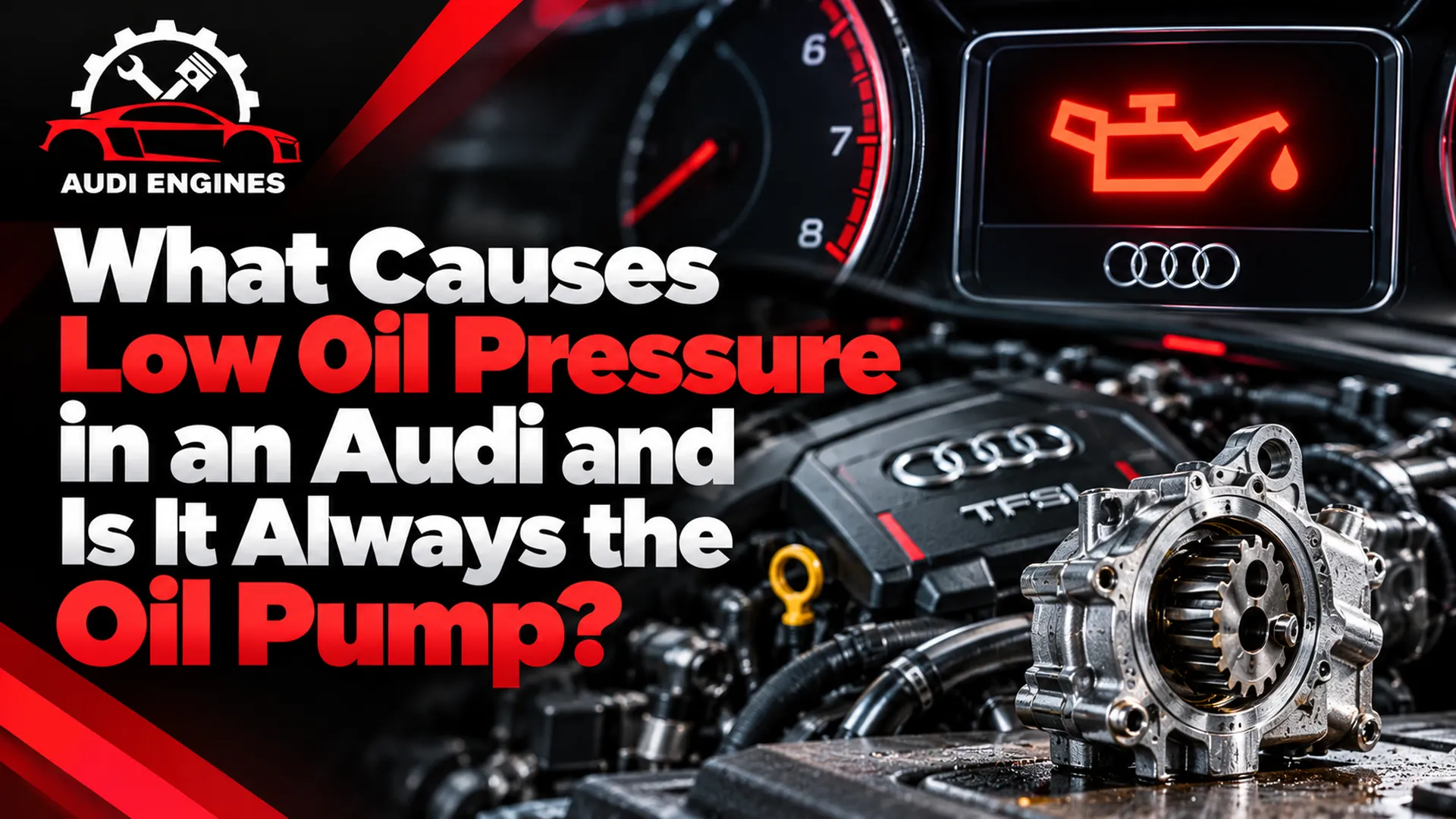
No. The oil pump is only one possible cause, and replacing it on a guess is an expensive mistake. Several problems produce the same Audi low oil pressure warning, and some are far cheaper to put right.
Can a Faulty Oil Pressure Sensor, Blocked Filter or Blocked Pickup Strainer Cause the Warning?
Yes, any of them can. These are the usual causes:
- A faulty oil pressure sensor, switch or wiring. The pressure is actually fine, but the signal reaching the instrument cluster is wrong.
- Wrong or degraded oil. Incorrect viscosity or an oil that has lost its properties cannot maintain pressure.
- A blocked or damaged oil filter. A restricted filter limits flow through the lubrication system.
- A restricted oil pickup pipe or strainer. The strainer feeds the oil pump, and if it clogs the pump cannot draw enough oil.
- A failing oil pump. Internal wear stops the pump building or holding pressure.
- Sludge and contamination. Dirty oil can clog passages and strainers.
- Worn crankshaft and camshaft bearings. Excess clearance lets oil escape too easily, so pressure falls.
- Oil leaks. Losing oil reduces what the pump has to work with.
Here is how those causes tend to present:
Likely cause | What it typically looks like | Usual repair direction |
| Faulty sensor or wiring | Warning with no noise or other symptoms | Test, then replace the sensor or repair the wiring |
| Wrong or poor-quality oil | Warning after an oil change or long service gap | Correct oil and filter service |
| Blocked oil filter | Warning that follows an overdue or faulty filter change | Replace the filter and recheck |
| Restricted pickup strainer | Low pressure that gets worse as the engine runs | Remove the sump and clean or replace the strainer |
| Failing oil pump | Low pressure, sometimes noise | Test, then replace the pump |
| Worn bearings | Knocking, low pressure when hot | Internal engine assessment |
The most important distinction is sensor fault versus genuine low pressure. A faulty sensor is a quick, inexpensive fix. Genuine low pressure is a mechanical problem that can destroy the engine. Without testing, you cannot tell them apart, and wrongly assuming a sensor fault is the dangerous mistake.
What Are the Symptoms of Low Engine Oil Pressure Beyond the Warning Light?
The warning light is often the first sign, but other symptoms can accompany it:
- A red or flashing oil symbol on the dashboard
- Knocking or rattling noises from the engine
- Unusual noise at idle
- Rising engine temperature
- Turbocharger whining or other noises
- Fluctuating oil pressure readings where the vehicle displays them
Any of these together with a red warning is a reason to stop immediately. Some drivers notice nothing except the light, so never dismiss it because the car feels normal.
Do Audi A3, A4, Q5 and Other Models Have Different Oil Pressure Problems?
They can. Faults vary by model, engine code and year, and not every engine shares the same failure pattern. An A3, A4, A5, A6, Q5 or Q7 may each have different lubrication components and different weak points, and the petrol TFSI and diesel TDI engines are not identical either.
That is why we never assume. We ask for your model, year and engine size so we can follow the checks that suit your specific car.
How Is Audi Engine Oil Pressure Diagnosed and Repaired?
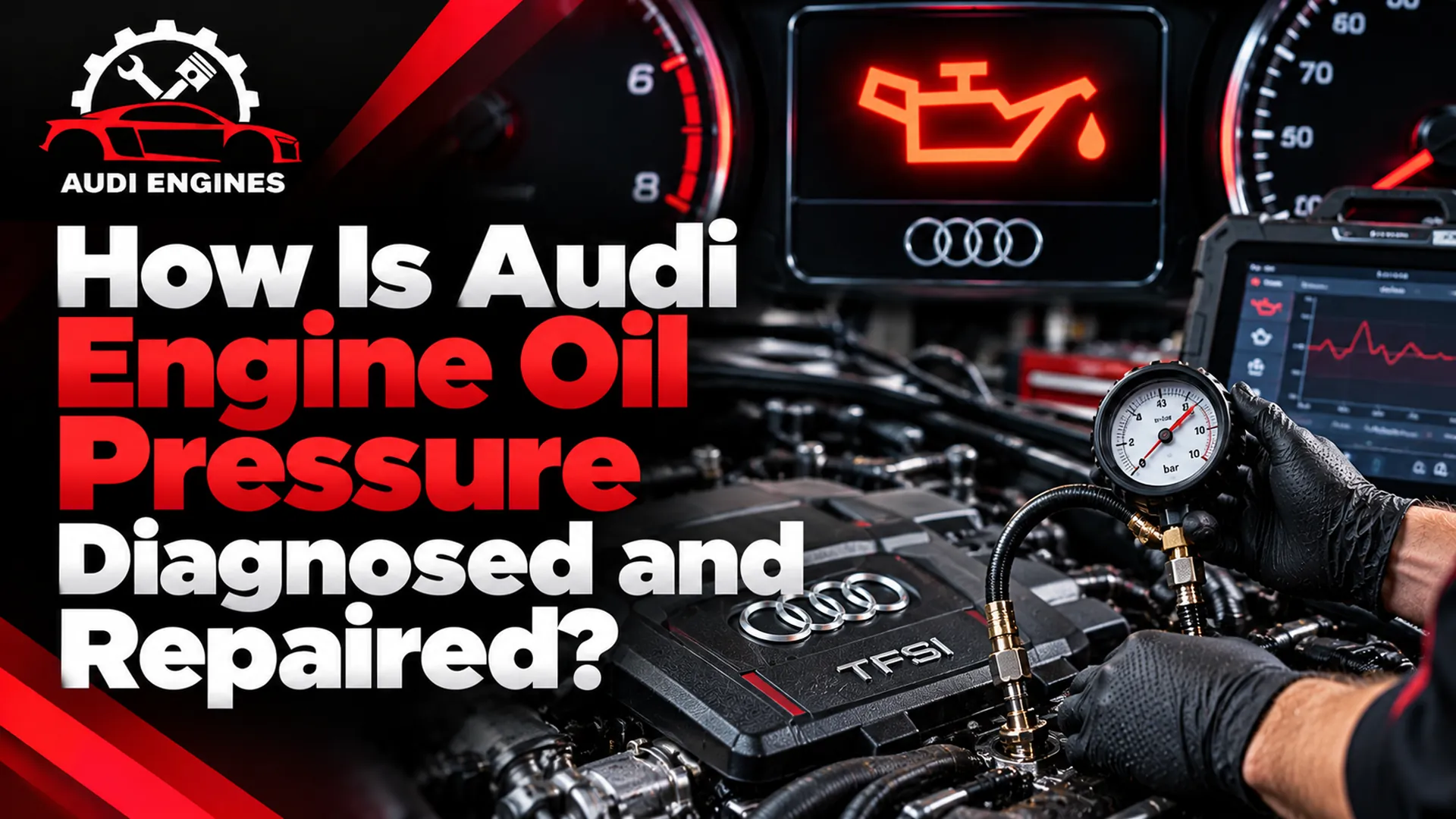
Good diagnosis starts with the simplest checks and moves towards the more involved. It prevents the common mistake of replacing an expensive part that was never the problem.
How Do Mechanics Diagnose Low Oil Pressure in an Audi Step by Step?
A proper Audi oil pressure diagnosis follows this order:
- Confirm the exact warning. Which symbol, colour and message appeared, and when?
- Check the oil level and condition. Look for dilution, contamination, sludge and the correct grade.
- Inspect for oil leaks. External leaks reduce the oil available to the system.
- Scan the fault codes. Read relevant engine and instrument cluster faults.
- Inspect the sensor and wiring. Check the connector, the wiring and the sensor signal.
- Measure actual pressure with a mechanical gauge. This compares true pressure against the specification for that engine at the right temperature.
- Inspect the oil pump, pickup strainer and lubrication system. If the pressure is genuinely low, the sump may need to come off.
- Check for bearing wear. Where the evidence points to internal damage, further inspection follows.
A mechanical pressure test is what settles the question of sensor or pump. It measures real pressure rather than relying on the dashboard signal.
Picture an Audi that shows a red oil warning after a recent oil change. The owner tops up the oil, and the light returns. A check finds the oil level is correct and the oil is the right grade. A pressure test shows the actual pressure is normal, but the sensor signal is erratic, and the wiring connector shows corrosion. Repairing the connection and replacing the sensor cures it. Had the owner replaced the oil pump on a guess, the expensive part would have made no difference.
Should You Replace the Sensor, Oil Pump or Pickup Strainer, or Is the Engine Beyond Repair?
The right repair follows the test result. This table frames the decision:
Test result | Typical repair direction | Why |
| Pressure normal, sensor signal wrong | Replace the sensor or repair the wiring | The lubrication system is healthy |
| Wrong or poor-quality oil, or blocked filter | Correct oil and filter service | Restoring clean oil restores flow |
| Strainer restricted or clogged | Clean or replace the strainer | The pump cannot draw enough oil |
| Pump cannot build pressure with clean oil and a clear strainer | Replace the oil pump | The pump itself has failed |
| Bearing wear or internal damage found | Further assessment of the engine | Pressure is being lost inside the engine |
Early diagnosis keeps the repair small. Leaving a warning, or driving on after it appears, turns a minor fault into internal damage. In severe cases, serious engine work may be needed, and your garage should explain your options honestly before any decision.
Why Does the Oil Pressure Warning Come Back After Topping Up, a Sensor Change or an Oil Change?
A returning warning has recognisable causes:
- Topping up treated the level, not the pressure. The underlying fault remained.
- The wrong part was replaced. A new sensor cannot fix a restricted strainer.
- The wrong oil was used. Incorrect viscosity or specification affects pressure.
- A blockage was missed. A clogged strainer or filter kept restricting flow.
- Internal wear is present. Worn bearings cannot hold pressure.
- The repair was never verified. Nobody re-tested pressure after the work.
After any repair, the pressure should be re-tested, the car road tested and the warning confirmed to stay off.
How Much Does Audi Oil Pressure Repair Cost and Who Should You Call?
The honest answer is that it depends on what is wrong. A sensor and an oil pump are very different jobs, even though the same warning can point to either. What we promise is a clear quote before any work begins, so there are no surprises on the final bill.
What Affects the Cost of Audi Oil Pressure Repairs From a Sensor to an Oil Pump?
Several factors shape the final cost:
- The root cause. Sensor and filter work sits at the lower end. Pump and internal work sits higher.
- Model and engine. Layouts and parts differ between an A3 and a Q7.
- Access. On some engines, reaching the oil pump or strainer means removing the sump or other components.
- Parts choice. Genuine, quality aftermarket and other options differ in cost and warranty.
- Labour time. Complex access naturally takes longer.
- Diagnostic time. Correct diagnosis protects you from paying for parts you do not need.
- Related damage. Bearing or turbocharger damage can add to the job.
This comparison shows how repair routes differ:
Repair route | Relative cost | Best suited to |
| Diagnostic check and pressure test | Lower | Any oil pressure warning as a first step |
| Oil and filter service | Lower | Wrong oil or a blocked filter |
| Sensor or wiring repair | Lower to moderate | Confirmed sensor faults |
| Strainer cleaning or replacement | Moderate | Restricted pickup |
| Oil pump replacement | Moderate to higher | Confirmed pump failure |
| Internal engine work | Higher | Bearing or internal damage |
A fair garage explains each recommendation and lets you decide.
When Should You Book an Audi Engine Specialist and What Should You Tell Them First?
Book a professional diagnosis as soon as a red oil pressure warning appears and does not go away with a correct oil level, or whenever it returns. Do not wait for a knock or a breakdown.
Before you call, note down:
- Your Audi model and year. This tells us which systems to focus on.
- Engine size and fuel type. Petrol and diesel lubrication systems differ.
- The exact warning. Which symbol, colour and message appeared.
- When it appears. At idle, when hot, while driving or after starting.
- Any noises. Knocking, rattling or whining.
- Recent work. An oil change, service or repair.
- The oil level. Whether it was correct when you checked.
Prevention also matters. To protect your engine:
- Use the correct Audi-approved oil. Specification and viscosity both matter.
- Change the oil and filter on schedule.
- Check the oil level regularly.
- Investigate oil leaks early.
At Vogue Fix My Motor, we find the real fault before recommending any repair. Our Audi engine diagnostics check the warning, the oil, the sensor and the pressure, so you pay for the repair your car needs. Whether the answer is a simple sensor or something more involved, you will get a clear explanation and a quote before work starts.
Call Vogue Fix My Motor today, request a quote or book your Audi in for an oil pressure diagnostic. Our contact details, address and opening hours are on this page.
Frequently Asked Questions About the Audi Engine Oil Pressure Warning
What does an Audi engine oil pressure warning mean?
It means the engine's monitoring system has detected oil pressure below the level it needs. Stop safely, switch off the engine and check the oil level.
Can I drive my Audi with the oil pressure warning light on?
No. A red oil pressure warning means you should stop. Continuing to drive risks serious engine damage.
Why does my Audi show low oil pressure when the oil level is correct?
Oil level and oil pressure are different things. A weak pump, restricted pickup strainer, blocked filter, worn bearings or a faulty sensor can all cause the warning with a full sump.
What causes an Audi oil pressure warning?
Common causes include a faulty sensor or switch, wrong or degraded oil, a blocked filter, a restricted pickup strainer, a failing oil pump, sludge and worn bearings.
Can a faulty oil pressure sensor trigger the warning?
Yes. A faulty sensor or damaged wiring can show a warning when pressure is normal. Only a pressure test confirms whether the pressure is genuinely low.
Can a blocked oil pickup pipe cause low oil pressure?
Yes. A restricted pickup pipe or strainer limits the oil reaching the pump, so pressure drops.
What happens if I continue driving with low oil pressure?
Moving parts can run without enough lubrication, leading to bearing and camshaft damage, turbocharger failure and potentially engine seizure.
How do mechanics test Audi engine oil pressure?
They check the oil level and condition, scan fault codes, inspect the sensor and wiring and measure actual pressure with a mechanical gauge, comparing it with the specification for the engine.
Does an Audi oil pressure warning mean the engine needs replacing?
Not necessarily. Many causes, such as a sensor fault, wrong oil or a blocked filter, are far smaller repairs. Early diagnosis gives the best chance of keeping the repair small.
Get Your Audi Oil Pressure Warning Diagnosed Properly
A red oil pressure warning is never something to ignore, but it does not have to mean disaster. Stop safely, check the oil level and get the car properly diagnosed before it runs any further. A structured diagnosis finds the real cause, a clear quote lets you decide with confidence and a verified repair means the warning stays off.
Contact Vogue Fix My Motor today to book your Audi engine oil pressure diagnostic and get the answers you need.