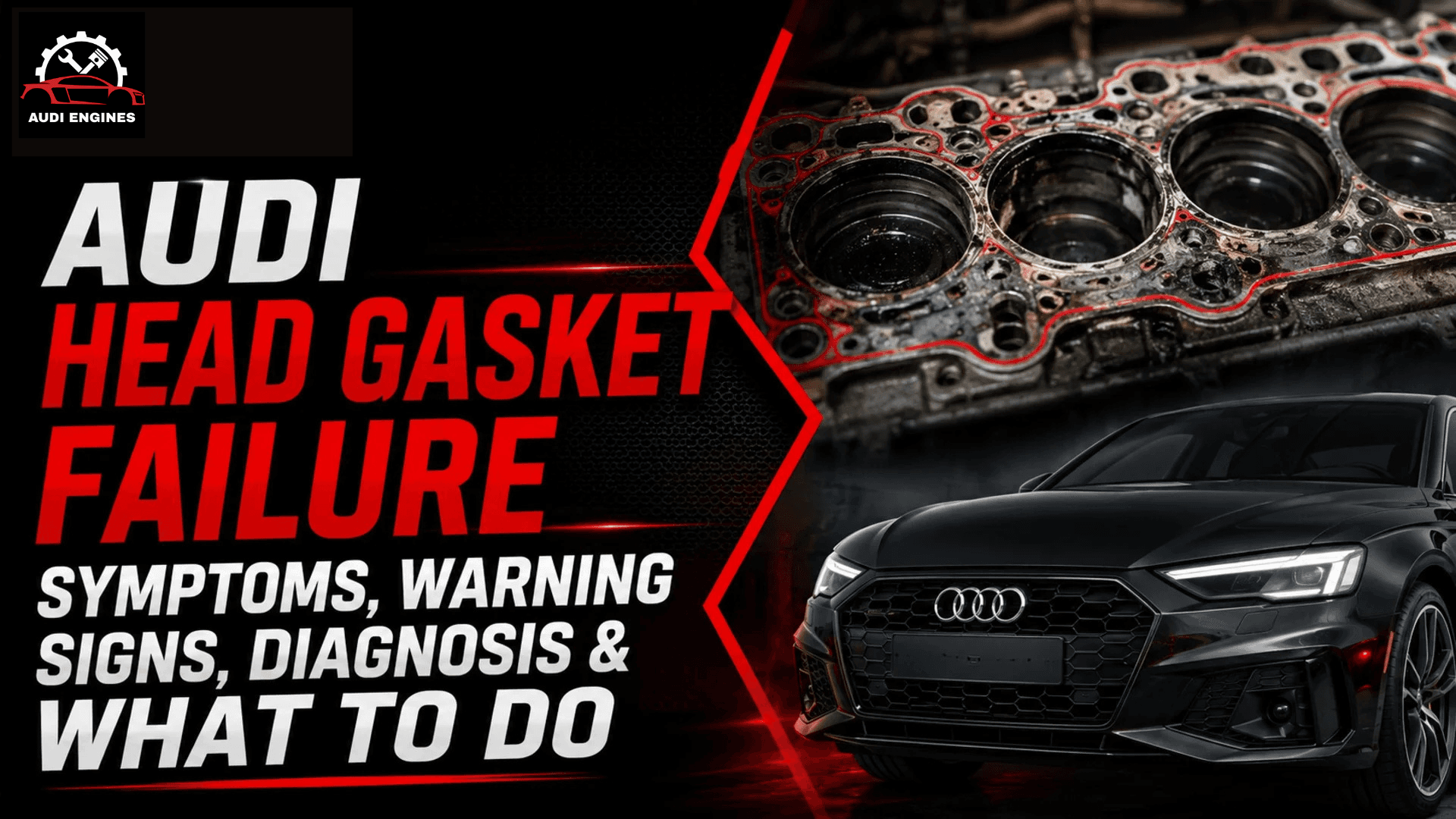
Audi Head Gasket Failure Symptoms, Warning Signs, Diagnosis & What to Do
Noticed white smoke drifting from your exhaust, or found yourself topping up the coolant more often than you should have to? Maybe there's a strange sweet smell hanging around after a drive, or the oil cap looks like it's got mayonnaise smeared under it.
Noticed white smoke drifting from your exhaust, or found yourself topping up the coolant more often than you should have to? Maybe there's a strange sweet smell hanging around after a drive, or the oil cap looks like it's got mayonnaise smeared under it. If any of this sounds familiar, you're probably here because you suspect, or fear, that your Audi's head gasket has failed.
That's a reasonable thing to worry about. Head gasket failure is one of the more serious faults an Audi engine can develop, and driving on regardless can turn a repairable problem into a written-off engine. But here's the thing most guides won't tell you clearly: not every one of these symptoms means the head gasket is at fault. Several other components, the EGR cooler, oil cooler, water pump, thermostat, can produce very similar warning signs.
This guide walks through the genuine symptoms, how to actually test for head gasket failure rather than guess, when driving becomes dangerous, and what a proper repair involves. By the end, you'll have a clear, evidence-based picture of what's going on under the bonnet.
What Are the Main Symptoms of Audi Head Gasket Failure?
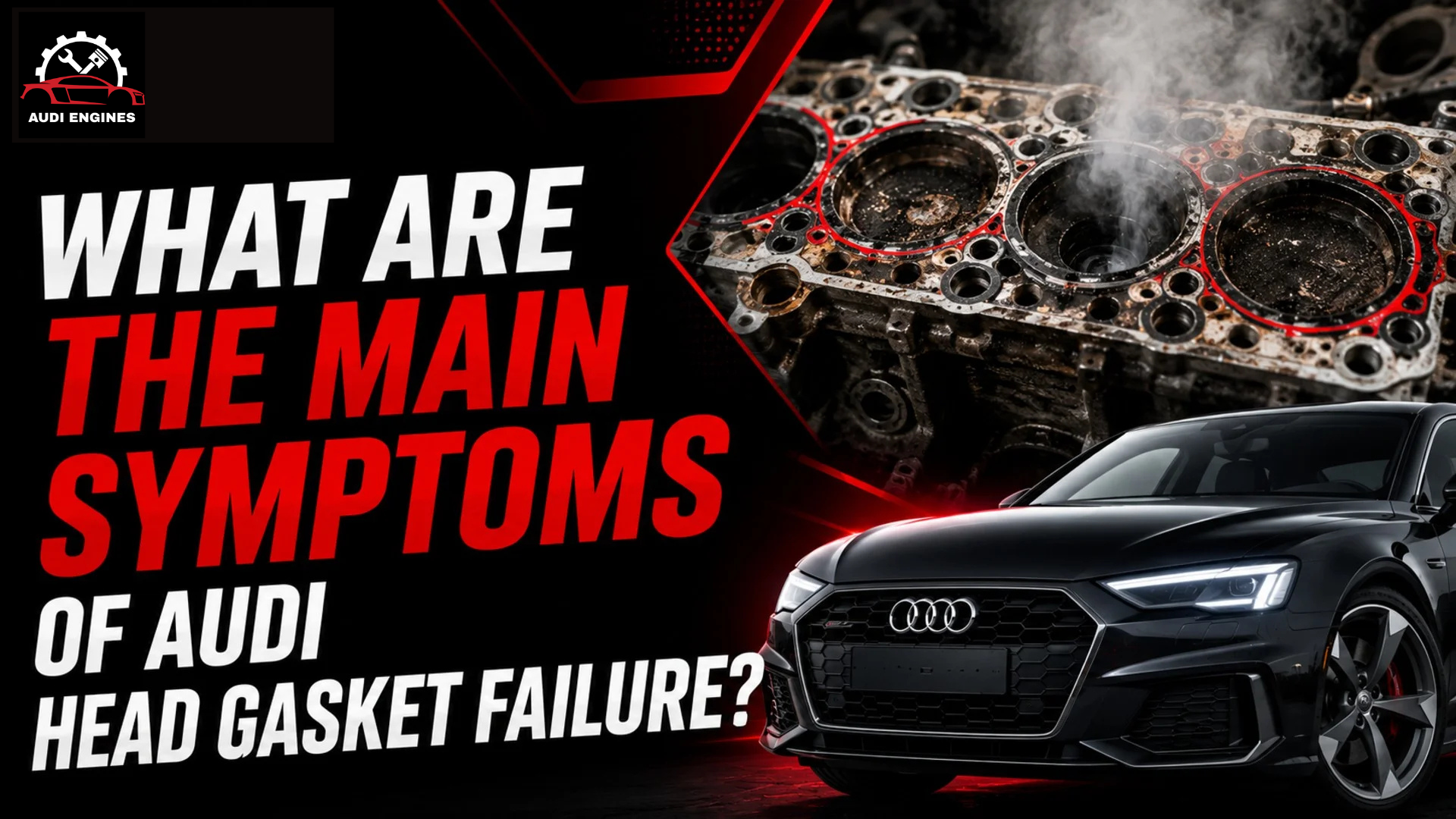
The head gasket sits between the cylinder head and the engine block, sealing the combustion chamber and keeping coolant, oil, and combustion pressure exactly where they're supposed to be. When it fails, one or more of those seals breaks down, and the symptoms that follow depend on exactly where the failure occurs.
Persistent White Smoke From the Exhaust
Thick, persistent white smoke, especially with a faintly sweet smell, is one of the most recognised warning signs of head gasket failure. It typically means coolant is finding its way into the combustion chamber and being burned off alongside fuel, which produces that distinctive steam-like smoke and sweet odour.
Is White Smoke Always a Sign of a Blown Head Gasket?
Not necessarily. A small puff of white vapour on a cold morning is often just condensation clearing from the exhaust system, completely normal and nothing to worry about. The concern is persistent white smoke that continues once the engine's warmed up, particularly if it's accompanied by a sweet smell or coolant loss. On diesel-engined Audis, it's also worth ruling out an EGR cooler leak, which can produce a strikingly similar symptom.
Unexplained Coolant Loss With No Visible Leak
If your Audi keeps needing coolant topped up but there's no puddle under the car, no visible external leak, and no obvious wet patches around hoses or the radiator, that's a red flag. It suggests the coolant is disappearing internally, most commonly being drawn into the combustion chamber and burned off, which is exactly why it pairs so often with white exhaust smoke.
Repeated Engine Overheating
A head gasket failure can allow combustion gases to pressurise the cooling system, pushing coolant out and reducing the system's ability to regulate temperature properly. The result is an engine that runs hotter than it should, sometimes climbing toward the red on the temperature gauge during motorway driving or in stop-start traffic.
It's worth saying clearly: overheating isn't unique to head gasket failure. A failing water pump, stuck thermostat, or a simple external coolant leak from a hose can cause identical symptoms, which is exactly why proper diagnosis matters before anyone starts quoting for a head gasket replacement.
Milky or Frothy Oil Under the Filler Cap
Pull the oil filler cap and see something that looks like pale, frothy mayonnaise rather than clean oil? That's a classic sign that coolant has mixed with your engine oil.
What Does Coolant in Engine Oil Actually Mean?
When the head gasket fails between an oil passage and a coolant passage, the two fluids can mix internally. This is more serious than it might sound, because contaminated oil loses its ability to lubricate properly, risking further engine damage. One caveat worth knowing: a small amount of milky residue purely around the filler cap, not mixed through the oil itself, can sometimes be caused by condensation from short journeys rather than a head gasket fault, so context matters here.
Bubbles in the Coolant Reservoir or Hard, Pressurised Hoses
If you watch the coolant expansion tank while the engine's idling and see continuous bubbling, that's often combustion gas escaping into the cooling system, a strong indicator of a compromised head gasket. Similarly, if the coolant hoses feel unusually hard and pressurised even when the engine's cold, that suggests excess pressure is building somewhere it shouldn't be.
Rough Idle, Misfires & Loss of Engine Power
Why a Head Gasket Fault Can Cause a Misfire
When coolant leaks into a cylinder, it disrupts the combustion process in that cylinder, leading to a rough idle, a noticeable misfire, or a general loss of power and responsiveness. This is often one of the later-stage symptoms, appearing once the leak has progressed enough to genuinely affect compression, which is why it's frequently paired with reduced fuel efficiency and sluggish acceleration.
How to Test an Audi Head Gasket (And Rule Out Other Faults)
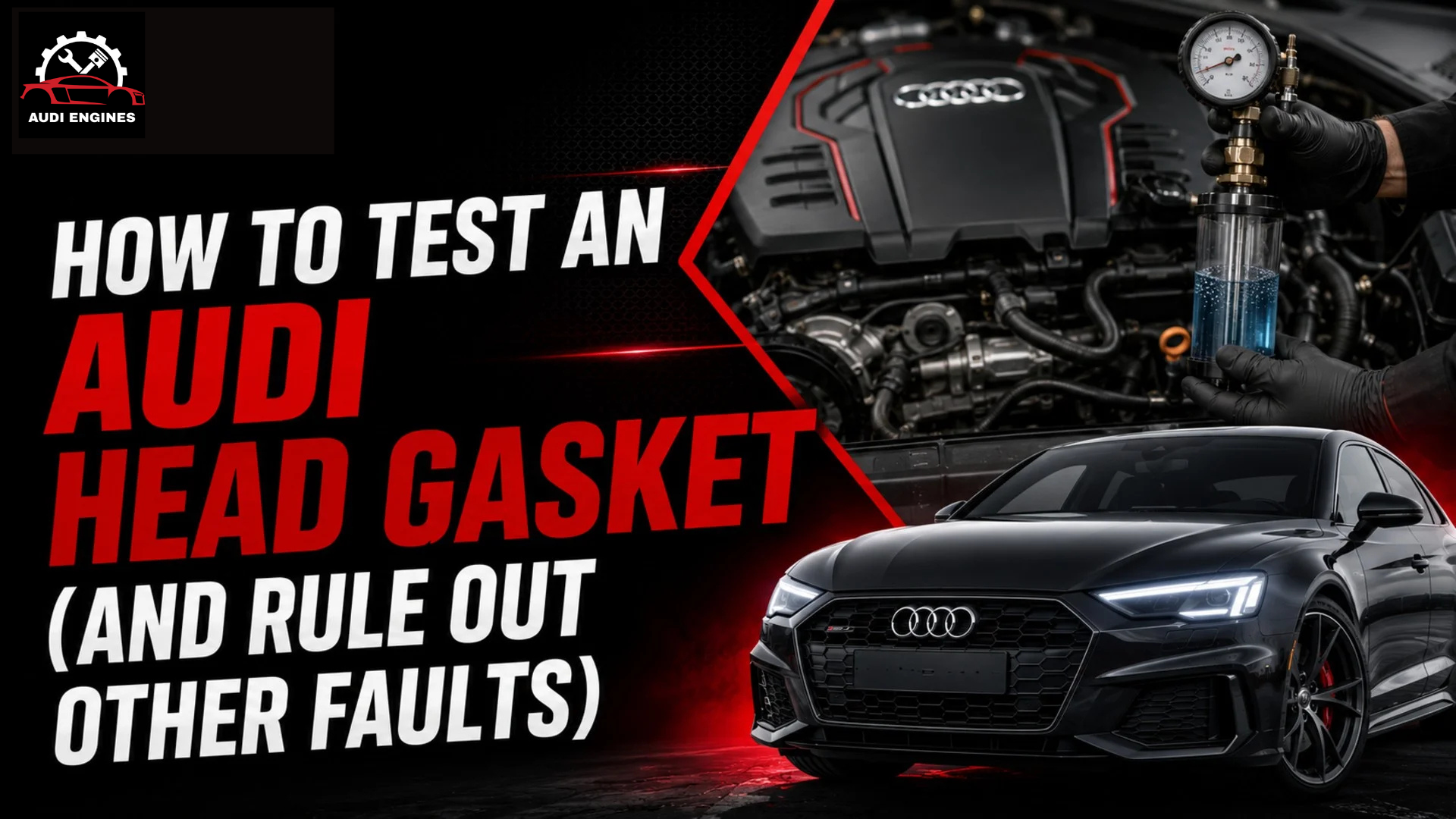
Guessing based on symptoms alone is risky, plenty of Audi owners have paid for an unnecessary head gasket replacement when the real fault was a leaking EGR cooler or a failing water pump. A proper diagnosis follows a logical sequence, ruling things in and out systematically.
The Correct Diagnostic Sequence
Visual Inspection, Fault Code Scan & Cooling-System Pressure Test
A thorough diagnosis typically starts with:
- Visual inspection checking coolant colour and condition, oil condition, hose integrity, and looking for any obvious external leaks first
- Diagnostic scan reading fault codes from the ECU, since a check engine light or coolant warning light often accompanies head gasket issues
- Cooling-system pressure test pressurising the system to see if it holds pressure, which can reveal both internal and external leaks
These early steps are quick and non-invasive, and they rule out several common alternative causes before anyone reaches for more involved testing.
Block Test, Compression Test & Leak-Down Test
If the pressure test raises suspicion, the next stage typically involves:
- Combustion-gas block test a chemical test performed on the coolant that changes colour in the presence of combustion gases, giving a strong indication of an internal head gasket leak
- Compression test measuring cylinder pressure across all cylinders; a significantly low reading on one or two cylinders (compared to the others) supports a head gasket diagnosis
- Leak-down test pressurising each cylinder individually and listening for air escaping into the cooling system, oil filler, or an adjacent cylinder, which pinpoints exactly where the seal has failed
Used together, these tests give a far more reliable picture than any single symptom on its own.
Audi Head Gasket or Another Engine Problem?
This is the question a genuinely useful guide needs to answer honestly, because attributing every coolant or smoke symptom to the head gasket isn't accurate, and it isn't fair to the person paying for the repair.
Symptom | Could Be Head Gasket | Other Common Audi Causes |
| Coolant loss | Internal gasket leak | Water pump, thermostat housing, radiator |
| White smoke | Coolant entering cylinder | EGR cooler, injector fault, cold-start condensation |
| Milky oil | Coolant/oil mixing internally | Condensation from frequent short trips |
| Misfire | Compression loss from coolant intrusion | Ignition coil, injector, spark plug, PCV system |
| Overheating | Combustion gases/coolant loss | Water pump, thermostat, radiator |
| Oil in coolant reservoir | Gasket failure | Oil cooler |
Could It Be the EGR Cooler Instead?
On diesel-engined Audis particularly, a leaking EGR cooler can produce white smoke and coolant loss that looks almost identical to head gasket failure. It's a genuinely common point of confusion, and a specialist familiar with Audi TDI engines will usually check this early, since it's often a cheaper fix than a head gasket job.
Could It Be the Oil Cooler, Water Pump or Thermostat?
An oil cooler can develop an internal leak that mixes oil and coolant in a very similar way to a head gasket fault, while a failing water pump or a stuck thermostat can both cause overheating and coolant loss without the head gasket being involved at all. This is precisely why proper testing, not just symptom-spotting, is worth insisting on before agreeing to any repair.
Does Head Gasket Failure Vary by Engine? (1.8/2.0 TFSI vs 2.0/3.0 TDI)
Symptoms can differ slightly depending on which engine your Audi runs. TFSI petrol engines, common across the A3, A4, and A5 ranges, tend to show the classic coolant-loss-and-white-smoke pattern. TDI diesel engines, meanwhile, need the EGR cooler ruled out specifically, since diesel combustion characteristics can mask or mimic head gasket symptoms more easily. Larger 3.0 TDI and 3.0 TFSI V6 engines, often found in the A6, A7, and Q7, can also show symptoms more gradually due to the additional cylinders diluting the effect of a single-cylinder leak, meaning symptoms sometimes appear later, once the fault has progressed further.
Can You Drive an Audi With a Blown Head Gasket?
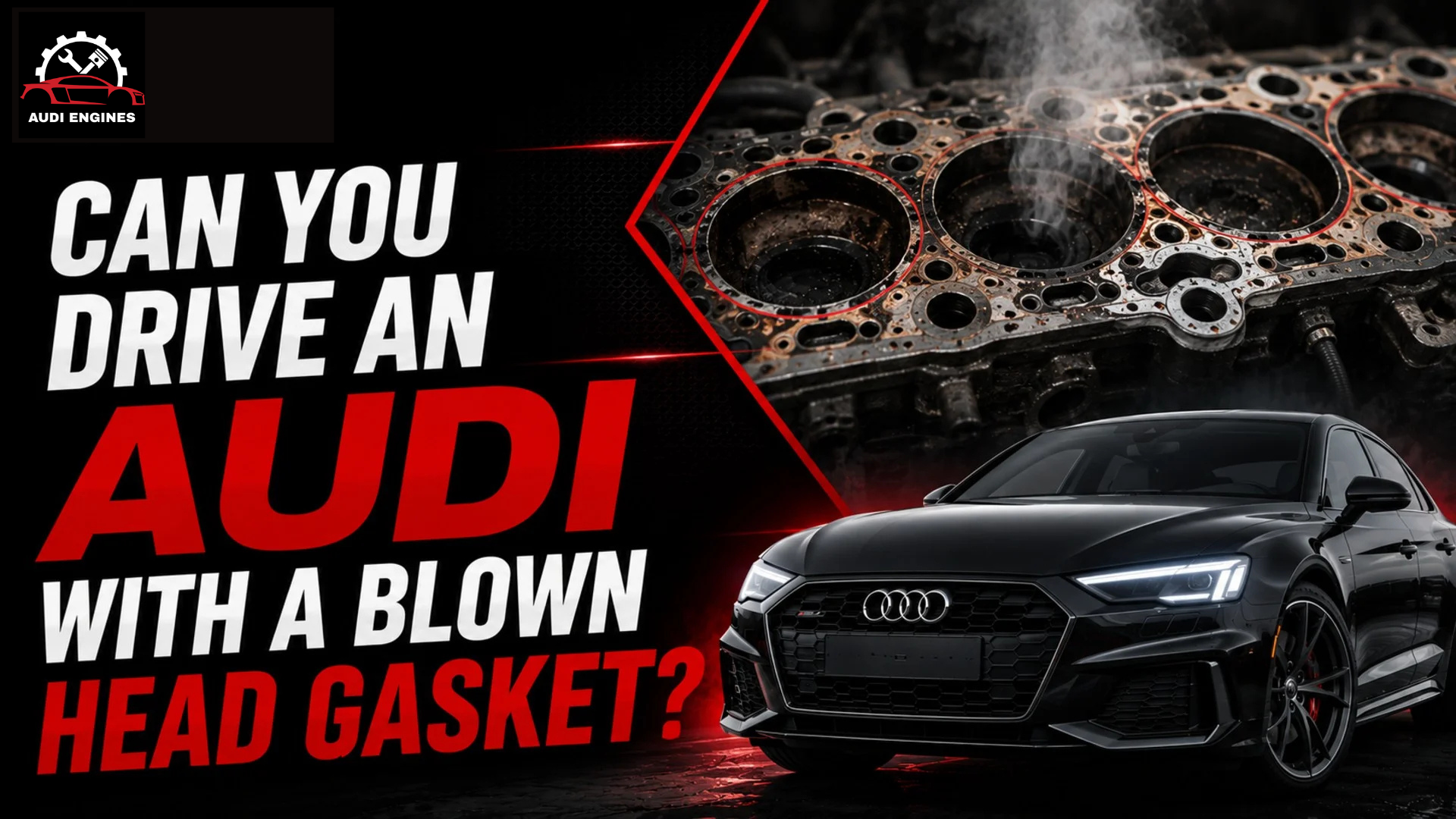
This is usually the most urgent question on an owner's mind, and the honest answer depends entirely on how far the fault has progressed.
When to Stop Driving Immediately
Severe Overheating, Milky Oil & Rapidly Falling Coolant
Some situations call for stopping the car as soon as it's safe to do so, rather than continuing the journey:
- The temperature gauge is climbing rapidly toward the red zone
- The engine warning light is flashing (not just illuminated steadily) alongside a misfire
- Oil visibly looks milky or frothy throughout, not just around the cap
- Coolant level is dropping noticeably within a single journey
- Thick, continuous white smoke is present, or coolant is being forced out of the expansion tank
Continuing to drive in any of these conditions risks warping or cracking the cylinder head, and in severe cases, catastrophic engine damage that turns a gasket replacement into a full engine rebuild.
When It's Safe to Book a Diagnosis (Rather Than Stop Driving Now)
If symptoms are mild and intermittent, occasional white smoke only on a cold start, gradual coolant loss over several weeks, or an unexplained pressure build-up you've only just noticed, it's usually reasonable to book a diagnostic appointment promptly rather than treating it as an immediate emergency. That said, "soon" should mean days, not months.
What Happens If You Keep Driving on a Failing Head Gasket?
Continued driving on a compromised head gasket typically accelerates the damage: coolant contamination degrades oil's lubricating properties, repeated overheating cycles increase the risk of a warped or cracked cylinder head, and low compression from a worsening leak puts additional strain on the rest of the engine. What starts as a head gasket replacement can escalate into cylinder head machining, or in the worst cases, a full engine rebuild or replacement.
Audi Head Gasket Repair, Cost, Process & Getting a Specialist Diagnosis
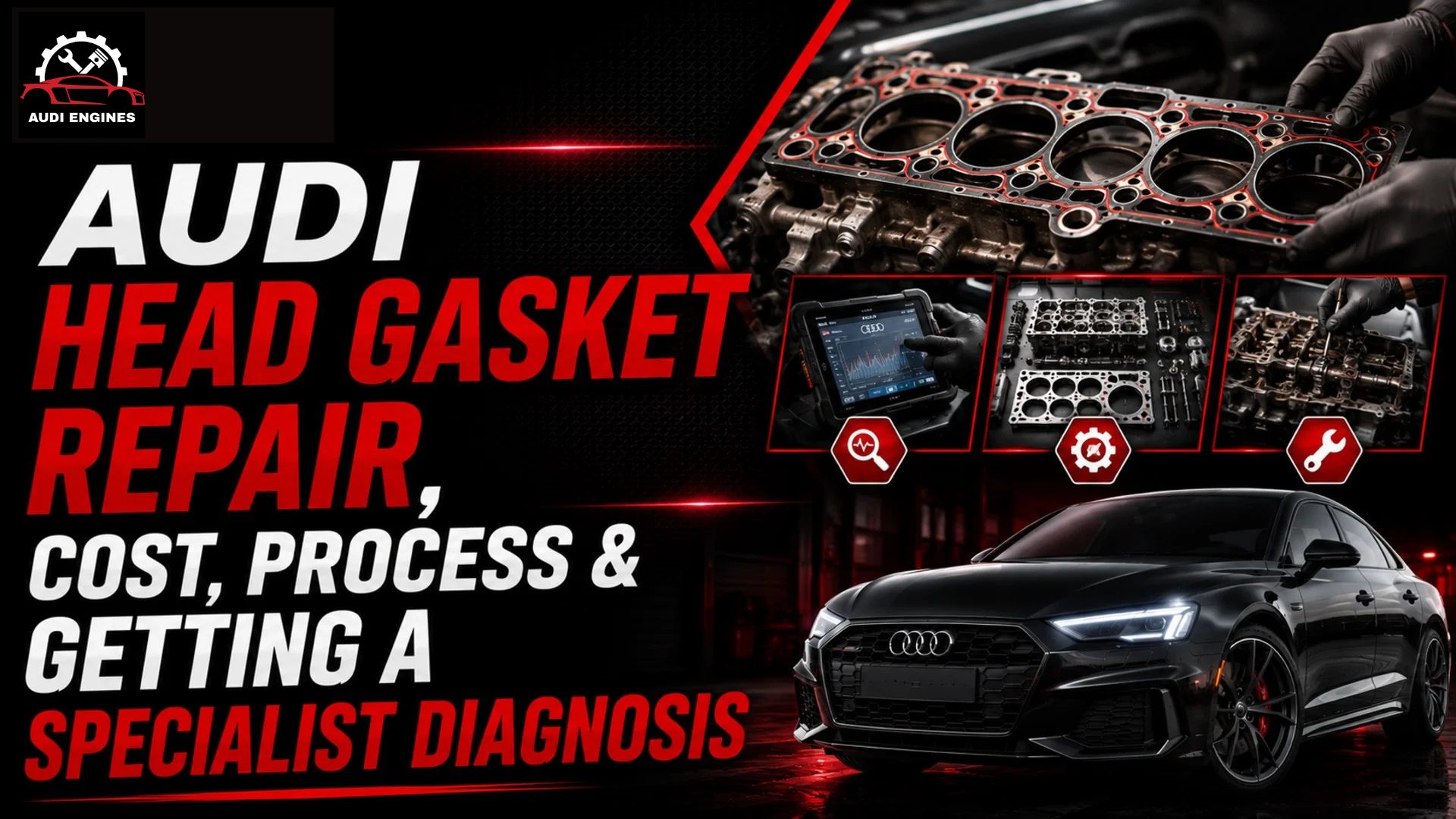
Once head gasket failure is confirmed through proper testing, the next question is what to actually do about it.
Is It Worth Repairing an Audi Head Gasket, or Replacing the Engine?
In most cases, yes, head gasket repair is worthwhile, particularly if the cylinder head itself hasn't sustained additional damage from prolonged overheating. The calculation changes if the cylinder head is warped or cracked beyond repair, or if overheating has caused wider engine damage; at that point, the cost comparison between a repair and a full engine replacement becomes much closer, and a specialist assessment is essential before committing either way.
What Does Audi Head Gasket Replacement Involve?
Cylinder Head Skimming, Warping & Cracked Head Checks
A proper head gasket replacement isn't just swapping the gasket itself. It typically includes:
- Removing the cylinder head and inspecting the sealing surface for warping
- Machining or skimming the head if it's warped but otherwise sound
- Checking for cracks, which would require head replacement rather than repair
- Fitting a new gasket to the correct torque specification and sequence
- Refilling and bleeding the cooling system properly to avoid trapped air pockets
Skipping the inspection step and simply fitting a new gasket onto a warped head is a common shortcut that leads to repeat failure, worth asking about directly when getting a quote.
How Much Does Audi Head Gasket Repair Cost?
Costs vary significantly depending on the engine (a straightforward 4-cylinder TFSI job differs considerably from a V6 3.0 TDI or TFSI, where accessing the head is more labour-intensive), whether the cylinder head needs skimming or replacing, and the extent of any secondary damage from overheating. Getting an accurate quote really does require a proper diagnosis first, anyone quoting a fixed price over the phone without inspecting the car is guessing.
Book an Audi Head Gasket Diagnosis With a Specialist
Why Choose an Audi Engine Specialist Over a General Garage?
Audi engines, particularly the TFSI and TDI ranges, have specific quirks around EGR coolers, oil coolers, and engine-code-specific torque sequences that a specialist will recognise immediately. That familiarity means a faster, more accurate diagnosis, and it avoids the risk of paying for an unnecessary head gasket job when the real fault lies elsewhere in the cooling or emissions system.
Frequently Asked Questions
What are the symptoms of Audi head gasket failure?
The main signs include persistent white exhaust smoke, unexplained coolant loss with no visible leak, repeated overheating, milky oil, bubbling in the coolant reservoir, and rough idling or misfires.
Can an Audi head gasket fail without overheating?
Yes. Some head gasket faults develop gradually and show up first as coolant loss, white smoke, or milky oil, with overheating only becoming noticeable once the leak has progressed further.
Can I drive my Audi with a blown head gasket?
It depends on severity. Mild, intermittent symptoms may allow a short delay to book a diagnosis, but severe overheating, milky oil, or thick continuous white smoke mean you should stop driving as soon as it's safe to do so.
Is white smoke always a sign of a blown head gasket?
No. Light vapour on a cold start is usually just condensation. Persistent white smoke once the engine is warm, especially with a sweet smell, is the stronger indicator, though on diesel Audis, an EGR cooler leak should also be ruled out.
How do I test an Audi head gasket?
A proper diagnosis combines a cooling-system pressure test, a combustion-gas block test, a compression test, and sometimes a leak-down test, alongside a visual inspection and diagnostic scan, not any single test in isolation.
How much does an Audi head gasket replacement cost?
Costs depend on the engine type, whether the cylinder head needs skimming or replacing, and any secondary damage from overheating. An accurate quote requires a hands-on diagnosis rather than a phone estimate.
Is it worth repairing an Audi with a blown head gasket?
Usually yes, provided the cylinder head itself isn't cracked or severely warped. If overheating has caused wider engine damage, a specialist can help you weigh repair cost against replacement.
Could it be the EGR cooler instead of the head gasket?
On diesel Audis, yes, a leaking EGR cooler can cause white smoke and coolant loss very similar to head gasket failure, and it's often a cheaper fix, so it's worth ruling out during diagnosis.
Final Thoughts
Head gasket failure is a serious fault, but it's rarely a mystery once it's tested properly rather than guessed at from symptoms alone. Coolant loss, white smoke, milky oil, and overheating all point toward the head gasket, but they can just as easily point toward an EGR cooler, oil cooler, water pump, or thermostat, which is exactly why proper diagnostic testing matters before any repair work begins.
If you're seeing these warning signs on your Audi, the safest move is to get it properly assessed rather than waiting to see if it gets worse, because with head gaskets, it usually does.
Concerned about your Audi's head gasket? Get in touch with our specialist team for an accurate, test-based diagnosis. We'll identify exactly what's going on, whether it's the head gasket or something else entirely, and give you a clear, honest quote for the repair your Audi actually needs.