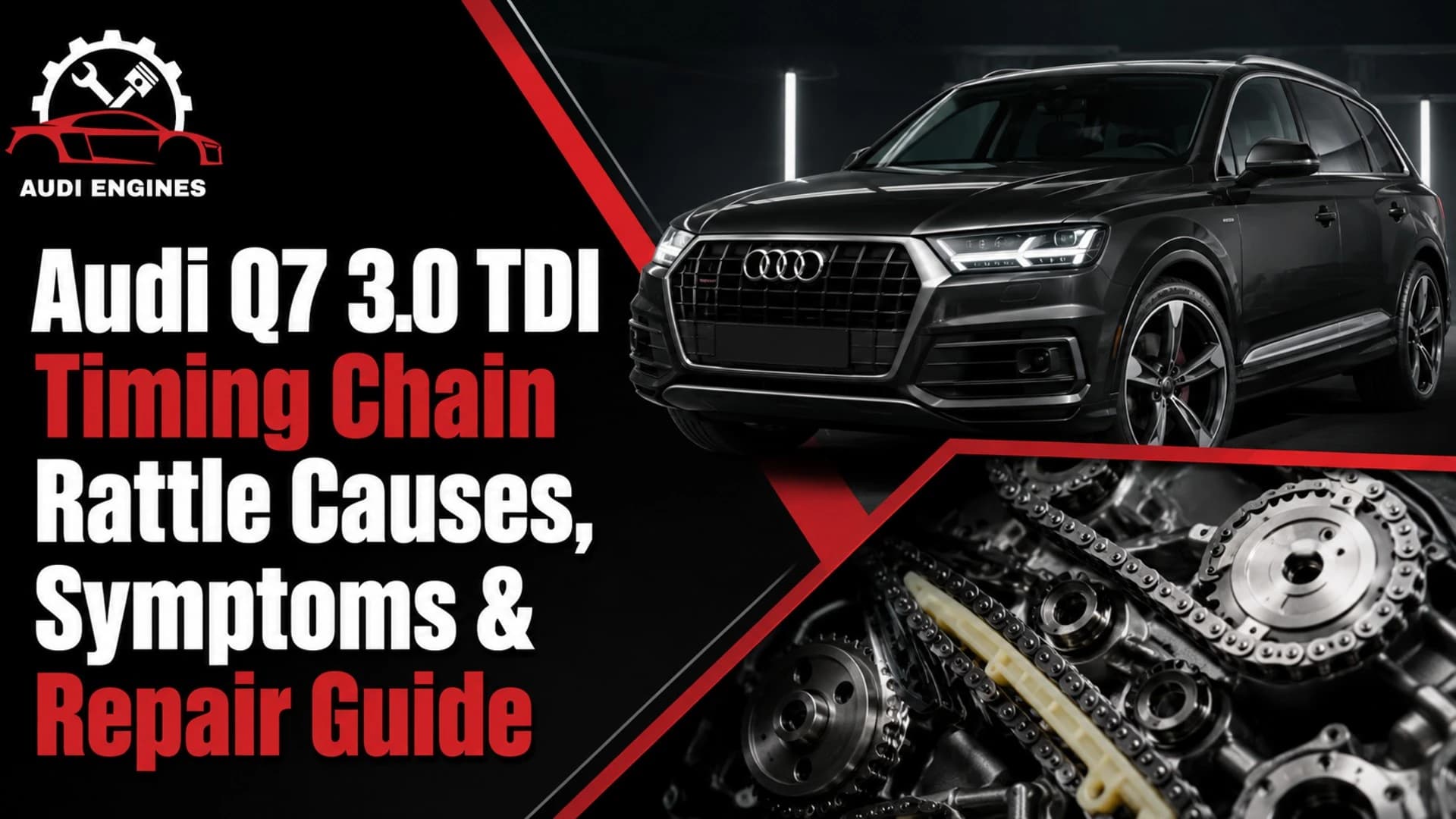
Audi Q7 3.0 TDI Timing Chain Rattle Causes, Symptoms & Repair Guide
You turn the key on a cold morning, and there it is, a metallic rattle from the engine bay that lasts a couple of seconds before settling into a smooth idle. It's gone by the time you've buckled your seatbelt, so you tell yourself it's nothing.
You turn the key on a cold morning, and there it is, a metallic rattle from the engine bay that lasts a couple of seconds before settling into a smooth idle. It's gone by the time you've buckled your seatbelt, so you tell yourself it's nothing. Then it happens again the next morning. And the one after that.
If you drive an Audi Q7 3.0 TDI, this scenario is familiar to a lot of owners, and it's one of the most searched-for issues connected to this engine. The good news is that a brief cold-start rattle doesn't automatically mean disaster. The bad news is that ignoring it can turn a manageable repair into a very expensive one.
This guide walks through exactly what causes timing chain rattle on the Q7 3.0 TDI, how to tell the difference between a noise that's worth monitoring and one that needs immediate attention, how specialists actually diagnose it, and what repair involves, so you're not left guessing.
What Causes Audi Q7 3.0 TDI Timing Chain Rattle?
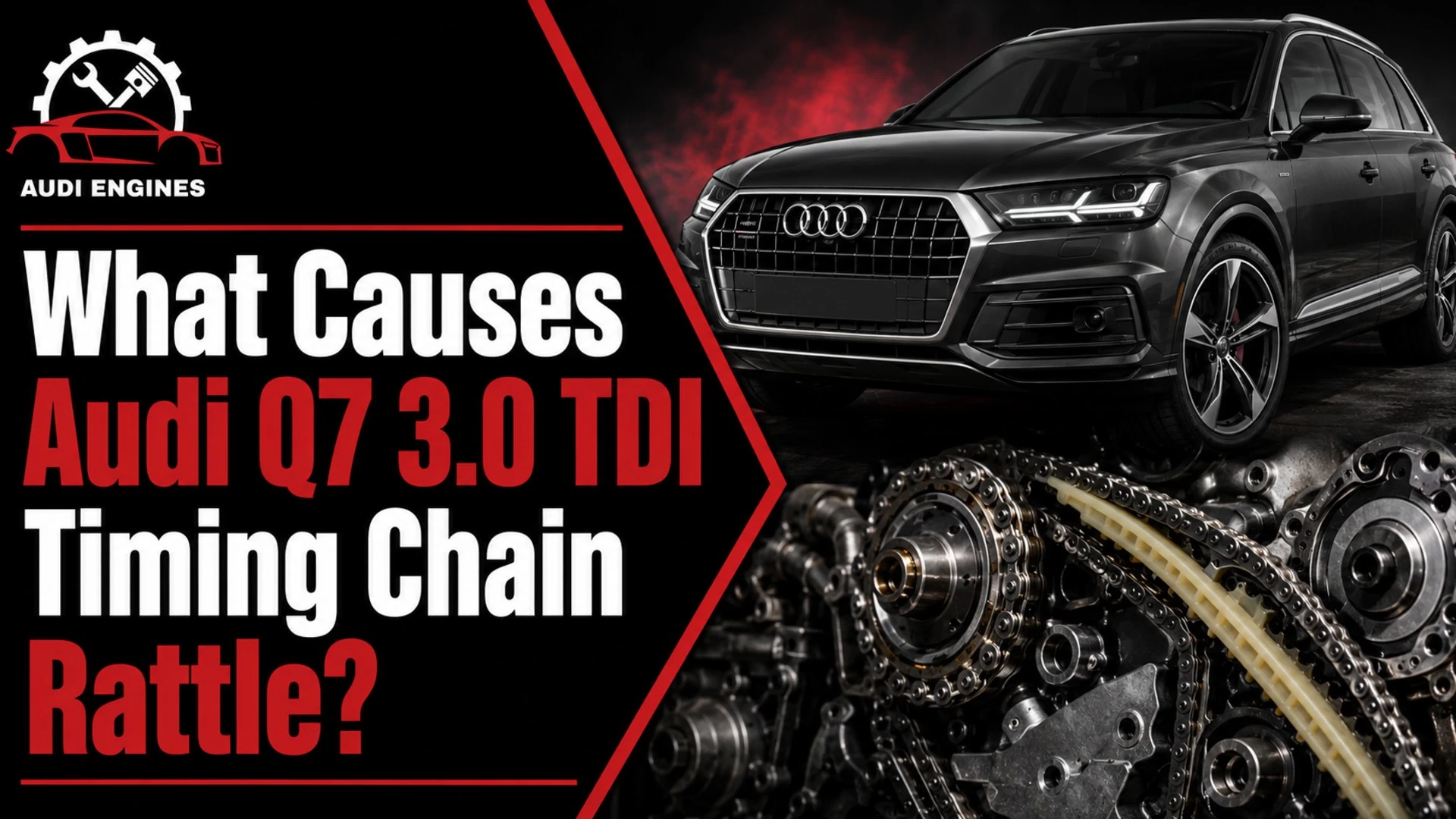
The 3.0 TDI V6 diesel fitted across the Q7 range (both the earlier 4L chassis and the later 4M generation) uses a timing chain rather than a belt to drive the camshafts. Chains last far longer than belts in theory, but they're not maintenance-free, and the system that keeps them tensioned is where most rattle complaints originate.
Here's the mechanism in plain terms: when the engine is switched off, oil pressure drops to zero almost immediately. The hydraulic chain tensioner relies on that oil pressure to stay firm against the chain. Once the engine's been sitting for a while, overnight, for example, the tensioner can bleed down and lose some of its holding pressure. When you start the engine again, there's a brief window before oil pressure builds back up fully. During that window, the chain has a small amount of slack, and that slack is what you hear as a rattle. Once pressure is restored, the tensioner takes up the slack and the noise disappears.
That's the textbook version of a healthy-but-ageing system. But several underlying issues can make this worse or turn a minor characteristic into a genuine mechanical problem.
Worn or Weak Timing Chain Tensioner
The upper chain tensioner is the component most frequently associated with this noise. Over time, the internal seals and check valve inside the tensioner wear, which means it holds pressure less effectively and bleeds down faster when the engine's off. A tensioner in this state produces a longer, more noticeable rattle than a healthy one, and the noise tends to get worse gradually rather than appearing overnight.
Timing Chain Stretch and Wear Over Time
Despite the name, timing chains don't actually stretch in the way a rubber band does, the individual links and pins wear, which causes the chain to elongate slightly. A chain with noticeable elongation sits looser on the sprockets, and the tensioner has to work harder to compensate. High-mileage examples, or vehicles that have covered a lot of miles on shorter journeys, are more likely to show this kind of wear.
Low Oil Pressure or Poor Lubrication
Because the tensioner depends entirely on oil pressure to function correctly, anything that affects lubrication has a knock-on effect on chain noise.
- Incorrect oil specification, The 3.0 TDI requires oil meeting Audi's specific approval standards (commonly VW 507.00). Using an oil outside this specification can affect how quickly and consistently pressure builds, especially in cold weather.
- Extended service intervals and oil degradation, Diesel engines are prone to a degree of fuel dilution in the oil over time, which thins it out and reduces its ability to maintain pressure. Vehicles that have had long or missed service intervals are more likely to develop rattle-related symptoms earlier than well-maintained examples.
Worn or Cracked Chain Guides
The plastic guides that keep the chain aligned as it runs around the sprockets wear gradually and can crack with age and heat cycling. A failing guide doesn't just cause noise, it can also allow the chain to run slightly off-line, which accelerates wear elsewhere in the system. Guide failure tends to produce a different character of noise compared to a tensioner issue: more of a slap or clatter than a sharp rattle.
Is a Cold-Start Rattle on Your Audi Q7 Normal or a Warning Sign?
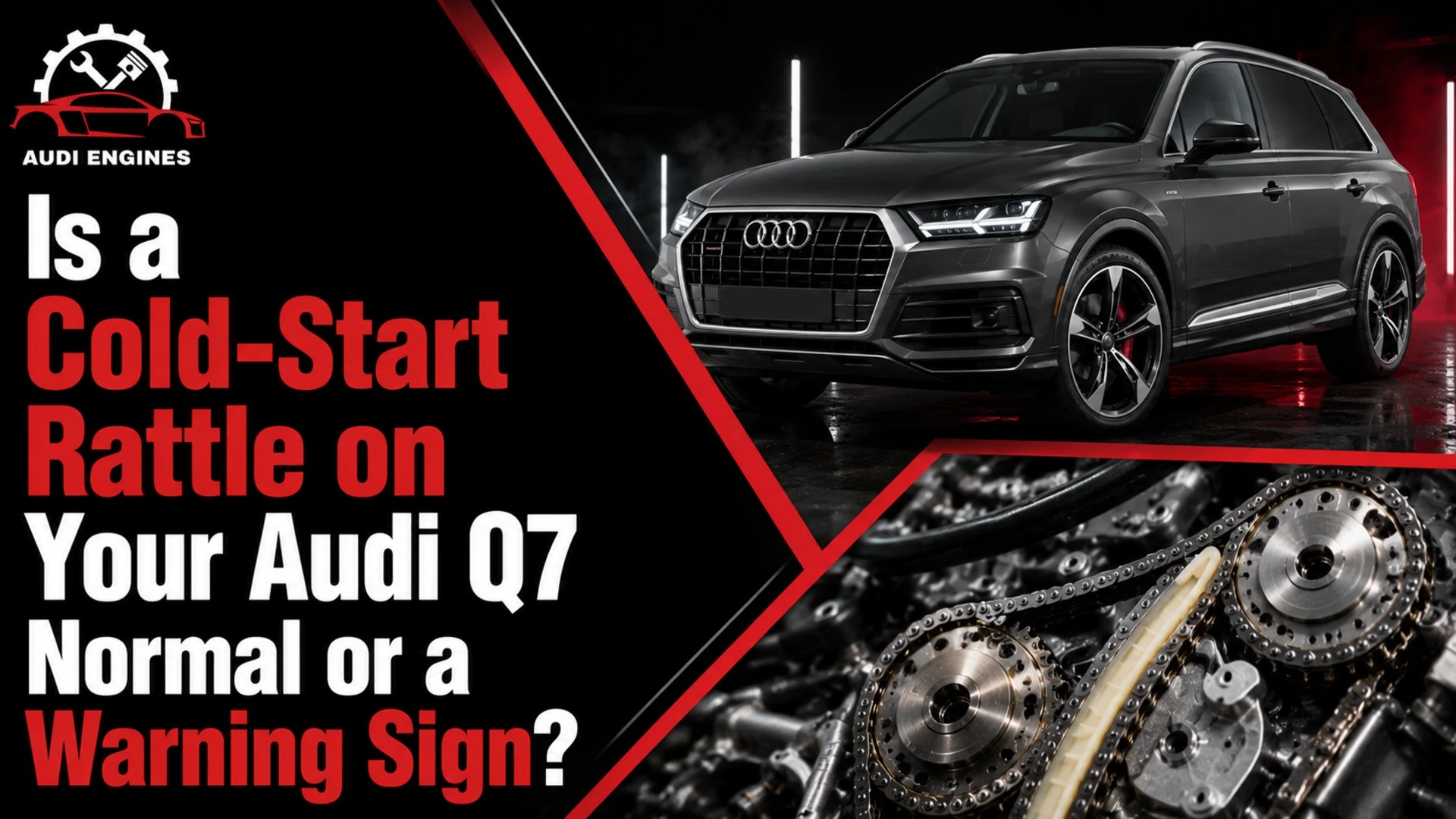
This is the question most owners actually want answered, and it's worth addressing directly rather than dancing around it.
Why Does the Rattle Only Happen on Cold Start?
As explained above, the rattle is tied to oil pressure recovery after the engine has been stationary. That's why it almost always happens on the first start of the day, or after the car has been parked for several hours, rather than on a warm restart at the petrol station. If your Q7 rattles every time you restart it, even five minutes after switching off, that's a different pattern and points toward a more advanced tensioner or oil pressure issue.
How Long Should the Rattle Last? 1–3 Seconds vs Persistent Noise
Duration is one of the most useful diagnostic clues available to you as an owner, and it's something competitor guides rarely explain properly.
A rattle that lasts somewhere between one and three seconds, occurs only on a genuinely cold start, and disappears completely once the engine settles into idle is broadly consistent with normal tensioner behaviour on an engine of this age and mileage. Technical guidance issued for this engine family has specifically addressed short first-start rattles linked to the upper tensioner, and in documented cases this brief noise wasn't found to indicate the chain was failing or that damage had occurred.
That said, "brief and disappearing" is doing a lot of work in that sentence. The picture changes if the noise:
- Lasts longer than three or four seconds
- Is getting progressively longer over weeks or months
- Happens on warm restarts as well as cold ones
- Is accompanied by any other symptom (rough idle, warning lights, hesitant starting)
Duration alone isn't a pass-or-fail test, it's one piece of evidence that needs to be read alongside how the noise is changing over time and whether anything else is going on.
Timing Chain vs Tensioner vs Guide, What's Actually Rattling?
Because "timing chain rattle" gets used as a catch-all term, it helps to separate out which component is actually behind the noise and what that typically means for you as a driver.
Component | Typical Issue | Likely Symptom |
| Chain tensioner | Loss of hydraulic pressure, internal wear | Brief rattle on cold start, usually resolves within seconds |
| Timing chain | Elongation/wear from mileage | Persistent noise, timing deviation, worsens over time |
| Chain guide | Wear or cracking | Rattling or slapping noise, sometimes with debris in the oil pan |
| Sprockets | Wear or damage | Contributes to timing instability, often a secondary issue |
| Oil system | Reduced pressure or poor lubrication | Delays tensioner response, worsens cold-start noise generally |
Knowing roughly which category your symptoms fall into helps you have a more informed conversation with whoever inspects the car, and helps you avoid paying for a full chain replacement when the actual fault is a single tensioner.
Signs the Rattle Points to a Bigger Problem
Some signals move the situation from "worth monitoring" to "book it in soon." These include the engine developing a rough or uneven idle after starting, the check engine light appearing (particularly alongside camshaft or crankshaft correlation faults), noticeably harder or longer cranking before the engine catches, or any noise that's clearly present during normal driving rather than just at startup. None of these on their own guarantee a serious fault, but together they're a strong reason to get the car scanned rather than waiting it out.
How Is Audi Q7 Timing Chain Rattle Diagnosed?
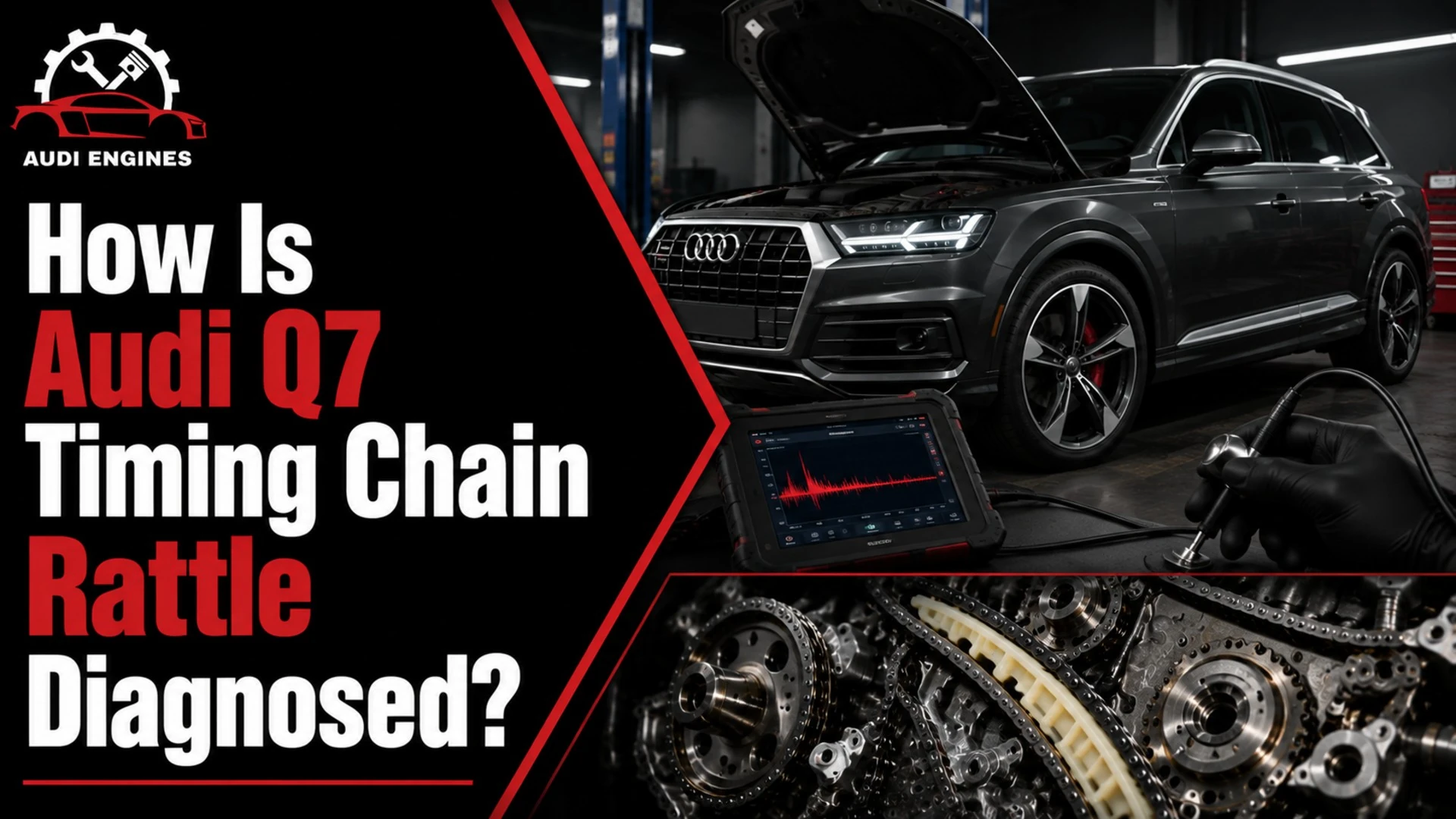
A proper diagnosis goes well beyond "we heard a noise, so we're replacing the chain." A methodical process protects you from paying for parts you don't need.
Listening to the Noise and Confirming Cold-Start Timing
The first step is establishing the pattern: does it happen only on a genuinely cold engine, how long does it last, and has the owner noticed any change in duration or character over recent weeks? This context shapes everything that follows.
Scanning for Fault Codes and Cam/Crank Correlation
Plugging in a diagnostic tool (VCDS and ODIS are the two most commonly used on VAG-group vehicles) checks the ECU's fault memory for stored codes. Codes related to camshaft and crankshaft correlation, sometimes logged as P0016 or P0017, indicate the ECU has detected that the camshaft and crankshaft aren't rotating in the expected relationship to each other. This is a meaningful finding because it moves the situation from "noise" to "measurable timing deviation," which is a stronger indicator of chain or tensioner wear.
Checking Oil Level, Condition and Specification
Because lubrication is so central to tensioner performance, checking oil level, checking that the correct specification has been used, and inspecting the oil's condition for signs of dilution or contamination is a standard part of any proper diagnosis. Occasionally, what looks like a mechanical timing issue turns out to be a lubrication issue that's far cheaper to resolve.
Confirming Tensioner or Chain Condition Before Quoting Repair
Where possible, a specialist will want to physically assess tensioner and chain condition rather than relying on noise and codes alone, this might involve inspecting for visible wear, checking timing values against manufacturer specification, or in some cases a partial strip-down. This step is what separates an accurate quote from a guess, and it's the step that's most often skipped by workshops without genuine Audi diesel experience.
Audi Q7 Timing Chain Repair, Cost & Prevention
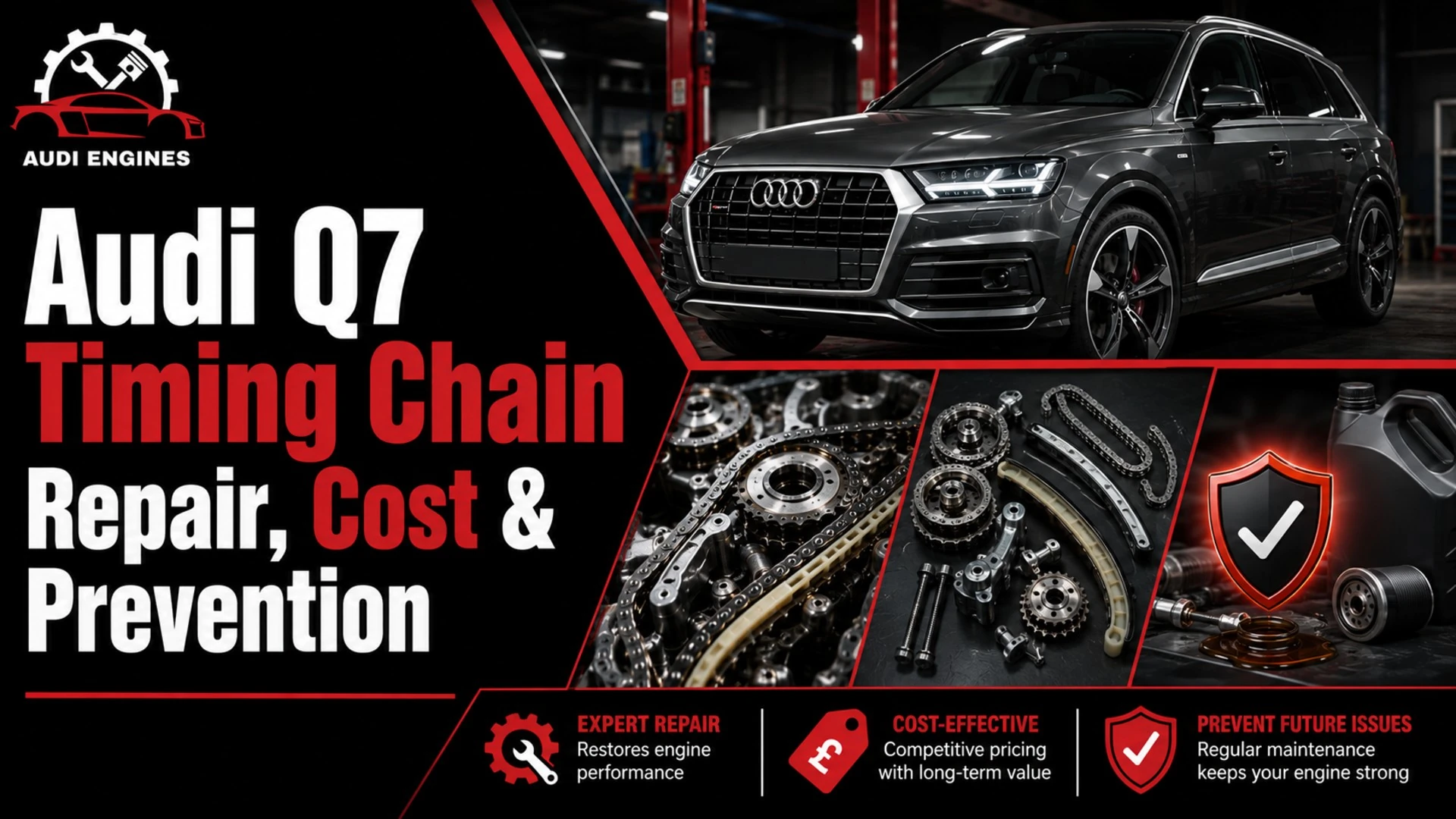
Once you've got a clear diagnosis, the repair path depends heavily on which component is actually at fault.
Timing Chain Tensioner Replacement
If the tensioner alone is worn, replacement is the more straightforward and less expensive route. An updated tensioner unit is fitted, and in many cases this resolves cold-start rattle completely if the chain and guides themselves are still within acceptable wear limits.
Full Timing Chain Replacement, Does It Need Engine Removal?
If the chain has elongated beyond tolerance, or guides have failed, a full timing chain kit, chain, tensioner, and guides together, is the more thorough fix. On the 3.0 TDI, access to the timing system typically requires significant disassembly at the front of the engine, and depending on the specific variant and engine mounting, this can mean the engine needs to be supported or partially removed to get proper access. This is why chain replacement carries considerably more labour than a tensioner-only job.
How Much Does Audi Q7 Timing Chain Repair Cost in the UK?
Costs vary considerably depending on exactly what's found during diagnosis, the age and generation of your Q7, and whether the work is done by a main dealer or an independent Audi specialist. A tensioner-only replacement sits at the lower end of the cost scale, while a full timing chain kit replacement, given the labour involved in reaching the timing system, represents a significantly larger job. Getting an accurate figure really does depend on a proper diagnosis first; quotes given without inspection tend to either overestimate the work needed or miss related components that should be replaced at the same time.
How to Prevent Timing Chain Problems on Your Q7
A few habits genuinely reduce the likelihood of premature tensioner or chain wear:
- Stick to the correct oil specification rather than a generic equivalent, particularly given how directly oil pressure affects tensioner behaviour.
- Don't stretch service intervals, especially if your driving is mostly short journeys, which allows more fuel dilution to accumulate in the oil.
- Get any cold-start noise checked early rather than waiting for it to lengthen or worsen, a tensioner caught early is a far smaller job than a chain that's been allowed to wear against failing guides.
- Keep service history documented, which also protects the car's value if you come to sell it, since timing chain history is something informed buyers specifically ask about on this engine.
Get Your Audi Q7 Timing Chain Inspected by a Specialist
If your Q7 3.0 TDI is showing any of the signs covered above, the most reliable next step is a proper diagnostic inspection rather than guesswork or waiting to see if it gets worse. At Audi Engines, we work specifically on Audi and VAG-group diesel engines, including tensioner and full timing chain replacement on the 3.0 TDI across both Q7 generations. Getting it looked at properly now is almost always cheaper than dealing with it after a small issue has become a bigger one.
Frequently Asked Questions
Why does my Audi Q7 3.0 TDI rattle on startup?
It's typically caused by the hydraulic timing chain tensioner losing some pressure while the engine has been switched off, creating brief chain slack until oil pressure rebuilds after starting.
Is a 1–3 second rattle on cold start normal?
A short rattle that disappears within a few seconds and only occurs on a genuinely cold engine is generally consistent with typical tensioner behaviour on this engine, though it's still worth having checked if it's new or getting longer.
Can I keep driving my Q7 with a timing chain rattle?
A brief, consistent cold-start rattle isn't usually an immediate emergency, but any rattle that's lengthening, happening on warm starts, or accompanied by warning lights or rough running should be inspected promptly rather than driven on indefinitely.
How do I know if it's the tensioner or the whole chain?
This can't be reliably determined by ear alone, a diagnostic scan for cam/crank correlation faults, combined with a physical inspection, is needed to tell the difference between a tensioner issue and chain or guide wear.
Does replacing the timing chain on a Q7 3.0 TDI require engine removal?
In many cases, reaching the timing chain system requires substantial disassembly at the front of the engine, and depending on the specific model, the engine may need to be supported or partially removed, which is why chain replacement costs considerably more in labour than a tensioner-only repair.
Can bad or old engine oil cause timing chain rattle?
Yes. Because the tensioner depends on oil pressure to stay firm, degraded oil, incorrect specification, or low oil level can all make cold-start rattle worse or appear earlier than it otherwise would.