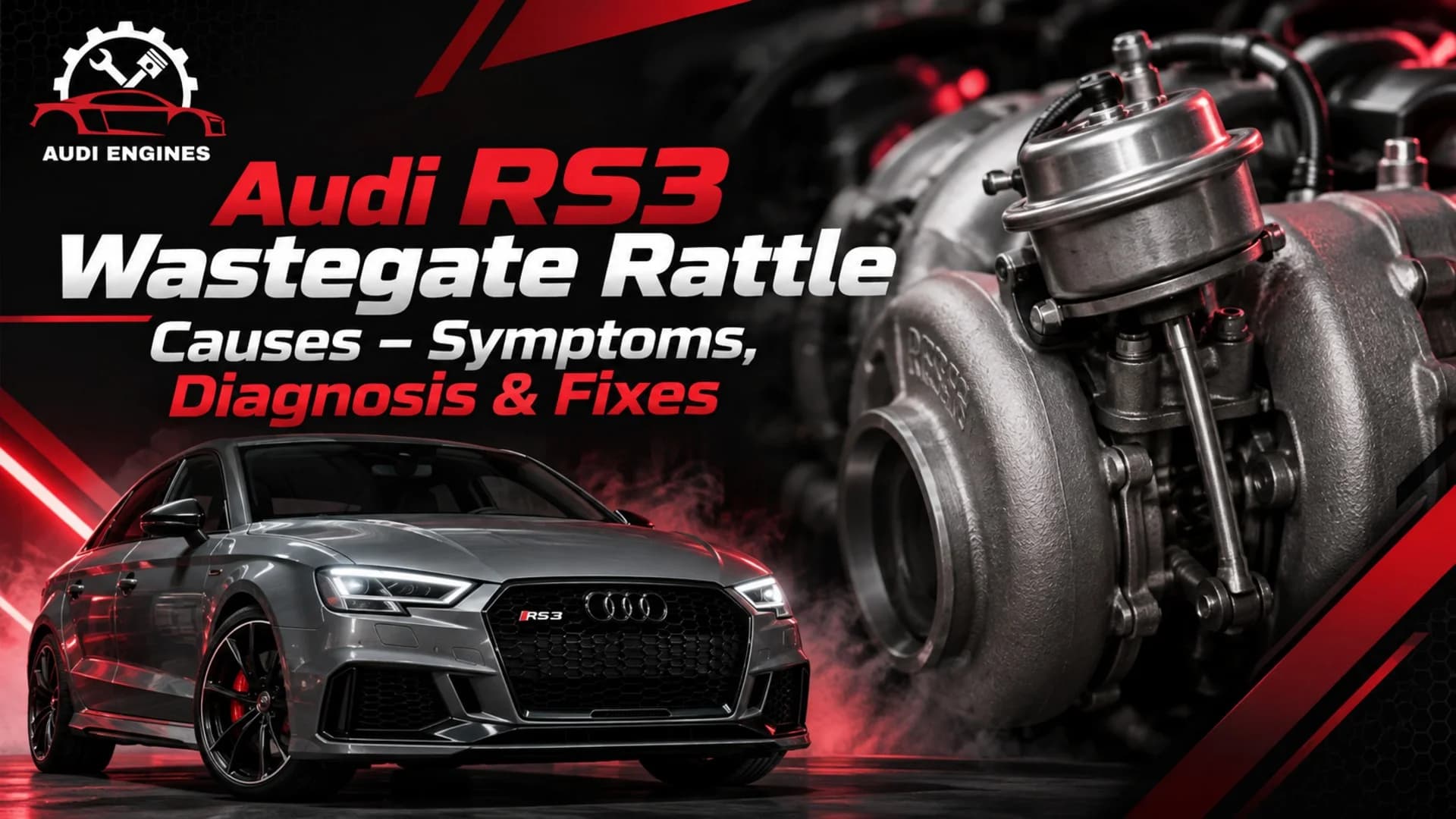
Audi RS3 Wastegate Rattle Causes – Symptoms, Diagnosis & Fixes
You fire up your RS3 on a cold morning and there it is, that metallic, ticking rattle from somewhere near the front of the engine bay. It sounds a bit like a handful of coins shaking in a tin can, and it's gone by the time the car's warmed up.
You fire up your RS3 on a cold morning and there it is, that metallic, ticking rattle from somewhere near the front of the engine bay. It sounds a bit like a handful of coins shaking in a tin can, and it's gone by the time the car's warmed up. So is that just how a 2.5 TFSI sounds, or is your wastegate actually on its way out?
Here's the honest answer: it depends. Search through enough Audi RS3 owner forums and you'll find just as many people saying "totally normal, mine's done it since new" as you will people convinced their turbo is failing. That split opinion isn't because owners are wrong, it's because wastegate rattle sits in a genuinely grey area, and telling the difference between characteristic noise and an early warning sign takes more than a quick listen.
This guide breaks down exactly what causes Audi RS3 wastegate rattle, why it happens specifically on cold start, how to tell it apart from other RS3 engine noises that get mistaken for it, and what your diagnosis and repair options actually look like if something genuinely needs fixing.
What Causes Audi RS3 Wastegate Rattle?
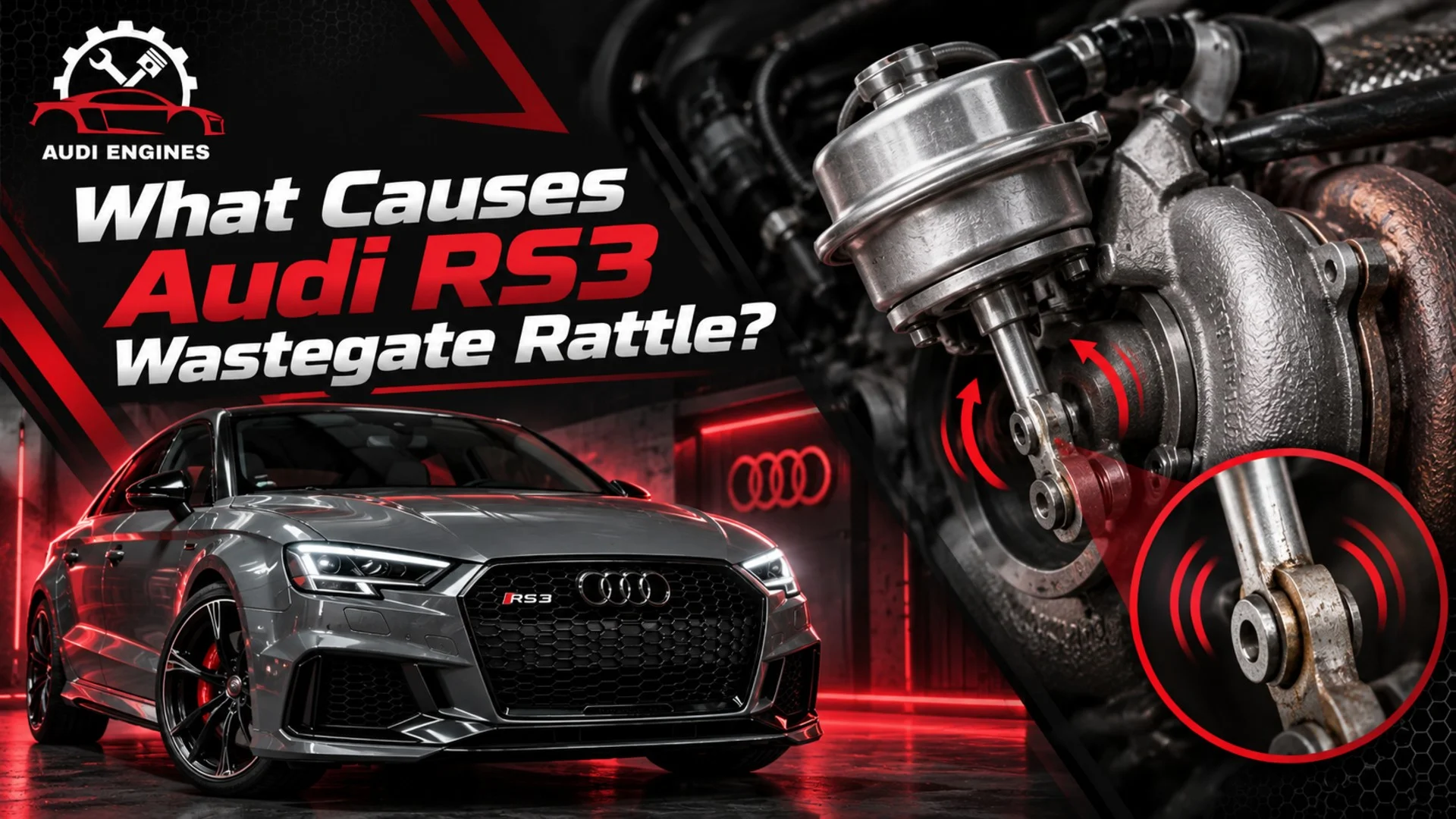
To understand the rattle, it helps to understand what the wastegate is actually doing. On the RS3's 2.5 TFSI five-cylinder engine, the turbocharger uses an internal wastegate, essentially a flap, to control how much exhaust gas bypasses the turbine and regulates boost pressure. That flap is controlled by a wastegate actuator, connected via a rod and linkage.
Here's the mechanism in simple terms:
Cold start → wastegate held in a specific position → exhaust gas flow moves past the flap → flap vibration → resonance through the turbo housing → audible rattle
A few specific factors combine to produce this:
- Wastegate flap vibration, the flap isn't under heavy load at idle or low RPM, so exhaust pulses can cause it to flutter slightly against its seat
- Actuator rod or linkage play, a small amount of mechanical play in the actuator arm is normal by design, but it's also part of what creates the ticking sound
- Exhaust gas pulsations, the five-cylinder engine's exhaust pulse pattern interacts with the wastegate position in a way that can produce a distinct metallic character
- Wastegate position at low load, under light throttle, the wastegate sits in a position more prone to flutter than it does once you're properly into the boost
None of this is unique to a faulty car. It's an inherent characteristic of how this turbocharger and wastegate design behaves under specific conditions, which is exactly why so many RS3 owners report it even on cars fresh from the dealership.
Why Does the RS3 Wastegate Rattle on Cold Start?
Cold start is when the rattle is most consistently reported, and there's a specific reason for that.
Modern turbocharged engines, including the RS3's 2.5 TFSI, run a cold-start catalyst warm-up strategy. To get the catalytic converter up to operating temperature quickly (which matters for emissions compliance), the engine management system runs a slightly different exhaust flow and wastegate position profile during the first minute or so after starting.
That warm-up phase typically involves:
- Higher idle RPM than normal operating idle
- Increased exhaust gas flow to heat the catalyst faster
- A wastegate position that's more exposed to exhaust pulsation
Once the catalyst reaches temperature and the engine settles into its normal warm operating strategy, the wastegate's behaviour changes, exhaust flow smooths out, and the rattle typically fades. That's why so many owners describe the same pattern: noticeable on startup, gone within a minute or two, absent entirely once the car's fully warm.
What Does Wastegate Rattle Actually Sound Like?
Owner descriptions are remarkably consistent, which is genuinely useful for self-diagnosis. Common comparisons include:
- A metallic, tinny rattle, distinctly different from a dull thud or knock
- A sound like "a box of marbles" shaking gently
- Similar to "coins in a tin can", especially at idle
- A light ticking or buzzing that varies with engine speed rather than staying constant
The location matters too. Wastegate rattle is generally felt and heard from the front/turbo area of the engine bay, not from underneath the car toward the rear, a distinction that becomes important later when we compare it to exhaust flap noise.
Does a Downpipe or Remap Make the Rattle Worse?
This is one of the most consistently reported patterns among modified RS3 owners, and it's worth understanding before you assume something's broken after a modification.
If you've fitted a catless or catted downpipe, or had a Stage 1 or Stage 2 remap, don't be surprised if the rattle becomes noticeably more audible. This isn't usually a sign of new damage, it's a side effect of the modification itself.
Catless Downpipes, Stage 1/2 Tunes & Increased Noise
Here's why the noise changes after these modifications:
- Removing the secondary catalytic converter reduces exhaust backpressure and restriction, which means sound (including wastegate flutter) travels more freely and audibly through the system
- Aftermarket downpipes are often less insulated or differently shaped than the factory midpipe, changing how resonance carries
- Remapping can adjust wastegate duty cycle and boost control strategy, which sometimes changes when and how noticeably the flap flutters
- Reduced exhaust restriction overall simply means less is muffling the sound that was always there, even if it was quieter on the stock setup
In other words: the rattle was very likely happening before the downpipe or tune, it just wasn't as easy to hear over the stock exhaust system's natural sound damping. That's a genuinely important distinction if you're trying to figure out whether your modification caused a fault or just revealed an existing characteristic.
Is Audi RS3 Wastegate Rattle Normal, or a Sign of a Fault?
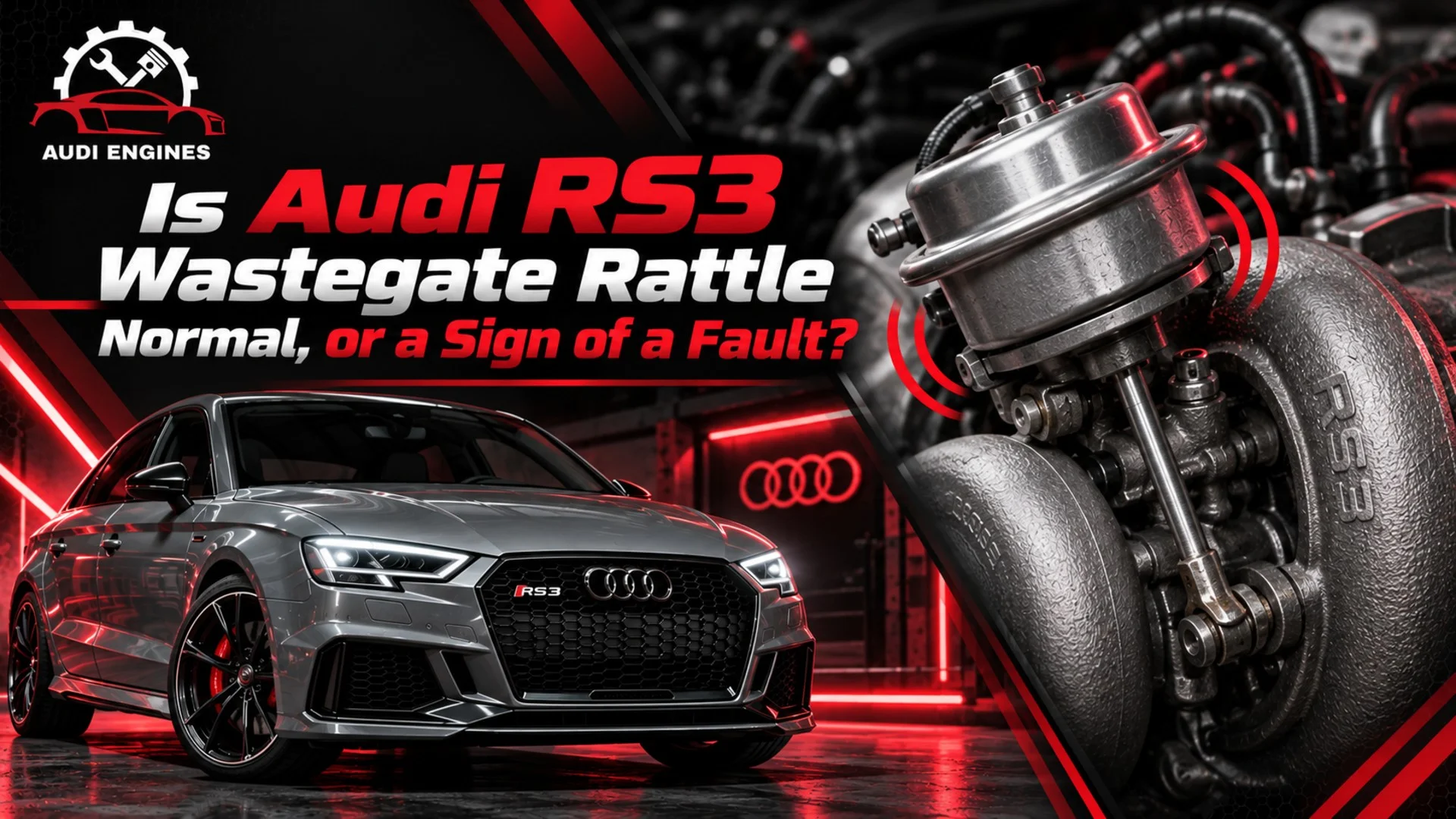
This is the question that matters most, and it's exactly where most existing content, forum threads especially, falls short. Nobody wants a definitive answer buried across fifteen pages of conflicting opinions, so here's a clear breakdown.
Signs That Point to Normal, Characteristic Rattle
If your experience matches most or all of the following, you're very likely dealing with the RS3's known characteristic noise rather than a developing fault:
- The rattle appears specifically on cold start and fades within a minute or two
- It's most noticeable at idle or low RPM, particularly under light throttle
- The noise disappears as boost builds under acceleration
- There's no accompanying warning light, fault code, or driveability issue
- Boost pressure and performance feel completely normal
- The car has had the rattle consistently since new or since a known modification, without getting progressively worse
Signs That Point to a Genuine Wastegate or Turbo Fault
On the other hand, treat the following as reasons to get the car properly inspected rather than assuming it's just "an RS3 thing":
Characteristic | More consistent with normal rattle | More concerning, investigate |
| Timing | Cold start only | Present when fully warm too |
| Duration | Fades within 1-2 minutes | Persistent throughout the drive |
| RPM range | Low RPM / idle | Present across a wide RPM range |
| Under boost | Disappears as boost builds | Continues or worsens under load |
| Warning light | None | Engine/check light illuminated |
| Fault codes | None stored | Underboost or boost-related code present |
| Actuator condition | Minimal play | Excessive or visible actuator play |
| Performance | Completely normal | Noticeable power loss or hesitation |
If you're ticking boxes in the right-hand column, especially a warning light, a fault code, or any real performance loss, that's no longer a "is it normal" question. It's time for a proper inspection.
When Should You Get It Checked by a Specialist?
Book a diagnostic check if:
- The rattle is present even once the engine is fully warm
- You notice reduced boost, hesitation, or a power drop alongside the noise
- A warning light appears on the dashboard
- The noise has noticeably worsened over a short period, rather than staying consistent
- You've recently had turbo, downpipe, or actuator work and the noise changed unexpectedly afterward
Catching a genuine fault early, rather than assuming it's "just wastegate rattle" for months, is usually the difference between a straightforward repair and a far more expensive turbo replacement.
Wastegate Rattle vs Other Audi RS3 Engine Noises
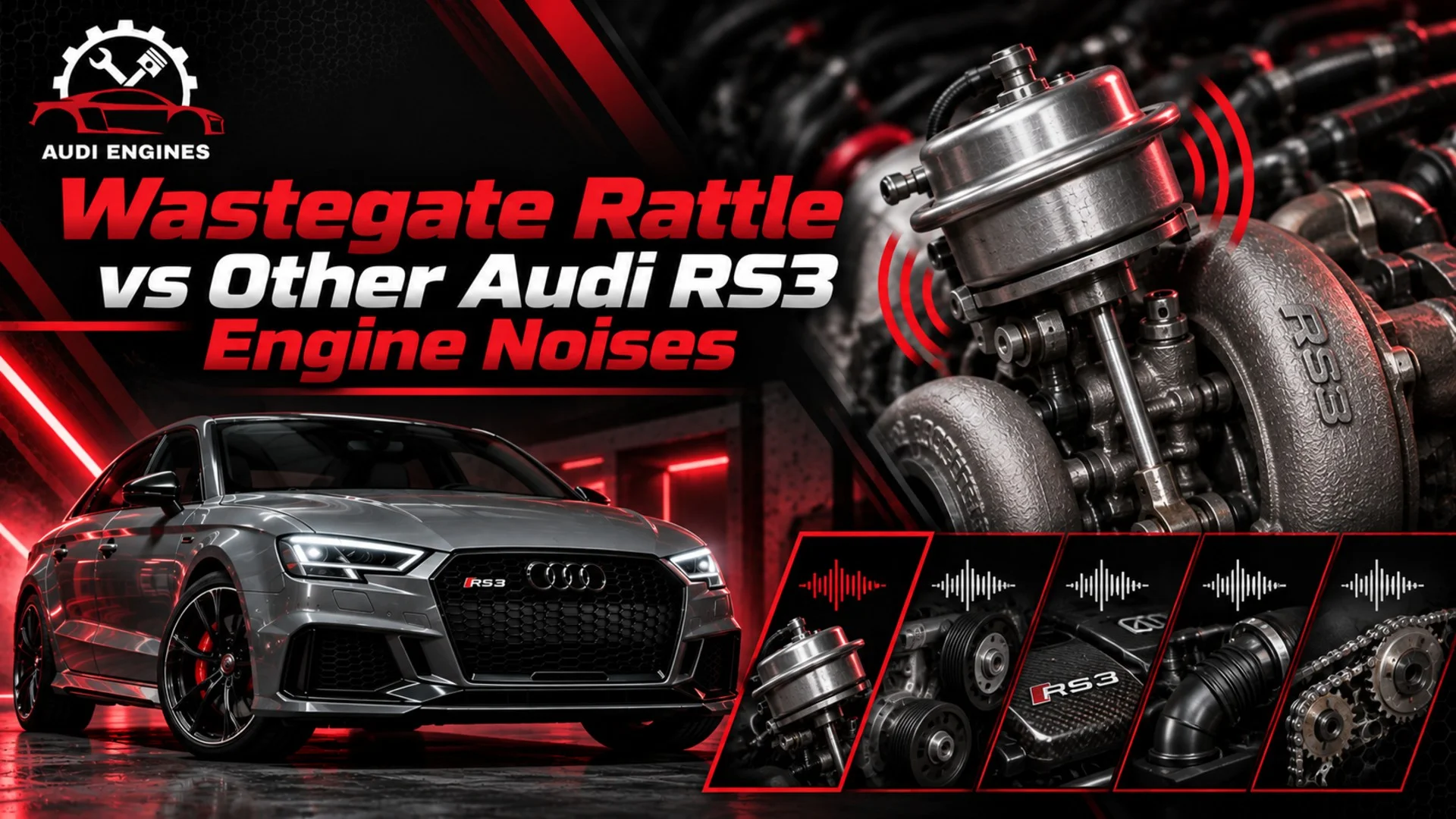
Part of the reason owners get confused isn't that wastegate rattle is hard to identify on its own, it's that several unrelated RS3 noises sound superficially similar. Here's how to tell them apart.
Wastegate Rattle vs Exhaust Flap Rattle
The RS3's active exhaust valve, fitted as part of the sport exhaust system, is a completely separate component from the wastegate, but the two get confused constantly in owner discussions.
- Wastegate rattle: comes from the front of the engine bay, near the turbo, most noticeable on cold start and at low RPM
- Exhaust flap rattle: comes from the rear of the vehicle, near the exhaust valve/flap assembly, often noticeable at idle regardless of engine temperature and can change depending on drive mode (Comfort vs Dynamic, for example)
If the noise seems to be coming from underneath the back of the car rather than under the bonnet, you're likely dealing with an exhaust valve issue, not a wastegate one, and that's a different repair path entirely.
Wastegate Rattle vs Timing Chain Noise
Timing chain noise is a legitimately different mechanical issue and one that's worth ruling out, since it's far more serious if present.
- Wastegate rattle: metallic, ticking, tied closely to cold start and low load, fades predictably
- Timing chain noise: typically a more consistent rattling or whirring from deeper in the engine, often present at idle regardless of temperature and not tied to boost or throttle position in the same way
If you're at all unsure, this is a case where a proper inspection is worth the cost, timing chain issues shouldn't be left to guesswork.
Wastegate Rattle vs Exhaust Leak or Heat Shield Vibration
Two more common look-alikes:
- Exhaust leaks typically produce more of a hissing, ticking, or popping sound, sometimes accompanied by a faint exhaust smell in the cabin or a noticeable change in exhaust tone
- Heat shield vibration tends to produce a buzzing or rattling noise that can occur across a much wider range of conditions, not specifically tied to cold start, and often changes if you press on the shield area (where accessible) while the engine's running
How to Locate Where the Noise Is Coming From
A simple process can help narrow things down before you even book a diagnostic appointment:
- Note when it happens, cold start only, or all the time?
- Note the RPM range, low RPM/idle only, or across the board?
- Note the location, front of the engine bay, or rear of the vehicle?
- Note what changes it, does it fade with boost, change with drive mode, or stay constant regardless?
- Check for anything else, warning lights, fault codes, smells, or performance changes?
Answering these questions gives a specialist a genuine head start when you do bring the car in, rather than starting from "it makes a rattling noise sometimes."
How to Diagnose & Fix Audi RS3 Wastegate Rattle
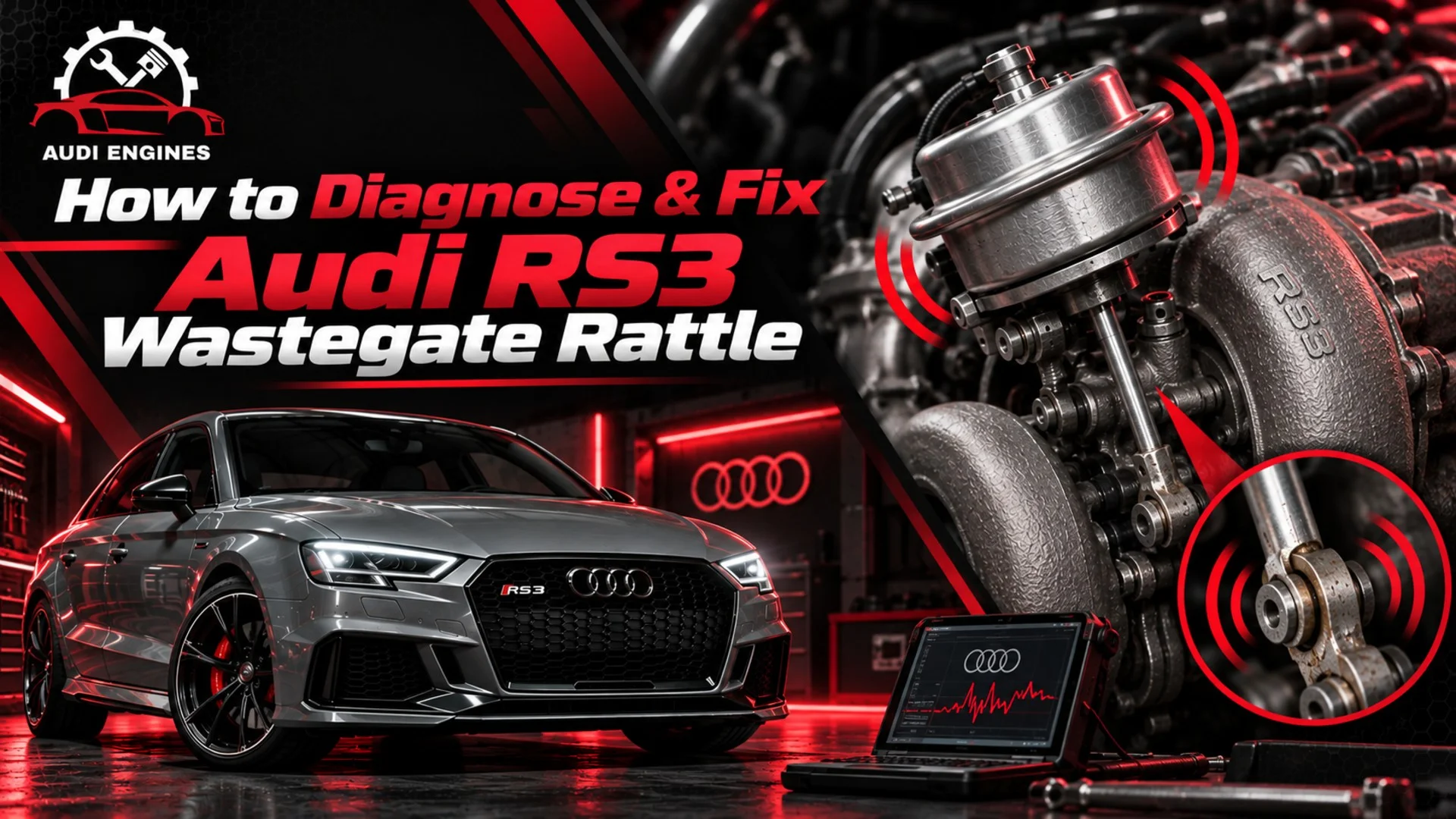
If your noise pattern lines up with genuine fault indicators rather than the normal characteristic rattle, here's what a proper diagnosis and repair process actually involves.
How Professionals Diagnose Wastegate Rattle
A thorough diagnosis goes well beyond just listening to the engine. It typically includes:
- Discussing exactly when and how the noise occurs, using the same timing/location/trigger questions outlined above
- Road testing where possible, to reproduce the noise under controlled conditions
- Checking boost pressure against expected values for the vehicle
- Scanning for fault codes, including underboost-related codes if present
- Visually and physically inspecting the wastegate actuator and linkage for excessive play or wear
- Checking for exhaust leaks or loose heat shields that could be mimicking the sound
Actuator Inspection, Boost Testing & Fault Code Scanning
This trio forms the core of a proper diagnostic process:
- Actuator inspection checks for movement beyond what's considered normal tolerance in the rod and linkage
- Boost pressure testing confirms whether the turbo is actually building and holding boost correctly, which rules out (or confirms) a functional problem rather than just a noise issue
- Fault code scanning picks up stored codes the driver might not have noticed as a warning light, giving objective evidence rather than relying on sound alone
Can Wastegate Rattle Damage the Turbo If Left Unchecked?
The characteristic cold-start rattle, on its own, isn't generally considered damaging, it's a byproduct of normal operation, not a sign of accelerating wear. However, if the rattle is actually being caused by genuine actuator or linkage wear rather than the expected characteristic flutter, ignoring it for an extended period can allow that wear to progress, potentially affecting boost control accuracy over time.
The safest approach is straightforward: if the noise matches the normal pattern, there's little cause for concern. If it doesn't, particularly if it's paired with a warning light or performance change, get it checked rather than hoping it resolves itself.
Repair Options – Adjustment, Actuator Replacement & Turbo Replacement
Not every wastegate issue requires a new turbo. Depending on what's actually found during diagnosis, repair options include:
- Wastegate adjustment, recalibrating preload or position where the fault is more about setup than worn components
- Software/ECU calibration checks, occasionally relevant where boost control strategy is contributing to the issue
- Actuator replacement, a targeted fix when the actuator itself, rather than the wastegate flap or turbo, is the source of excessive play
- Turbocharger replacement, reserved for cases where the wastegate flap, seat, or internal turbo components show genuine wear beyond what adjustment or actuator replacement can resolve
How Much Does It Cost to Fix Wastegate Rattle on an RS3?
Costs vary significantly depending on what's actually required:
- Diagnosis and inspection sits at the lower end, and is the sensible starting point before assuming anything more expensive is needed
- Wastegate adjustment or minor calibration work costs considerably less than component replacement
- Actuator replacement costs more due to parts and labour, but remains well below a full turbo replacement
- Turbocharger replacement represents the most significant cost, whether fitted with an OEM-spec unit or an upgraded aftermarket turbo
Given how often the rattle turns out to be entirely normal, it's always worth starting with a proper diagnosis rather than pre-emptively booking a turbo replacement based on noise alone.
Frequently Asked Questions
Is wastegate rattle normal on an Audi RS3?
In many cases, yes. A metallic rattle on cold start that fades within a minute or two, disappears under boost, and comes with no warning lights or performance issues is widely reported as a known characteristic of the RS3's turbo and wastegate design.
What causes wastegate rattle on an RS3?
It's caused by the wastegate flap and actuator linkage flexing slightly under exhaust gas pulsation, particularly during low-load conditions like idle and cold start, when the flap isn't under the same load as it is once boost builds.
Why does my RS3 rattle when cold?
Cold-start catalyst warm-up strategy runs a higher idle and different exhaust flow profile to bring the catalytic converter up to temperature quickly, and this combination tends to make wastegate flutter more audible until the engine settles into normal warm operation.
Does wastegate rattle mean my turbo is failing?
Not necessarily. The characteristic version of this noise is considered normal operating behaviour rather than a sign of failure. It only becomes a concern when it's persistent when warm, accompanied by a warning light, or paired with a genuine loss of performance.
Can RS3 wastegate rattle damage the turbo?
The expected characteristic rattle generally isn't damaging on its own. However, if the underlying cause is genuine actuator or linkage wear rather than normal flutter, leaving it unaddressed for a long period could allow that wear to progress.
Does an aftermarket downpipe make the wastegate rattle louder?
Yes, this is a commonly reported pattern. Removing exhaust restriction, particularly with a catless downpipe, tends to let existing wastegate noise travel more freely and become more audible, rather than creating a new fault.
How can I tell the wastegate rattle from the exhaust flap rattle?
Location is the key giveaway. Wastegate rattle comes from near the turbo at the front of the engine bay, while exhaust flap rattle comes from the rear of the vehicle near the active exhaust valve, and can vary depending on drive mode.
How do you fix the Audi RS3 wastegate rattle?
If diagnosis confirms a genuine fault rather than normal characteristic noise, fixes range from wastegate adjustment and actuator replacement through to turbocharger replacement in more advanced cases, depending on what's actually found during inspection.
Final Thoughts
Wastegate rattle on an Audi RS3 sits in a genuinely grey area, and that's exactly why so much of the existing owner discussion around it goes in circles. In most cases, that cold-start ticking is simply the wastegate and actuator doing exactly what they're designed to do under low-load, cold conditions, and it's nothing to lose sleep over.
But "usually normal" isn't the same as "always normal." If your rattle persists when warm, shows up alongside a warning light, or comes with any real change in performance, that's a different situation entirely, and one worth having properly diagnosed rather than dismissed.
If you're not sure which category your RS3 falls into, get in touch with our team with a description of when the noise happens and what you've noticed alongside it. We'll talk you through a proper diagnosis, confirm whether you're looking at normal characteristic noise or a genuine wastegate, actuator, or turbo fault, and give you a clear, honest quote for whatever repair, if any, is actually needed.