
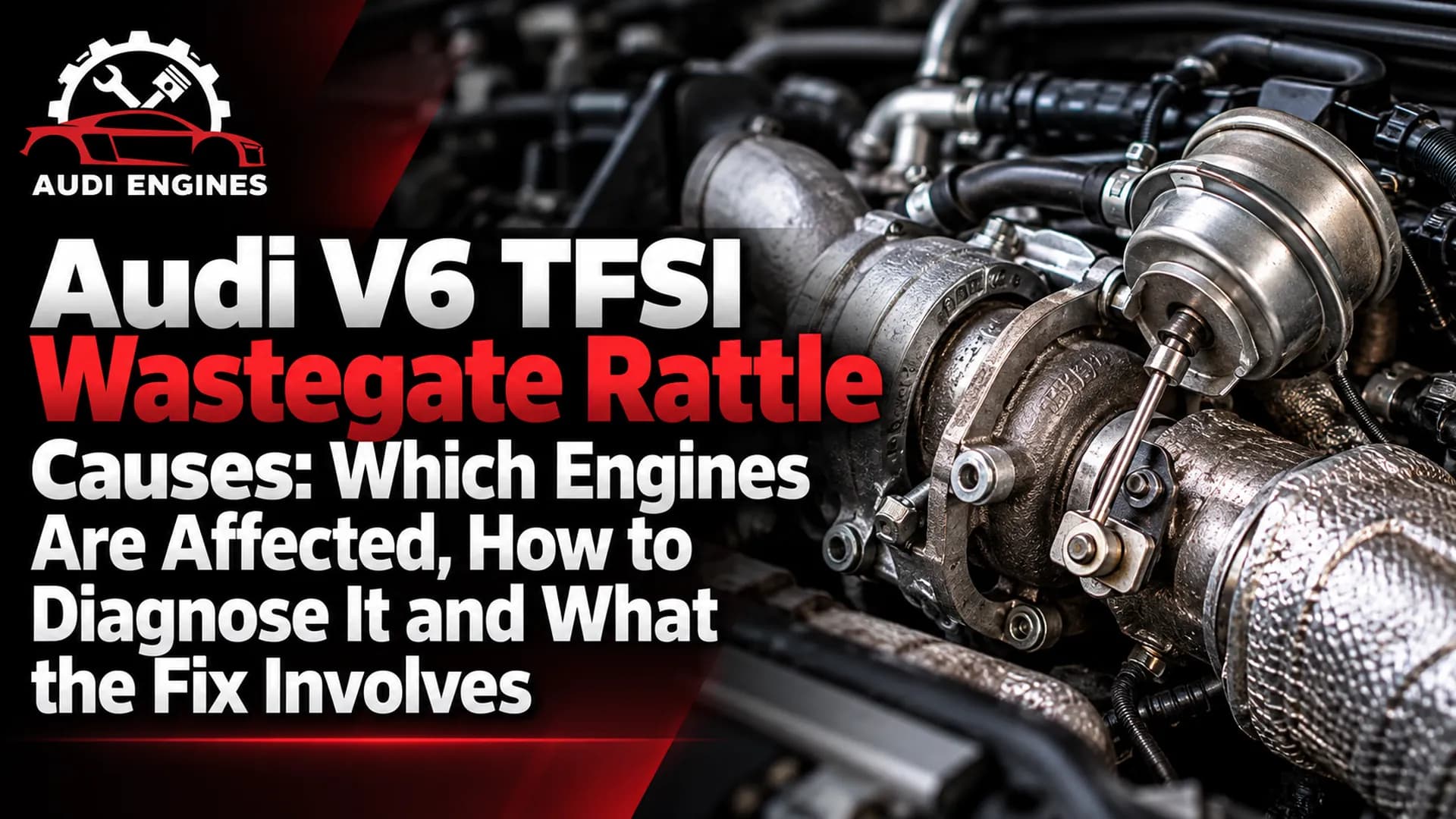
Audi V6 TFSI Wastegate Rattle Causes: Which Engines Are Affected, How to Diagnose It and What the Fix Involves
You start the car, pull away, and there it is. A thin, metallic rattle from somewhere under the bonnet, usually as the turbos begin to build boost or when you lift off the throttle. No warning light. No loss of power. Just a noise that makes you wonder whether something expensive is about to let go.
You start the car, pull away, and there it is. A thin, metallic rattle from somewhere under the bonnet, usually as the turbos begin to build boost or when you lift off the throttle. No warning light. No loss of power. Just a noise that makes you wonder whether something expensive is about to let go.
Online advice makes it worse. One forum thread says ignore it. Another says you need a new turbocharger. Both are too simple.
Here is the direct answer. On the Audi 2.9 TFSI biturbo, the usual cause is slight play in the wastegate flap and its linkage, which exhaust pulsation turns into an audible rattle. The 3.0 TFSI supercharged V6 is a different story. It has no turbo and no wastegate, so a rattle on that engine needs a different diagnosis.
At Audi Engines, we work on Audi turbocharged and supercharged engines, and we see owners arrive with the wrong engine diagnosis more often than you might expect. This guide explains which engines are affected, what causes the noise, how to tell it apart from other rattles, and what your repair options look like. If you want the noise properly identified, book a diagnostic with us at audiengines.co.uk.
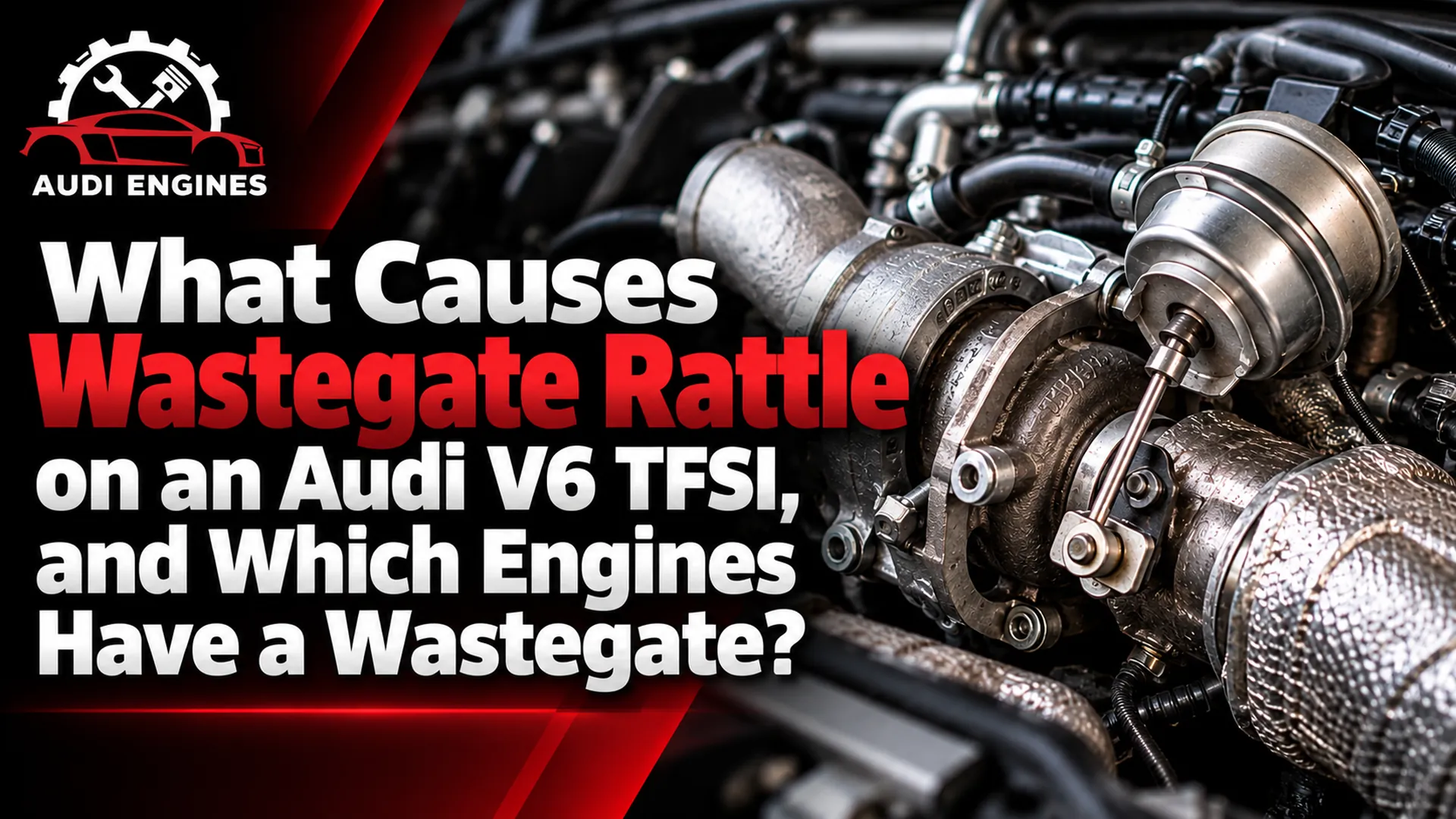
What Causes Wastegate Rattle on an Audi V6 TFSI, and Which Engines Have a Wastegate?
The label "Audi V6 TFSI" covers two very different engines. Mixing them up is the most common reason owners chase the wrong fault, so it is worth sorting out before anything else.
A wastegate is a valve that controls how much exhaust gas reaches the turbine of a turbocharger. By diverting some of that gas, it regulates boost pressure. The valve consists of a flap, a linkage or rod, and an actuator that moves it. Any looseness in that chain can produce noise, particularly when exhaust pulses hit the flap.
Does the Audi 3.0 TFSI Have a Wastegate, or Is a V6 Rattle Something Else?
No. The 3.0 TFSI is supercharged, not turbocharged, so it has no wastegate. If you own one and hear a rattle, the wastegate is not your culprit. On that engine, a brief rattle just after a cold start that fades within a few seconds is more often linked to the timing chain tensioners.
This table separates the three engines owners most often confuse:
Engine | Induction | Does it have a wastegate? | What a rattle usually points to |
| 2.9 TFSI biturbo (EA839) | Twin turbochargers | Yes | Play in the wastegate flap and linkage, made audible by exhaust pulsation |
| 3.0 TFSI supercharged (EA837) | Supercharger | No | Timing chain tensioners, especially a short rattle on cold start |
| 2.0 TFSI (EA888) | Single turbocharger | Yes | A long-documented wastegate rattle, which Audi has addressed with a spring clip fix |
The 2.0 TFSI appears here for context. Most online forum content about wastegate rattle comes from that engine, which is why the V6 side of the story gets so little attention.
A quick note for anyone searching for an RS3 fix. The RS3 uses a five-cylinder engine, not a V6, so this guide does not cover it. The general principles still apply, but the diagnosis and repair differ.
A pattern we see in the workshop: an owner describes a "V6 rattle", assumes it is the turbo, and has already been quoted for a replacement. A proper diagnosis then shows a chain tensioner issue on a supercharged car, or a loose heat shield on a biturbo. Identifying the engine and the noise first saves a great deal of money and worry.
What Are the Main Causes of Wastegate Rattle on the Audi 2.9 TFSI (EA839)?
The 2.9 TFSI biturbo powers cars such as the RS4, RS5, S4 and S5, along with other models in the range. Forum posts often say "the flap is loose" and stop there. The real picture is a chain of causes, and understanding it helps you judge how worried to be.
- Wastegate linkage play. Every linkage has some manufacturing tolerance. When that tolerance allows slight movement between the rod and the flap, the parts can tap against each other. This is the central cause on the 2.9 TFSI, and Audi's technical service bulletin for turbocharger noise points to slight play at the wastegate flap linkage.
- Exhaust gas pulsation. Exhaust gas arrives at the turbine in pulses, not a smooth stream. Those pulses make a loose flap and rod vibrate, which is why the rattle often appears as boost builds or when you lift off the throttle.
- Wastegate flap and bushing wear. Over time, the pivot points can wear and increase the clearance. A rattle that starts faint and grows louder often points here.
- Actuator rod tolerance. The rod between the actuator and the flap has its own tolerance. Any slack there adds to the movement and the noise.
- Heat cycling and component fatigue. Turbine housings reach very high temperatures. Repeated heating and cooling can loosen fits and accelerate wear.
- Tune load. A software tune that raises boost or changes wastegate duty can add load to the wastegate system. It does not create the tolerance, but it can make an existing rattle appear sooner or louder.
Think of it as a loose hinge on a door in a draught. The hinge was never perfectly tight, the wind makes it rattle, and wear slowly makes it worse. The wind here is exhaust pulsation, and the hinge is the flap and linkage.
Understanding this chain matters because it explains why the rattle is often intermittent. It can come and go with engine load, temperature and throttle position, which makes it hard to reproduce on demand.
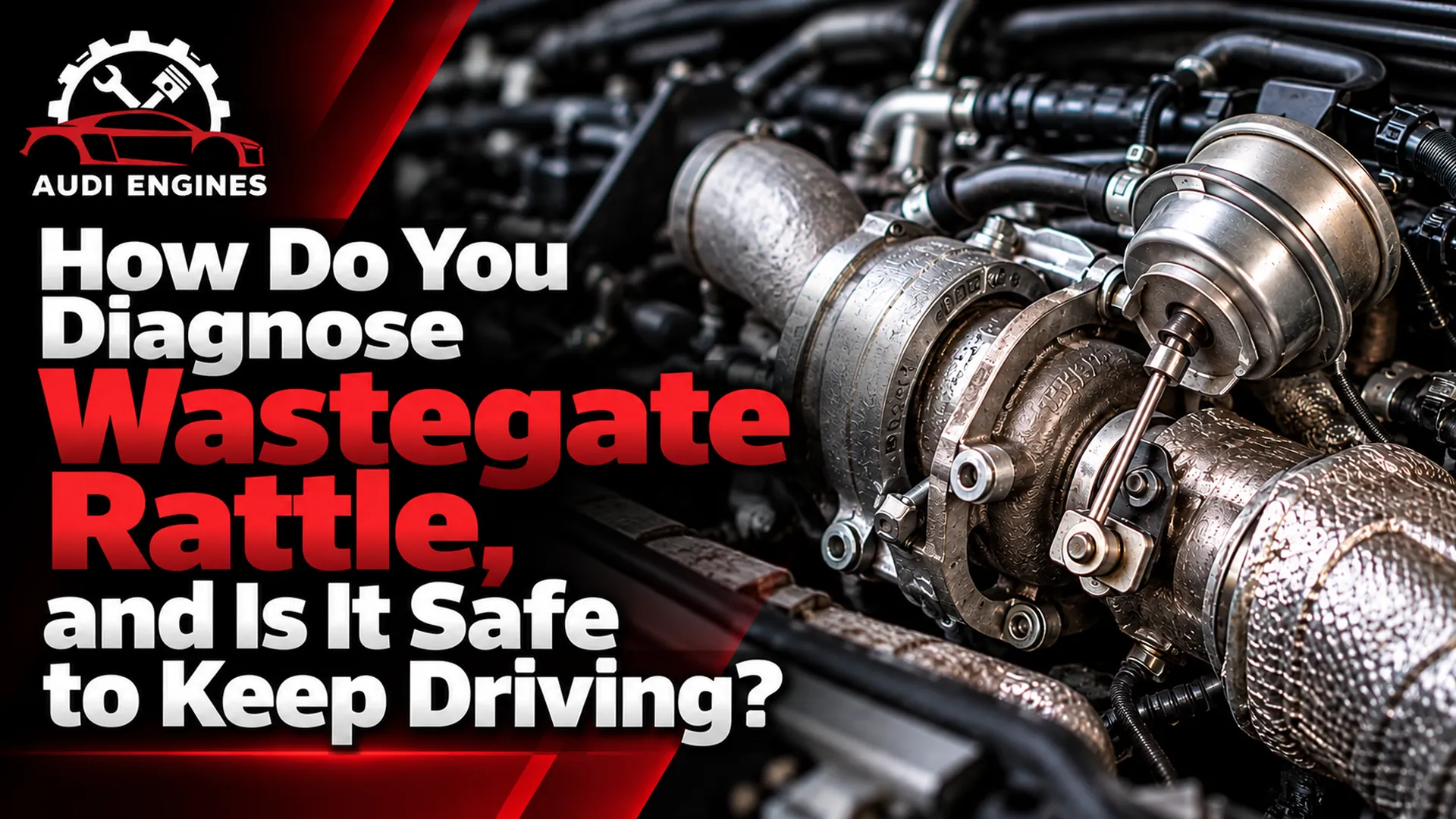
How Do You Diagnose Wastegate Rattle, and Is It Safe to Keep Driving?
Two questions come up in almost every enquiry: what is making the noise, and can I keep driving? A reliable answer to the first makes the second much easier.
Is It the Wastegate, a Heat Shield, a Diverter Valve or an Exhaust Leak?
Several components can mimic a wastegate rattle. The timing of the noise is your best clue. Use this guide as a starting point, then have the car checked, because sound alone can mislead.
When you hear it | What it sounds like | Possible cause |
| At idle, or just off idle | Thin, metallic buzz or chatter | Wastegate flap or linkage play, or a loose heat shield |
| As boost builds under light load | Rattle or tick that comes with the turbos spooling | Wastegate linkage play with exhaust pulsation |
| When you lift off the throttle | Flutter, chatter or rattle | Wastegate movement, or diverter valve and turbo flutter |
| Short rattle on first cold start | Rattle lasting a few seconds, then gone | Timing chain tensioners on the supercharged 3.0 TFSI |
| Constant or rising with revs | Tick or buzz that follows engine speed | Exhaust manifold leak, loose heat shield or another component |
Turbo flutter, sometimes called compressor surge, is a fluttering sound when you lift off the throttle and boost has nowhere to go. It is a separate issue from wastegate rattle, though the two can be confused.
A proper diagnosis follows a logical order:
- Record the noise. Note when it occurs: cold or hot, idle, lift-off or load. A phone recording helps your technician.
- Scan for fault codes and review boost data. Tools such as VCDS or ODIS read stored codes and live boost figures. Underboost codes, including P0299, suggest the car is not reaching its target pressure.
- Inspect external components. Heat shields, clamps, charge pipes and mounts are checked for looseness or damage.
- Check for boost leaks. A smoke test on the charge system rules out leaks that can mimic or accompany turbo noise.
- Check linkage play and actuator movement. This confirms whether the wastegate itself has excessive movement.
Skipping steps leads to guesswork. We have seen cars where a loose heat shield was blamed on the turbo and others where a genuine wastegate fault was dismissed as a heat shield. The sequence above separates the two.
Can You Drive With a Rattling Wastegate, and Will It Trigger a Check Engine Light?
Often, yes, for a while. Many owners report driving for thousands of miles with a wastegate rattle and no warning light. A rattle alone does not always mean the turbo is about to fail.
That said, a rattle is never a reason to ignore the car. Use this simple severity guide:
- A faint rattle, no warning lights, normal power. Usually a nuisance. Book a diagnostic, and have the noise recorded and assessed so you know where you stand.
- A rattle that is getting louder over time. Wear may be progressing. Get it checked sooner rather than later.
- A rattle with an underboost code or reduced power. The wastegate may no longer be controlling boost correctly. Stop pushing the car and arrange a diagnosis.
- A rattle with limp mode, whistling, oil smoke or a sharp loss of power. Treat this as urgent. Further driving risks more serious damage, so have the car inspected promptly.
Will it trigger a check engine light? Not necessarily. A rattle with no warning light is common, which is why owners often delay. If the wastegate loses control of boost, the car may log underboost or overboost faults and display a warning, but plenty of rattling wastegates never get that far.
Can wastegate rattle damage the turbo? Excess movement can accelerate wear on the parts involved, and a worn wastegate can eventually affect boost control. It does not always lead to turbo failure, but a worsening rattle deserves attention.
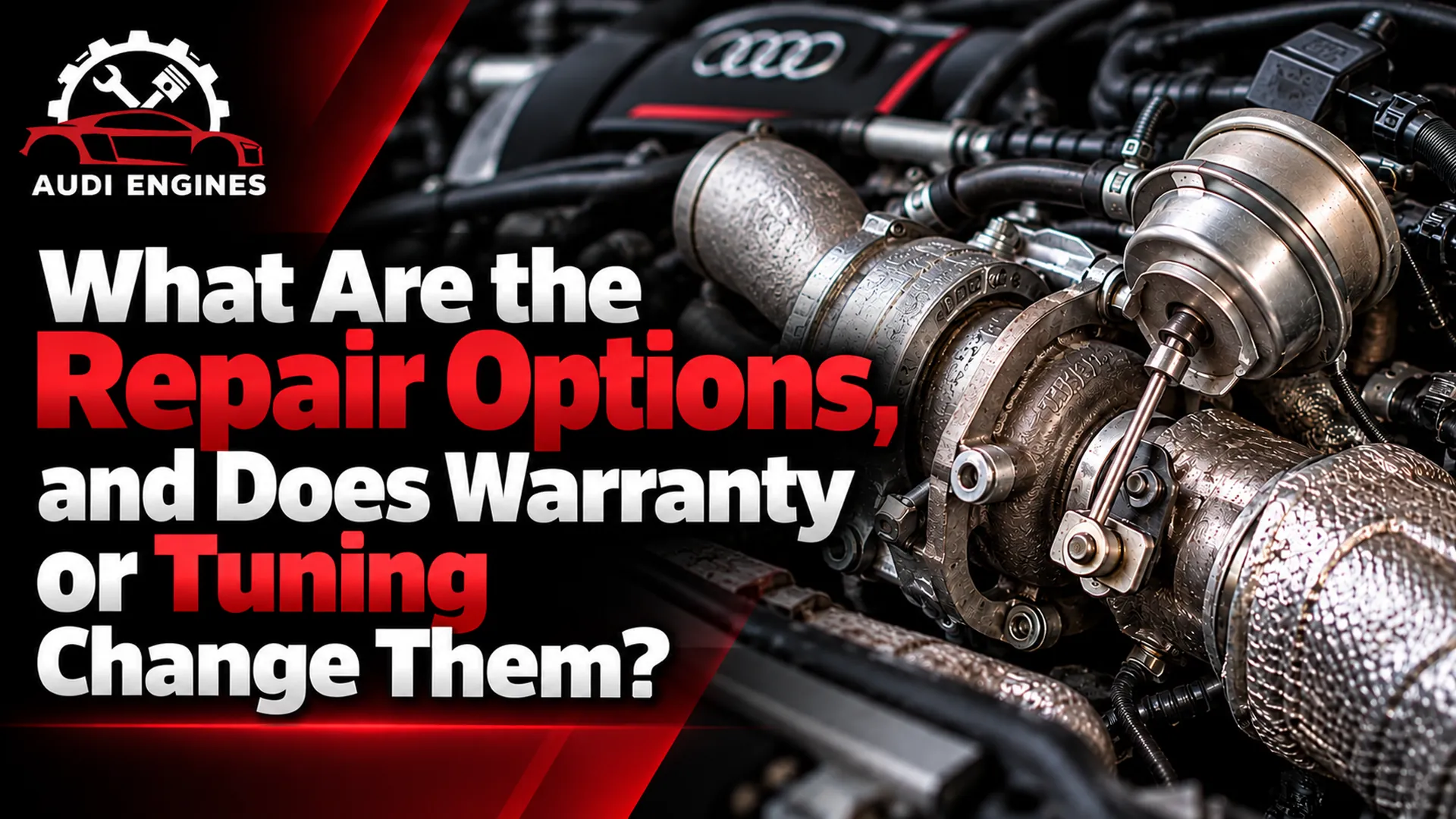
What Are the Repair Options, and Does Warranty or Tuning Change Them?
Once the noise is confirmed as the wastegate, the next question is what the fix involves. The honest answer is that it depends on the cause, the car's age and how far wear has progressed.
Can the Wastegate Be Repaired Separately, or Do You Need a New Turbo?
Sometimes the wastegate can be dealt with without replacing the whole turbocharger, and sometimes it cannot. Think of repair options as a ladder, starting with the least involved:
- Linkage or clip-style correction. Where the design allows, a fix that removes play in the linkage can quieten the rattle. Audi has used spring clip solutions on other engines, and the correct approach for the 2.9 TFSI depends on the unit and the technical bulletin for your car.
- Actuator repair or replacement. If the actuator or its rod is worn or faulty, replacing it may restore correct movement.
- Turbo reconditioning. A specialist can rebuild or recondition the unit, including wastegate components, depending on the condition of the core.
- Full turbocharger replacement. When the core is worn, the housing damaged or a separate repair is not practical, a new or remanufactured turbo is the route.
What shapes the cost? We do not quote figures here, because every car is different, but these factors matter most:
- The engine and turbo design. Access and parts differ between engines and units.
- The depth of the repair. A linkage correction is a different job from a turbo replacement.
- New, OEM or remanufactured parts. Each choice carries different cost and warranty implications.
- Labour time. Twin-turbo V6 engines are tightly packaged, and access takes time.
- Associated work. Gaskets, seals, oil feed lines and a fresh oil service often go hand in hand with turbo work.
Before you authorise any turbo work, ask these questions:
- Has the noise been diagnosed and confirmed, or is it a guess?
- Can the wastegate be repaired separately, and is that approach reliable on my engine?
- Will new, OEM or remanufactured parts be used, and what guarantee comes with them?
- What other work is recommended, and why is each item needed?
- Will the car be tested and the boost verified after the repair?
A garage that answers these clearly is one you can trust. If you want an honest assessment of whether your car needs a repair or a replacement, book a diagnostic with Audi Engines. Tell us your model, engine and when the noise happens.
Is Wastegate Rattle Covered by Warranty, and What If the Car Is Tuned?
It can be, depending on your cover. Audi has issued a technical service bulletin addressing noises and rattling from the turbocharger on the 2.9 TFSI, attributing it to slight play at the wastegate flap linkage. A bulletin tells dealers how to diagnose and repair a known issue, but it does not by itself guarantee coverage for every car. Check the bulletin details and affected model years against Audi's current documentation, or ask your dealer to confirm them for your vehicle.
In the UK, your options generally include:
- Manufacturer warranty. If the car is within its warranty period, ask the dealer to assess the noise and put the findings in writing.
- Extended warranty. Policies vary in what they cover. Read the terms on turbochargers, wear items and pre-existing faults before relying on one.
- Goodwill repairs. Some manufacturers or dealers contribute to repairs outside warranty in certain cases. It is worth asking, particularly with a full service history.
- Consumer rights. If you bought a car from a dealer recently and the fault was present at the time, the Consumer Rights Act may give you routes to a remedy.
What about tuned cars? Be honest with yourself and your garage. A tune that changes boost or wastegate behaviour can complicate a warranty claim, because a manufacturer may argue that the modification contributed to the fault. Stock cars have the stronger position. If your car is tuned, talk to a specialist before approaching a dealer so you know what to expect.
Buying a used RS4, RS5, S4 or S5? A wastegate rattle should not automatically rule a car out, but it should shape your negotiation. Ask for the full service history, check whether the car has been tuned, find out whether the rattle has been diagnosed, and have a specialist inspect it before you commit. A car with a documented diagnosis is a safer purchase than one with a vague "it's normal" explanation.
Frequently Asked Questions About Audi V6 TFSI Wastegate Rattle
What causes wastegate rattle on an Audi V6 TFSI?
On the 2.9 TFSI biturbo, the main cause is slight play at the wastegate flap and linkage, which exhaust pulsation turns into noise. Flap and bushing wear, actuator rod tolerance and heat cycling can make it worse, and a tune may add load.
Does the 3.0 TFSI have a wastegate?
No. The 3.0 TFSI is supercharged, not turbocharged, so it has no wastegate. A rattle on that engine, especially a brief one on cold start, is more often linked to the timing chain tensioners and needs a different diagnosis.
Is wastegate rattle serious?
It depends. A faint rattle with no warning lights is often a nuisance, but one that grows louder, or appears alongside underboost codes or reduced power, deserves prompt attention. Get it diagnosed rather than guessing.
Can I drive with a rattling wastegate?
Many owners do for a time, but it is wise to have it checked. Stop and seek help if you notice limp mode, a sharp loss of power, whistling or oil smoke.
Will wastegate rattle trigger a check engine light?
Not always. A rattle with no warning light is common. A warning may appear if the wastegate stops controlling boost correctly and the car logs underboost or overboost faults.
Does a tune cause wastegate rattle?
A tune does not create the underlying tolerance, but extra boost or changed wastegate control can add load and make a rattle appear sooner or louder. It can also complicate a warranty claim.
Can the wastegate be repaired instead of replacing the turbo?
Sometimes. Linkage corrections, actuator work or reconditioning may be possible, depending on the unit and its condition. A diagnosis confirms whether a separate repair is realistic.
Should I buy a used Audi with wastegate rattle?
It need not be a dealbreaker, but treat it as a negotiating point. Check the service history, ask about tuning, and have a specialist diagnose the noise before you commit.
Book a Wastegate Rattle Diagnostic with Audi Engines
A rattle from the engine bay is easy to ignore until it grows louder or a warning light appears. Identify the engine, record when the noise happens, and have it properly diagnosed, and you will know whether you are looking at a minor repair or something larger.
Audi Engines is a UK specialist for Audi turbocharged and supercharged engines. Visit audiengines.co.uk to book a diagnostic, ask about turbo repair or reconditioning, or talk through what your car is doing. Tell us your model, engine and when the rattle occurs, and we will take it from there.