
Is It Worth Replacing an Engine in a Car? A Complete Cost & Decision Guide (UK)
Your mechanic's just delivered the news: the engine's gone. Maybe it's a rod knock that's been getting louder for weeks, maybe it seized after overheating on the motorway.
Your mechanic's just delivered the news: the engine's gone. Maybe it's a rod knock that's been getting louder for weeks, maybe it seized after overheating on the motorway, or maybe a head gasket finally gave out after one too many warning signs you hoped would go away on their own. Either way, you're now staring at a repair estimate that feels like it might exceed what the car's even worth, and wondering whether replacing an engine in a car is actually worth it, or whether you're better off cutting your losses.
It's a genuinely difficult decision, and honestly, there isn't a single right answer that applies to everyone. It depends on your car's age, its condition beyond the engine, what a replacement actually costs, and what your alternatives look like. This guide walks through all of it, the real costs, the rebuild-vs-replace debate, and the questions worth asking before you commit a few thousand pounds to a car that might still let you down elsewhere.
When Does Engine Replacement Make Financial Sense?
The honest starting point is this: engine replacement is worth it when the cost is reasonable relative to what the car is worth and the rest of the vehicle is in good enough condition to justify the investment. Get either of those wrong, and you risk pouring money into a car that fails again somewhere else within months.
Factors That Determine Whether It's Worth Replacing an Engine
Before getting a quote, it's worth running through a few questions honestly, because they'll shape the entire decision more than the engine cost itself.
Vehicle Age and Current Market Value
A five-year-old car with 60,000 miles and a blown engine is a very different conversation to a fifteen-year-old car with 150,000 miles on the clock. Check the current market value for your specific make, model, mileage, and condition, not what you paid for it, and not what you feel it's worth. If a replacement engine costs more than 50% of that market value, the maths starts working against you.
Transmission, Suspension & Rust Condition
An engine replacement only makes sense if everything else in the car is sound. Before committing, it's worth having a proper look at:
- Transmission condition, a failing gearbox alongside a new engine is a double expense nobody wants
- Suspension health, worn bushes, shocks, or mounts add up quickly if neglected
- Rust inspection, structural rust, especially around chassis rails or subframes, can make a car unroadworthy regardless of engine condition
A car that's mechanically sound apart from the engine is a strong candidate for replacement. A car with multiple ageing systems is a much harder sell.
Signs You Need an Engine Replacement
Not every engine problem means replacement, plenty of faults are repairable. But certain signs point toward the engine being beyond economical repair:
- Rod knock, a deep, rhythmic knocking sound that gets worse under load, usually indicating bearing failure
- Seized engine, the engine won't turn over at all, often caused by oil starvation or catastrophic overheating
- Cracked engine block, visible coolant or oil leaking directly from the block itself
- Persistent overheating, especially if it's caused a warped cylinder head or blown head gasket more than once
- Significant compression loss across multiple cylinders, confirmed by a compression test
If you're seeing one or more of these, it's worth getting a proper diagnostic from a mechanic before assuming the worst, but these are the signs that typically separate a repairable fault from a genuine replacement situation.
Engine Replacement vs Buying Another Car
This is usually where the real decision gets made. It's not just "can I afford the engine", it's "am I better off putting this money into a car I already know, or starting again with an unknown vehicle that comes with its own risks."
Cost Comparison Examples
Buying another car isn't free of risk either, you're trading a known issue for an unknown vehicle history, plus the cost, stress, and time of finding, inspecting, and buying a replacement. Sometimes the devil you know, with a solid engine now fitted, is genuinely the better long-term option.
Average Engine Replacement Costs Explained
This is usually the number people search for first, and understandably so, it's the figure that makes or breaks the decision.
Engine Replacement Cost Breakdown
Engine replacement cost in the UK varies significantly depending on the vehicle, engine type, and whether you're going new, used, or remanufactured. As a general guide:
- Used engine (supply only): Typically the most affordable route, particularly for older or higher-mileage vehicles
- Remanufactured engine: Mid-to-higher cost, rebuilt to OEM tolerances with new wear components
- New/factory engine: The highest cost, usually only economically sensible for newer or higher-value vehicles
Parts Cost vs Labour Cost
It's easy to focus purely on the engine price and forget that labour cost often makes up a substantial portion of the total bill. Engine installation typically takes anywhere from a full day to several days depending on the vehicle's complexity, and labour is charged accordingly. Always ask for a full engine replacement estimate that separates parts and labour clearly, so you know exactly what you're paying for.
New vs Used vs Remanufactured Engines
This is one of the most important decisions in the entire process, and it's where a lot of buyers get confused by inconsistent terminology between suppliers.
OEM Engines vs Aftermarket Engines
An OEM replacement engine is built to the exact factory specification of your original engine, the safest choice if you want performance and reliability to match what the car had originally. Aftermarket alternatives can be cheaper, but quality varies significantly between suppliers, so it's worth checking exactly what testing and warranty backs the engine before buying.
Rebuilt Engine Cost vs Replacement Cost
A rebuilt engine (the original engine, stripped and repaired) is often cheaper than a full replacement, but only if the engine block itself is undamaged. If the block is cracked, warped, or beyond repair, rebuilding isn't an option, replacement becomes the only route forward, regardless of preference.
Hidden Costs to Watch For
Beyond the headline engine price, a few costs catch people out:
- Ancillary parts, mounts, gaskets, sensors, and fluids that need replacing alongside the engine, not included in the base quote
- Diagnostic time, confirming the exact cause of failure before ordering a compatible replacement
- Recalibration, some vehicles need ECU work after a swap to run correctly
- Compatibility issues, a mismatched engine code can mean returns, delays, and additional labour
Getting a full, itemised quote upfront, rather than a headline "engine only" price, avoids nasty surprises halfway through the job.
Engine Rebuild vs Engine Replacement, Which Is Better?
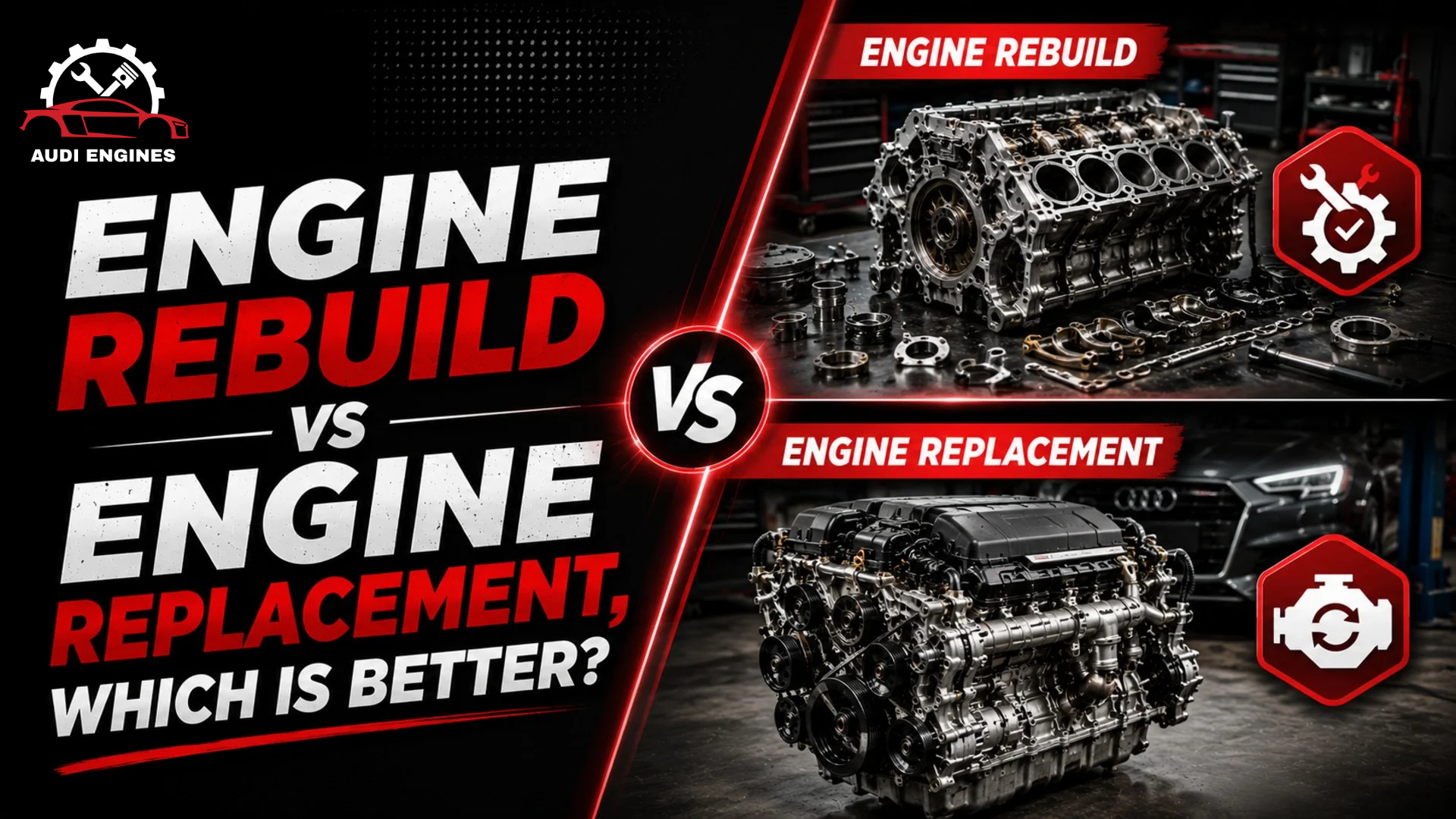
These two options solve similar problems but suit different situations, and picking the wrong one is one of the most common, and costly, mistakes people make.
When Rebuilding Makes More Sense Than Replacing
Rebuilding is usually the better choice when:
- The engine block itself is undamaged and structurally sound
- You want to retain the exact original engine (useful for classic or performance vehicles)
- The fault is isolated to wearable components, pistons, rings, bearings, rather than the block or head
- Budget is tighter, and the labour-to-parts ratio favours a rebuild
When Replacement Is the Smarter Choice
Replacement tends to make more sense when:
- The engine has suffered catastrophic damage (a cracked block, a seized crankshaft, severe overheating damage)
- Time matters, sourcing and fitting a tested replacement engine is often faster than a full rebuild
- You want the reassurance of a tested unit with a clear warranty, rather than reassembled original components
- The cost difference between rebuild and replacement is minimal once labour is factored in
Pros and Cons of Replacing an Engine
Advantages of a Fresh Engine
- A tested, working engine with known condition, no guessing about remaining wear
- Often comes with a replacement engine warranty, giving peace of mind a rebuild may not
- Can extend the car's usable life by years, particularly if paired with good ongoing maintenance
- Avoids the labour-intensive, time-consuming process of a full rebuild
Drawbacks and Risks to Consider
- Upfront cost is often higher than a straightforward repair
- Compatibility issues can arise if the engine code isn't matched precisely to your vehicle
- A replaced engine still needs a proper break-in period and early maintenance attention
- If other parts of the car are worn, you may face further repair costs soon after
Questions to Ask Before Replacing Your Engine
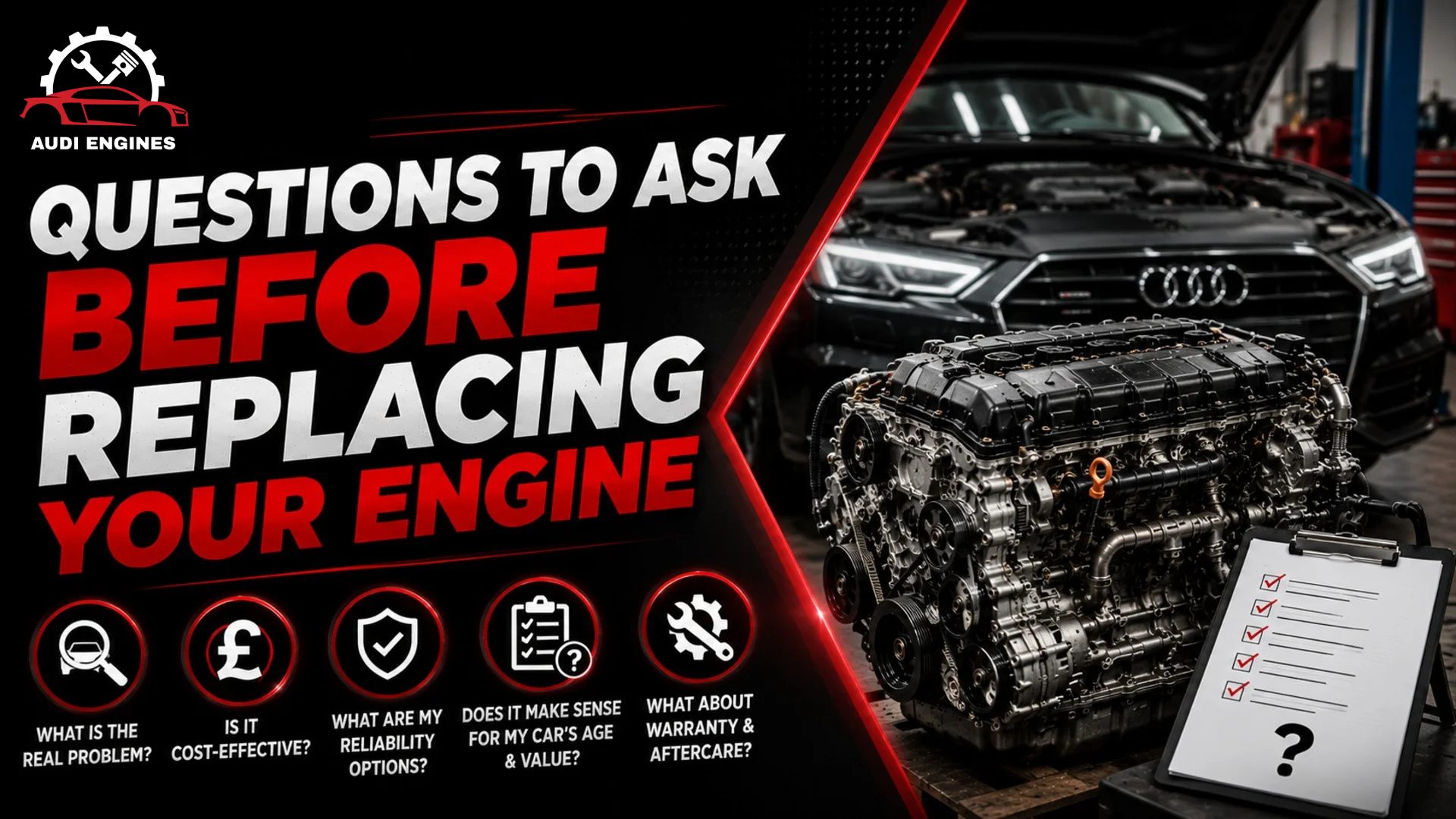
Before signing off on a quote, a few practical questions can save you from regret later, particularly around value, warranty, and what happens if something goes wrong afterward.
Does Replacing an Engine Affect Resale Value?
It can go either way, and this genuinely surprises people. A car with a replaced engine and clear documentation, receipts, warranty paperwork, service records, can actually reassure buyers, since they know exactly what's under the bonnet and when it was fitted. On the other hand, an undocumented or poorly explained engine swap can raise red flags during a used car inspection, so keeping thorough records matters as much as the work itself.
Is Engine Replacement Covered by Warranty or Insurance?
This depends heavily on the cause of failure. If the engine failed due to a manufacturing defect within the original warranty period, it may be covered. If it failed due to wear, neglect, or an accident, it typically falls outside standard cover. Insurance rarely covers gradual mechanical failure, it's generally reserved for sudden events like an accident-related engine failure, not wear-related issues like a blown head gasket from years of use. Always check your specific policy and warranty terms rather than assuming either way.
How Long Does Engine Replacement Take?
For most vehicles, a full engine replacement takes between one and three days once the correct engine is confirmed and in stock. More complex vehicles, or situations involving compatibility issues or additional ancillary repairs, can extend that timeline. Always ask your garage for a realistic estimate based on your specific vehicle rather than a generic figure.
Frequently Asked Questions
Is Replacing an Engine Cheaper Than Buying Another Car?
Often, yes, particularly if the rest of the vehicle is in good condition and the engine replacement cost stays well below the car's market value. Buying another car brings its own costs and risks, including an unknown maintenance history, so a straightforward like-for-like engine replacement is frequently the more economical choice.
Will Replacing an Engine Reset the Mileage?
No. Mileage is recorded against the vehicle, not the engine, so replacing the engine doesn't reset or affect the car's recorded mileage in any way. The odometer reading remains a reflection of how far the vehicle itself has travelled.
Is a Rebuilt Engine as Reliable as a New One?
A properly rebuilt engine, using quality parts and correct procedures, can be just as reliable as a replacement unit, but reliability depends entirely on the quality of the rebuild and the condition of the original block. A poorly executed rebuild can fail again quickly, which is why choosing an experienced specialist matters more than the price difference.
Final Verdict, Is It Worth Replacing an Engine in Your Car?
There's no universal answer, but here's the honest framework: if your car's overall condition is good, the replacement cost stays reasonably below the vehicle's market value, and you plan to keep the car for a few more years, replacement is very often worth it. If the car has multiple ageing systems, the replacement cost approaches or exceeds its value, or you were already considering a change, that money is often better spent elsewhere.
The safest way to know for certain is a proper inspection and an honest, itemised quote, not a guess based on the engine cost alone.
Get an Honest Engine Replacement Quote
At audiengines.co.uk, we've helped countless UK drivers make this exact decision, and we'd rather give you a straight answer than sell you a replacement you don't need. If your engine fails, get in touch with your vehicle details and we'll talk you through your genuine options: replacement, rebuild, or otherwise, along with a clear, no-obligation quote so you can decide with confidence.