
Oil in Audi Coolant, Causes, Symptoms, Diagnosis and Fixes
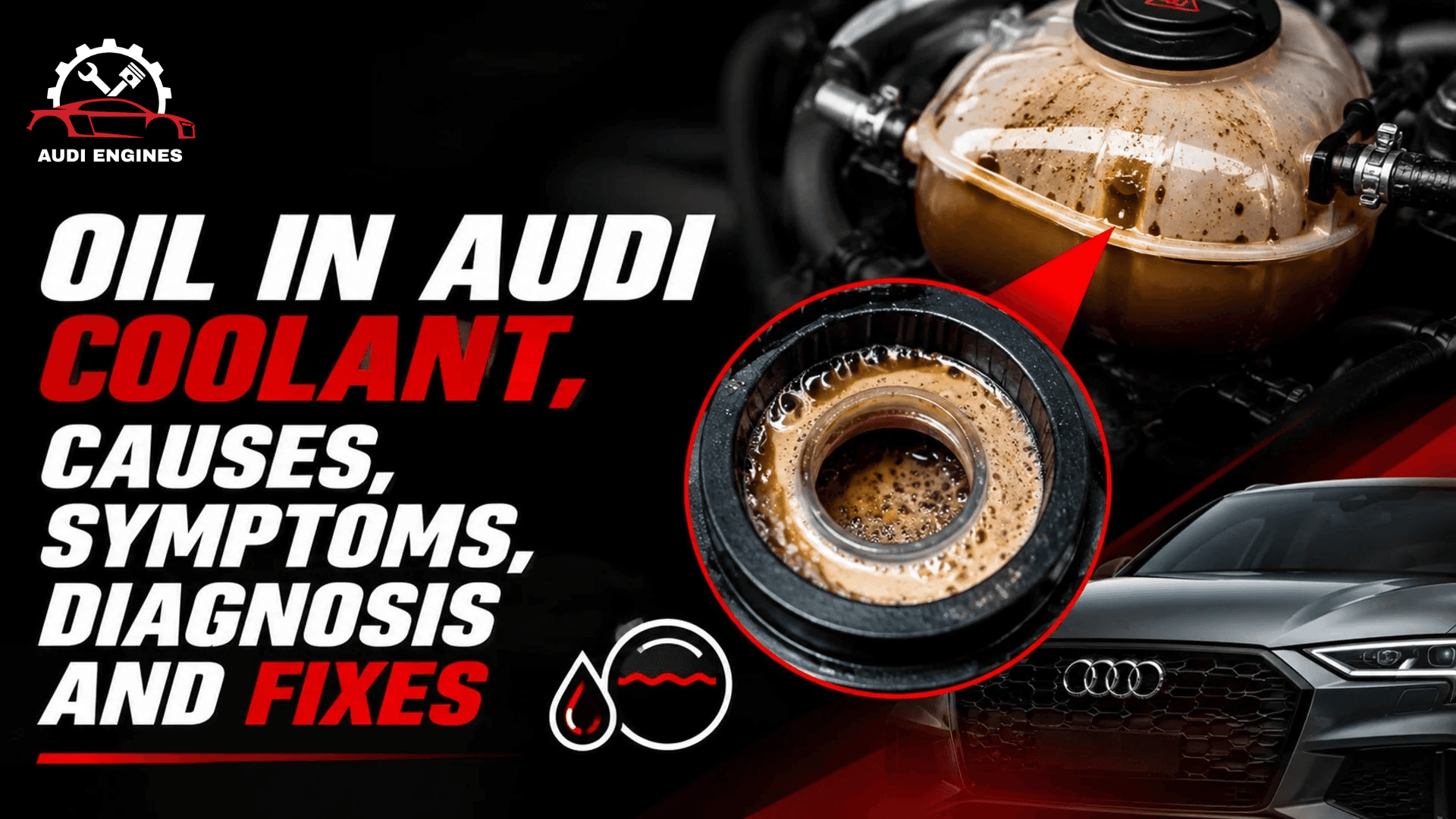
You popped the bonnet, checked the coolant reservoir, and something's off. There's a brownish film on top, maybe a slick sheen.
You popped the bonnet, checked the coolant reservoir, and something's off. There's a brownish film on top, maybe a slick sheen, or the whole tank looks murkier than it should. Your gut's telling you this isn't right, and it isn't.
Oil in Audi coolant is never something to shrug off. But here's what most articles get wrong: they jump straight to "it's your head gasket" and leave you panicking about a four-figure repair bill before you've even confirmed what's actually failed.
The truth is more nuanced. In a large number of cases, oil in the coolant reservoir on an Audi points to a failed oil cooler, a far simpler and cheaper fix than a head gasket. This guide walks through exactly how to tell the difference, what's really going on inside your engine, and what to do next.
What Causes Oil in Audi Coolant?
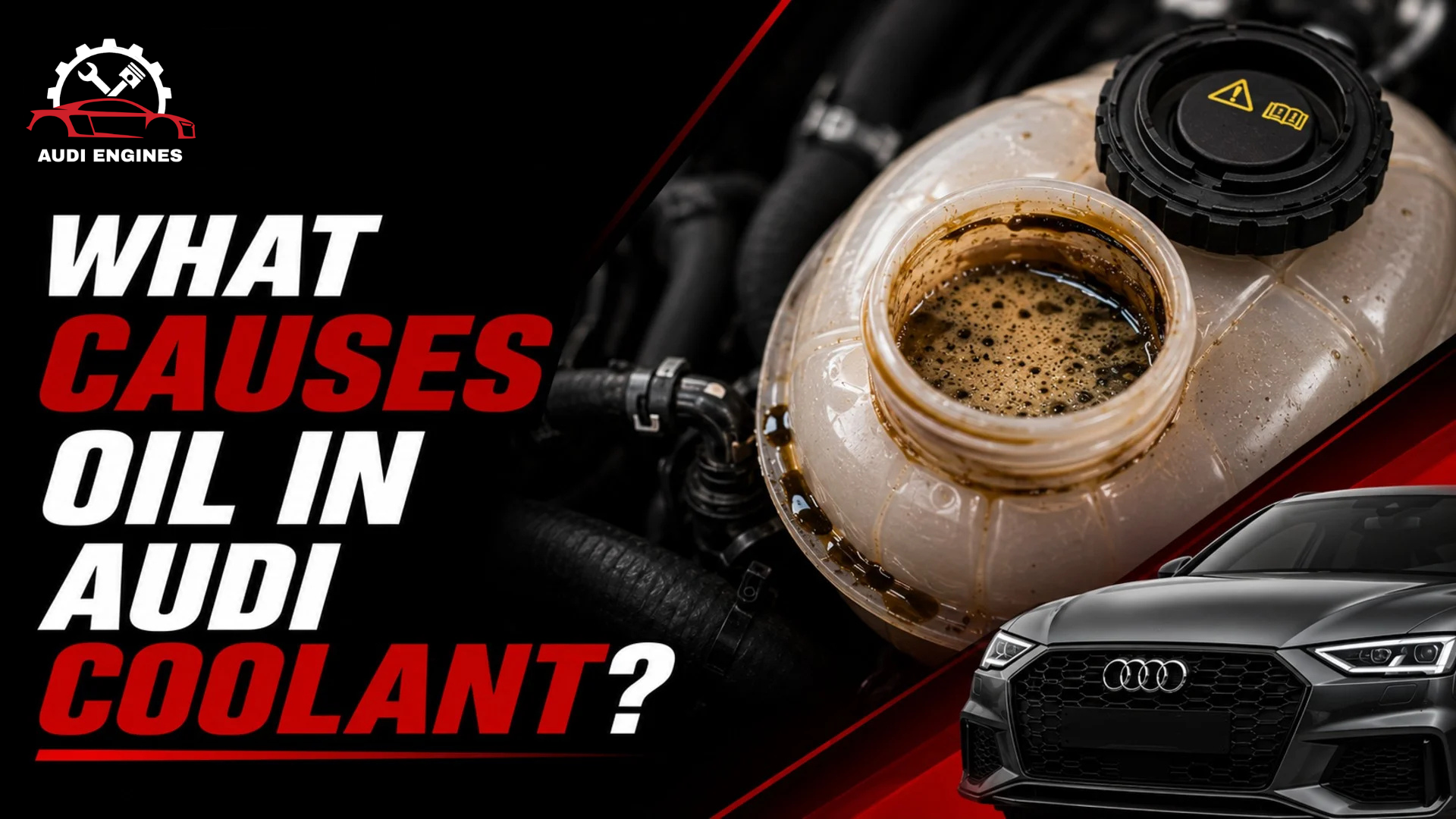
Oil and coolant run through completely separate systems in your engine, the lubrication system and the cooling system never touch under normal conditions. When oil turns up in the coolant, it means something has failed internally, creating a path between the two.
There are several possible causes, and they're not all equal in seriousness or cost.
Failed Oil Cooler or Heat Exchanger, The Most Common Cause
Most Audi engines use an oil-to-water heat exchanger, commonly called the oil cooler, to regulate engine oil temperature using coolant. It's a compact unit sitting between the two systems, and it's designed with internal seals that keep oil and coolant completely separate while still transferring heat between them.
When the oil cooler's internal gasket or seal fails, or the unit itself cracks internally, oil can pass directly into the coolant passage, and vice versa, depending on which side has higher pressure at any given moment.
This is significant because oil cooler failure is often mistaken for a head gasket fault, when it's actually a much smaller and less expensive job to put right.
Audi 2.0 TFSI & 3.0 TDI Oil Cooler Problems
The 2.0 TFSI engine family, used across the A4, A5, A6, Q5, and TT, has a known history of oil cooler seal degradation over time, particularly as the engine reaches higher mileage and the rubber seals harden and lose their sealing ability.
The 3.0 TDI engines, common in the A6, A8, and Q7, use a similarly designed oil-to-water heat exchanger, and the same failure pattern applies, seal degradation leading to internal cross-contamination between oil and coolant.
If you're driving one of these engine families and you've spotted oil in the coolant, the oil cooler should be the first thing checked, not the head gasket.
Can a Blown Head Gasket Put Oil in the Coolant?
Yes, it can, but it's less common than most people assume. A head gasket seals the cylinder head to the engine block, and it separates the combustion chamber from both the oil and coolant passages that run through the cylinder head.
If the head gasket fails in exactly the right spot, it can create a path between an oil gallery and a coolant passage, allowing oil to migrate into the cooling system. This is different from the more commonly discussed head gasket failure where coolant enters the combustion chamber or the oil, so it's worth being precise about which failure pattern you're actually dealing with.
Cracked Cylinder Head or Engine Block, Less Common Causes
A cracked cylinder head or a cracked engine block can also allow oil and coolant to cross-contaminate, though this is a rarer cause than either oil cooler failure or head gasket failure. Cracks like these usually develop after severe overheating, and they tend to come with more dramatic symptoms, significant coolant loss, visible overheating, or a persistent misfire.
Why Oil in Coolant Isn't Always the Same Fault as Coolant in Oil
This is where a lot of guidance online gets muddled. Oil in coolant and coolant in oil are related but distinct problems, and they don't automatically point to the same underlying cause.
Why Does the Direction of Contamination Matter?
Engine oil pressure and coolant pressure aren't always equal, and that pressure difference influences which fluid moves into which system when a seal or gasket fails.
- If oil pressure is higher at the point of failure, oil tends to push into the coolant.
- If coolant pressure is higher, coolant tends to push into the oil.
- Under different engine conditions, idling, cruising, or under load, that pressure balance can shift, which is why symptoms sometimes seem inconsistent.
This is exactly why a failed oil cooler can produce oil in the coolant while your engine oil still looks completely clean on the dipstick, the contamination is happening in one direction, not both.
What Does Oil in Your Audi Coolant Reservoir Look Like? (Symptoms by Scenario)
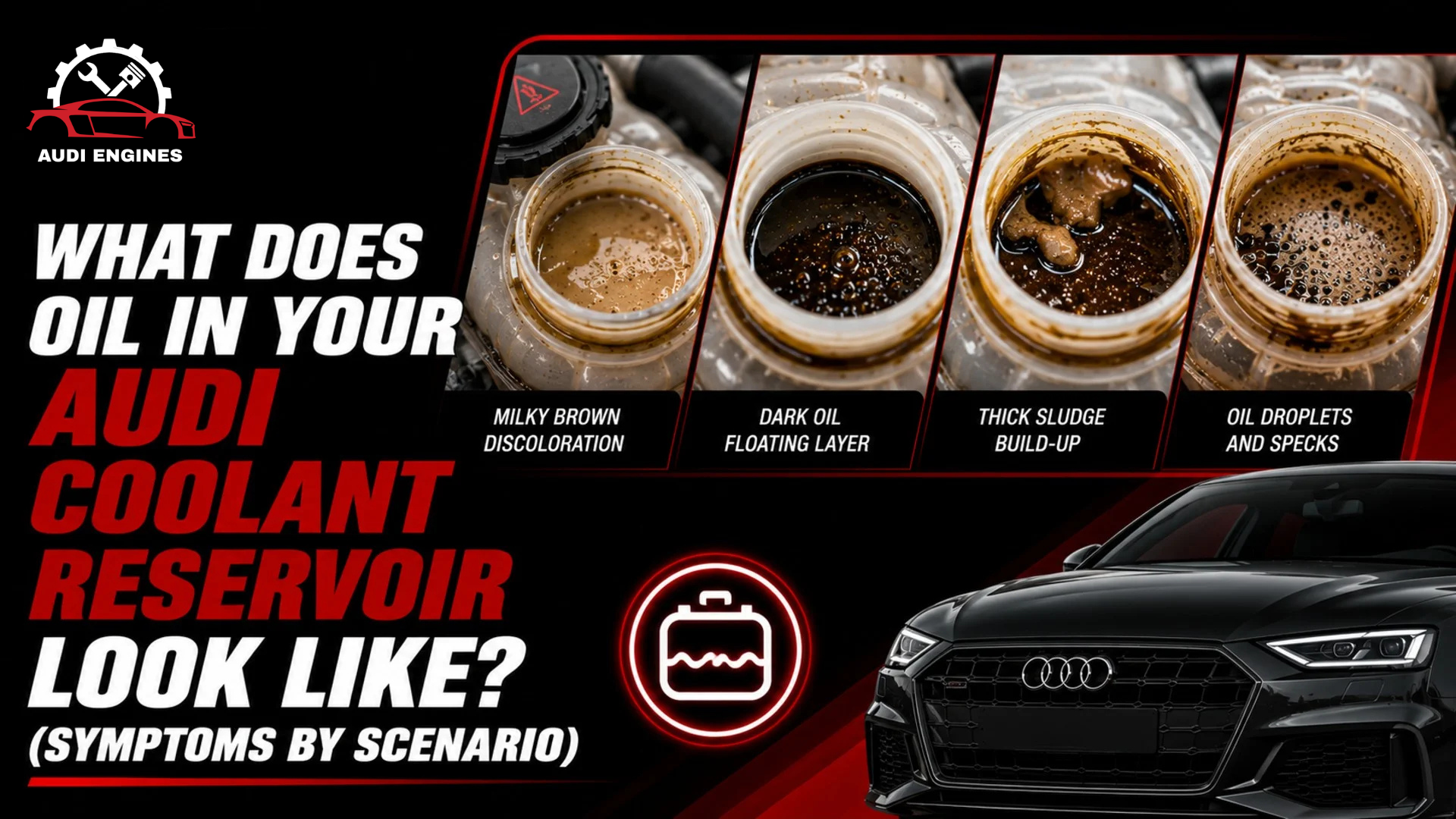
Not every case of oil-in-coolant looks the same, and the specific pattern of symptoms you're seeing actually tells you a lot about what's likely gone wrong.
Brown, Oily or Sludgy Coolant, What It Means
If you open the coolant reservoir and see a brown or black oily film floating on top, or the coolant itself has taken on a thick, sludgy consistency, that's a strong sign oil has been mixing in for a while. The longer this goes unaddressed, the more the sludge tends to build up, sometimes clogging narrow coolant passages and reducing cooling efficiency.
Oil in Coolant But No Overheating, Is That Normal?
This catches a lot of Audi owners off guard. You'd expect oil contamination to cause overheating, but that's not always immediate. Early-stage oil cooler failure often lets a small amount of oil into the coolant without significantly affecting the cooling system's ability to regulate temperature, at least initially.
That said, "no overheating yet" doesn't mean "no problem." As contamination increases, it typically starts to affect cooling efficiency, and overheating can develop over time if the fault isn't addressed.
Oil in Coolant But Engine Oil Looks Clean
This scenario is actually one of the clearer diagnostic signals. If you're seeing oil in the coolant reservoir but your engine oil on the dipstick looks completely normal, that pattern lines up much more closely with an oil cooler fault than a head gasket issue, since it suggests contamination is moving in one direction only, from oil into coolant, rather than both fluids cross-contaminating each other.
Milky Oil, White Exhaust Smoke, When It Points the Other Way
If you're seeing the reverse pattern, milky, frothy engine oil on the dipstick, combined with white smoke from the exhaust, especially on startup, that's a stronger indicator of coolant entering the oil or combustion chamber, which shifts suspicion more toward the head gasket or a cracked cylinder head.
Symptom Comparison Table, Oil Cooler vs Head Gasket vs Cross-Contamination
Symptom Pattern | Most Likely Cause |
| Oil in coolant, engine oil looks clean | Failed oil cooler / heat exchanger |
| Oil in coolant, no overheating (yet) | Early-stage oil cooler failure |
| Coolant in engine oil, oil looks milky | Head gasket, cracked head, or cracked block |
| Milky oil + white exhaust smoke | Strong head gasket / internal coolant entry suspicion |
| Both fluids visibly contaminated | Serious cross-contamination, needs full diagnostic workup |
| Brown sludge, no white smoke | Oil cooler failure or long-term untreated contamination |
It's worth stressing, this table is diagnostic guidance, not a guaranteed answer. The only way to properly confirm the cause is through hands-on testing, which is exactly what the next section covers.
Oil Cooler or Head Gasket? How Audi Technicians Diagnose the Fault
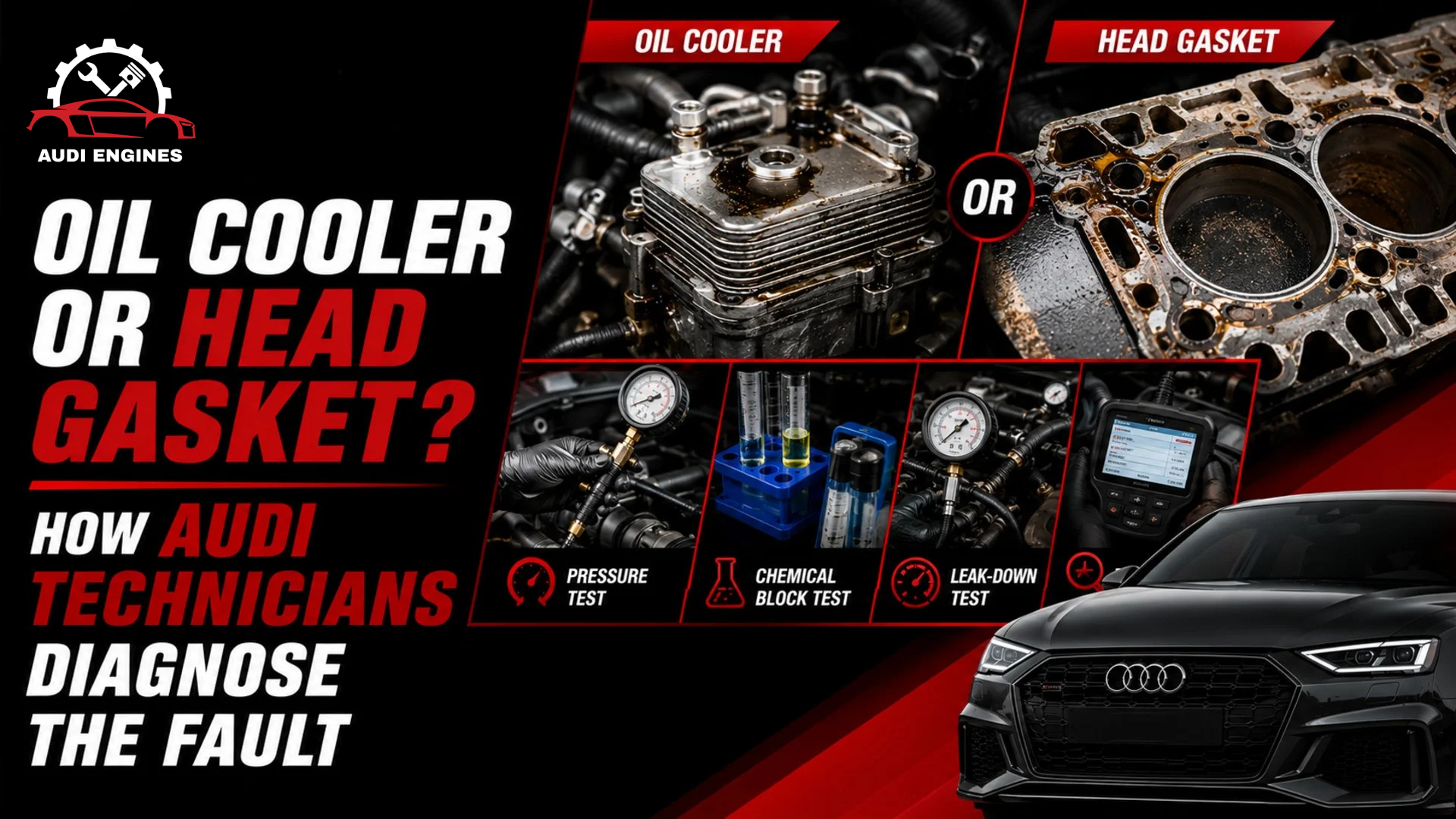
Guessing at this stage costs money, either from unnecessary parts being replaced, or from a real fault being missed. A proper diagnostic workflow rules causes in or out systematically, rather than jumping straight to the most expensive explanation.
Visual Inspection of the Coolant Reservoir and Oil Cooler
The first step is always a visual check, inspecting the coolant reservoir for oil film, sludge, or discolouration, and checking the engine oil filler cap and dipstick for any signs of milky residue. The oil cooler housing itself is also inspected for external leaks or visible seal degradation.
Cooling System Pressure Test
A cooling system pressure test pressurises the system to check for pressure loss, which can help identify whether there's an internal leak feeding oil into the coolant, separate from any external leak points.
Compression Test & Leak-Down Test
A compression test checks each cylinder's ability to hold pressure, while a leak-down test goes a step further, identifying exactly where pressure is escaping, whether that's past the piston rings, through a valve, or via a head gasket failure point. Both tests help rule the head gasket in or out with more precision than symptoms alone.
Combustion Gas (Block) Test for Head Gasket Failure
A chemical block test checks the coolant for the presence of combustion gases. If combustion gases are detected in the coolant, that's a strong confirmation of a head gasket breach between the combustion chamber and the cooling system, a more definitive test than visual symptoms alone.
Can You Drive an Audi with Oil in the Coolant?
This is the question most owners want answered first, and it deserves a straight answer: it's not recommended.
Continuing to drive with oil in the coolant risks:
- Reduced cooling efficiency, as oil residue can coat internal passages and reduce heat transfer
- Engine overheating, particularly as contamination builds up over time
- Bearing damage, if the contamination is significant enough to affect oil quality and lubrication
- Escalating repair costs, since a straightforward oil cooler replacement can turn into a much larger repair if the engine overheats or runs on contaminated oil for an extended period
If you've spotted oil in your coolant reservoir, the safest move is booking a diagnostic check before your next drive, not waiting to see if it gets worse.
How to Fix Oil in Audi Coolant, Repair Process & Cost
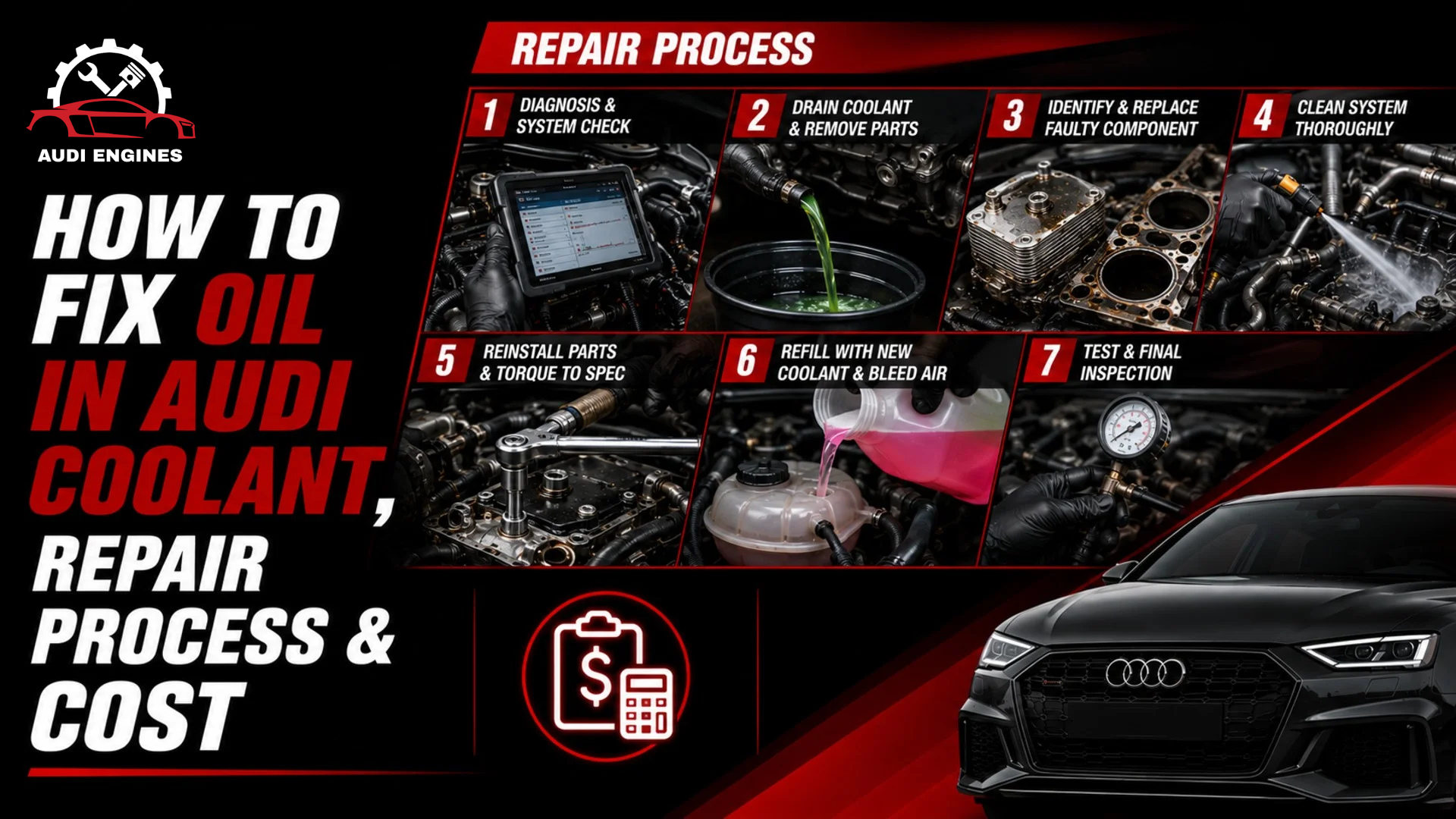
Once the cause is confirmed, the fix depends entirely on what's actually failed. Here's what each repair path typically involves.
Replacing the Oil Cooler or Gasket
If the oil cooler or its gasket/seal is the confirmed cause, replacement involves removing the housing, fitting a new oil cooler unit or gasket, and pressure-testing the system afterward to confirm the fault's resolved. This is generally a more straightforward and less labour-intensive job than head gasket work.
Head Gasket Repair, What's Involved
Head gasket repair is a considerably bigger job. It involves removing the cylinder head, inspecting it for warping or cracks, fitting a new gasket, and carefully re-torquing the head back into place to the correct specification. If the cylinder head itself is warped or cracked, it may need machining or replacement before reassembly.
Why the Cooling System Must Be Fully Flushed
Here's a step a lot of repairs skip, and it's a mistake. Replacing the failed part alone doesn't remove the oil residue already circulating through the cooling system. Left in place, that residue can continue causing problems even after the original fault's fixed.
A proper repair should include:
- Draining the contaminated coolant completely
- Flushing the cooling system, sometimes more than once, with an appropriate cooling-system cleaner
- Inspecting hoses and the radiator for residual oil build-up
- Cleaning or replacing the coolant reservoir if contamination is significant
- Refilling with fresh, correct-specification coolant
- A follow-up inspection to confirm no contamination has returned
What Happens If You Don't Flush the System Properly?
Skipping a thorough flush risks leaving oil residue trapped in the radiator or narrow coolant passages, which can reduce cooling efficiency long-term and, in some cases, contribute to a repeat contamination issue even though the original component's been replaced. It's a step worth confirming with whoever's doing the repair, not assuming it's automatically included.
Audi Oil Cooler & Head Gasket Repair Cost
Costs vary significantly depending on which repair is needed, your specific model and engine, and the extent of contamination. As a general guide:
- Oil cooler / gasket replacement tends to sit at the more affordable end, given the more contained nature of the job
- Head gasket repair is considerably more labour-intensive, given the scale of engine disassembly involved
- Additional costs may apply if a full cooling system flush, coolant replacement, or oil change is needed alongside the main repair
- Severe cases involving engine damage from prolonged contamination can require more extensive work, up to and including a rebuild or replacement engine in the worst-case scenario
Get a Diagnostic Quote from an Audi Specialist
Because the cost genuinely depends on what's failed, the most reliable way to know what you're looking at is a proper diagnostic check rather than guessing from symptoms alone. A specialist Audi garage can confirm the cause, give you an accurate quote, and get the right repair booked in before the problem escalates.
Frequently Asked Questions About Oil in Audi Coolant
Why is there oil in my Audi coolant?
The most common cause is a failed oil cooler or heat exchanger, which allows oil to cross into the coolant passage due to a degraded internal seal or gasket. Less commonly, a head gasket failure, cracked cylinder head, or cracked engine block can also cause it.
Is oil in coolant always a head gasket?
No. In many Audi cases, particularly on 2.0 TFSI and 3.0 TDI engines, a failed oil cooler is the more common cause and a considerably cheaper fix than a head gasket repair.
Can a bad oil cooler cause oil in coolant?
Yes, this is actually the most frequent cause on Audi engines. The oil cooler's internal seal is designed to keep oil and coolant separate, and when it degrades, oil can pass directly into the coolant system.
Can I drive my Audi with oil in the coolant?
It's not recommended. Continuing to drive risks reduced cooling efficiency, potential overheating, and bearing damage if contamination affects oil quality. A diagnostic check before further driving is the safer option.
How do you flush oil out of a cooling system? A proper flush involves fully draining the contaminated coolant, running an appropriate cooling-system cleaner through the system (sometimes repeated), inspecting hoses and the radiator for residual oil, and refilling with fresh coolant to the correct specification.
Why is my Audi coolant brown or oily?
Brown, oily, or sludgy coolant typically indicates oil has been mixing into the cooling system, usually from a failed oil cooler seal. The longer it's left, the more sludge tends to build up.
How much does an Audi oil cooler replacement cost?
Costs vary by model and the extent of contamination, but oil cooler replacement is generally more affordable than head gasket repair given the more contained scope of the job. A specialist can provide an accurate quote after diagnosis.
Does coolant in oil damage an engine?
It can, particularly if left unaddressed. Coolant mixing with engine oil reduces its lubricating properties, which can lead to increased friction and, over time, bearing damage.
Get Your Audi Properly Diagnosed, Before It Becomes a Bigger Repair
Oil in your Audi's coolant is a signal worth acting on quickly, not a symptom to monitor and hope goes away. In a lot of cases, it turns out to be a straightforward oil cooler fault rather than the head gasket nightmare many owners fear, but the only way to know for certain is a proper diagnostic check.
At AudiEngines, diagnosis starts with the full workflow, visual inspection, pressure testing, and compression/leak-down testing where needed, so you get a confirmed cause, not a guess, and a repair quote that actually reflects what your Audi needs. Get in touch to book a diagnostic check and find out exactly what's going on under the bonnet before a small fix turns into a much bigger bill.