
Signs Your Audi Needs a New Turbo, Symptoms, Causes & Repair Guide
Your Audi's supposed to feel effortless. That shove of power when you put your foot down, the smooth pull past 3,000rpm, it's part of why you bought a TFSI in the first place. So when that push starts to feel weaker, or you hear a whine that wasn't there last month, something's changed.
Your Audi's supposed to feel effortless. That shove of power when you put your foot down, the smooth pull past 3,000rpm, it's part of why you bought a TFSI in the first place. So when that push starts to feel weaker, or you hear a whine that wasn't there last month, something's changed. And more often than not, that something is the turbo.
Turbo problems rarely announce themselves all at once. They creep in, a slight hesitation here, a whistle there, until one day the car's in limp mode on the hard shoulder. The good news is that a failing turbo almost always gives you warning signs first, and catching them early is the difference between a straightforward repair and a full engine rebuild.
This guide walks through exactly what to look and listen for, what your dashboard is trying to tell you, why Audi turbos fail in the first place, and what your realistic repair options look like.
What Are the Warning Signs of a Failing Audi Turbo?
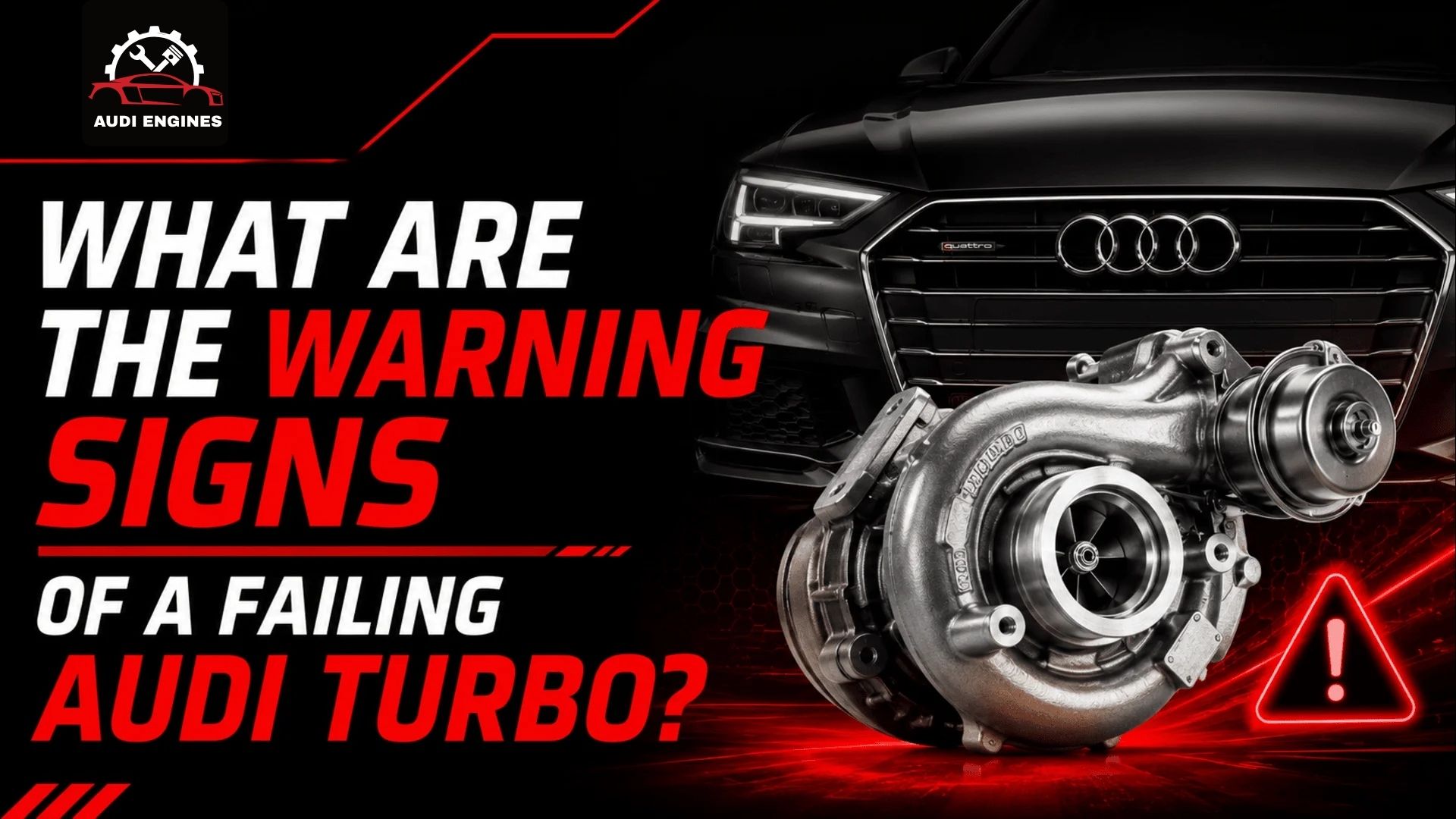
Turbocharger problems tend to show up as a cluster of symptoms rather than one obvious fault. If you're noticing two or three of the following at once, it's worth getting the car looked at before you drive it much further.
Loss of Power or Sluggish Acceleration
This is usually the first thing owners notice. The turbo's job is to force extra air into the engine, and when it can't build boost pressure properly, your Audi loses that characteristic punch. You might feel:
- Noticeably slower acceleration, especially from a standing start
- Reduced power when overtaking or joining a motorway
- A flat feeling in the mid-range, where the turbo should be doing its best work
- Engine hesitation under load
A healthy TFSI engine builds boost quickly and smoothly. If yours feels like it's working harder for less, that's your turbocharger struggling to compress and deliver air the way it should.
Whining, Whistling or Siren-Like Noises
A turbo whistle isn't always bad news, some is normal, especially under hard acceleration. But a loud, siren-like whine that gets worse over time usually points to worn turbo bearings or shaft play inside the compressor housing.
The sound typically changes character as it worsens: a mild whistle can progress into a harsh whine, then eventually a grinding or rattling noise as internal components wear further. If the noise is getting louder week by week, that's a sign of active, ongoing damage rather than a one-off quirk.
Excessive Exhaust Smoke, What the Colour Means
Smoke colour actually tells you quite a lot about what's going wrong. Here's a quick breakdown:
Smoke Colour | Likely Cause |
| Blue smoke | Engine oil burning in the combustion chamber, often a sign of failed turbo seals allowing oil into the intake or exhaust |
| Grey smoke | Can indicate oil leaking into the turbo or a failing PCV valve |
| Black smoke | Usually a fuelling issue rather than turbo failure, though it can appear alongside boost problems |
If you're seeing blue or grey smoke on start-up or under hard acceleration, that's a strong indicator of turbo oil seal failure, and it's worth booking a diagnostic check sooner rather than later.
Oil Leaks and Rising Oil Consumption
A turbo that's leaking oil, or an engine that's suddenly using more oil between services than it used to, often points to worn turbo seals. Oil is meant to lubricate the turbo's bearings and shaft, but when the seals degrade, oil can leak into the intake or exhaust, which is exactly what produces that blue or grey smoke.
Keep an eye on your oil level between services. If you're topping up more than usual and there's no visible leak under the car, the turbo is a likely culprit.
Warning Lights & Fault Codes Linked to Audi Turbo Failure
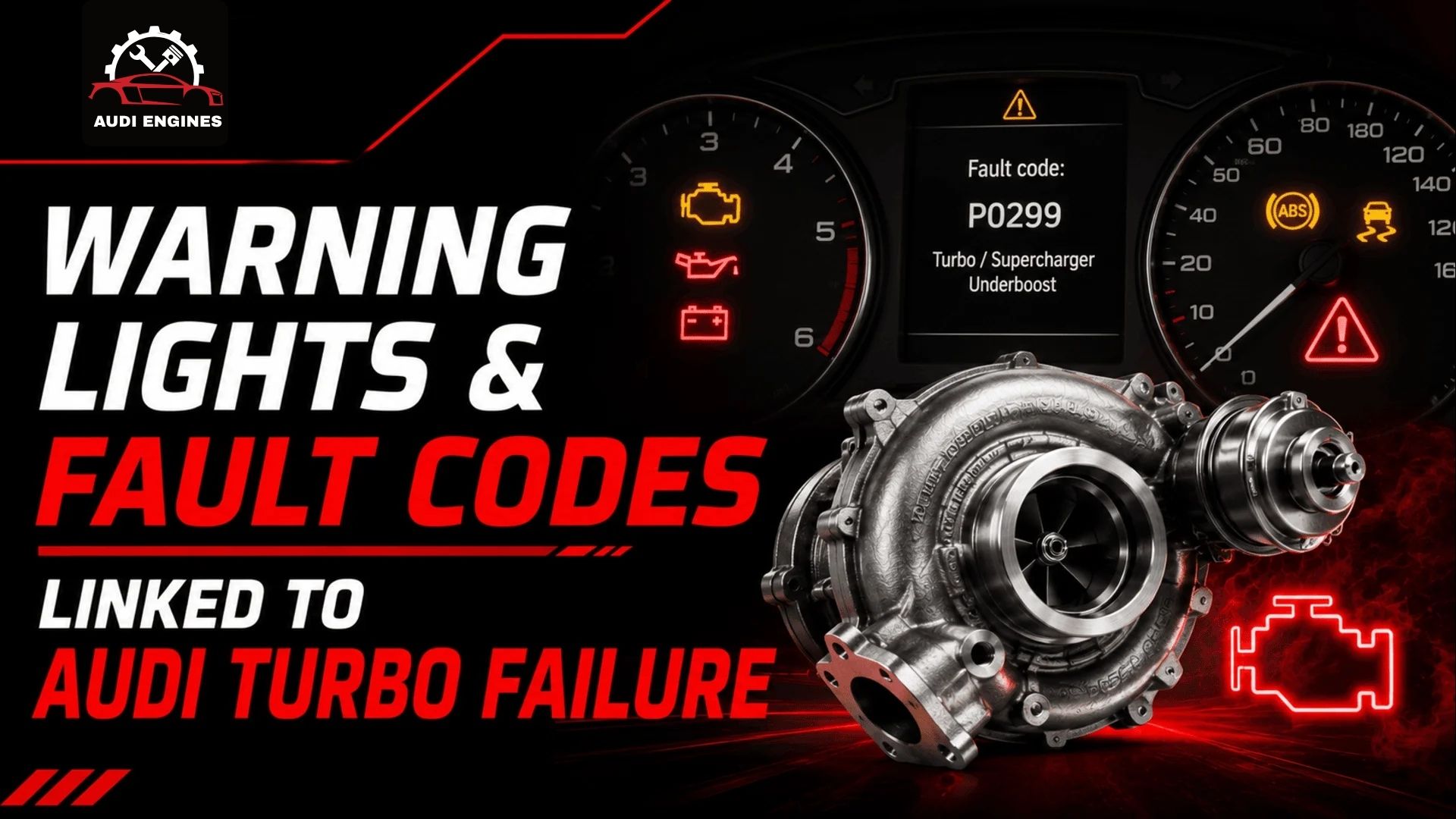
Modern Audis are good at flagging turbo issues electronically, often before you notice a difference in how the car drives. Knowing what these lights and codes mean can save you a guessing game at the garage.
Check Engine Light and EPC Light, What's the Difference?
The check engine light is a general warning covering a wide range of engine faults, including turbo-related issues like underboost, overboost, or sensor faults.
The EPC light (Electronic Power Control) is more specific to Audi and VW Group vehicles. It relates to the throttle and engine management system, and it frequently comes on alongside turbo boost problems because reduced boost pressure affects how the ECU manages engine power output.
If either light comes on together with a loss of power, that combination is a strong signal to get the car scanned rather than waiting to see if it clears itself.
What Does Audi Fault Code P0299 (Underboost) Mean?
P0299 is one of the most common fault codes linked to Audi turbo problems. It means the engine control unit has detected boost pressure lower than expected for the given engine load.
Underboost can be caused by:
- A genuine turbo fault worn bearings, a damaged compressor wheel, or a seized wastegate
- A boost leak somewhere in the intake system, rather than turbo failure itself
- A faulty wastegate actuator that isn't controlling boost correctly
- A stuck or leaking diverter valve
This is an important distinction, because P0299 doesn't automatically mean you need a new turbo, it means boost pressure is wrong, and the cause needs proper diagnosis.
Why Is My Audi Stuck in Limp Mode?
Limp mode is the ECU's protective response when it detects a serious fault, including turbo-related faults like severe underboost or overboost. The car restricts power and revs to protect the engine from further damage, which is why a car in limp mode often feels sluggish, unresponsive, or stuck in a low gear.
It's frustrating to drive, but it's doing exactly what it's designed to do. Rather than resetting the fault and hoping it doesn't return, it's worth getting the underlying cause diagnosed properly.
Why Do Audi Turbochargers Fail? (And Can You Still Drive It?)
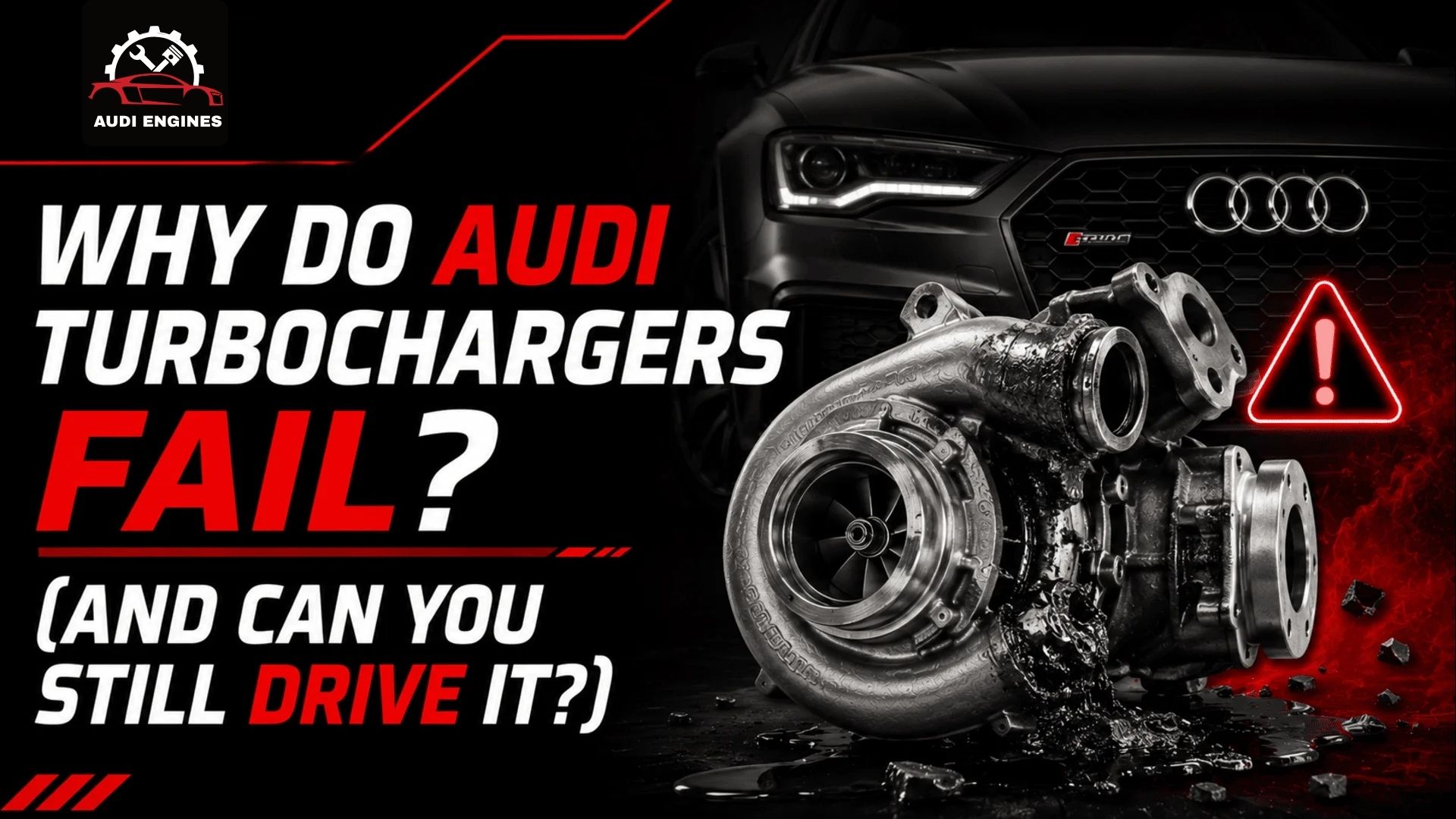
Understanding why turbos fail helps make sense of the symptoms — and helps you avoid the same problem next time.
Common Causes, Worn Bearings, Wastegate & Diverter Valve Failure
Audi turbochargers, particularly on EA888 and EA113 engines, are well-engineered but still wear parts. The most common failure points include:
- Worn turbo bearings years of high-speed rotation eventually cause bearing wear, leading to shaft play and that characteristic whining noise
- Damaged compressor or turbine wheels often caused by debris ingestion or oil starvation
- Failed turbo seals allow oil to leak into the intake or exhaust, causing smoke and oil consumption
- Wastegate failure a seized or poorly calibrated wastegate can cause both overboost and underboost conditions
- Diverter valve problems while not part of the turbo itself, a failing diverter valve often produces symptoms nearly identical to turbo failure
Poor maintenance habits accelerate all of these. Short journeys that don't let the turbo cool properly, low-quality oil, extended service intervals, and aggressive driving straight after cold starts all shorten turbo lifespan considerably.
Is It a Boost Leak or Genuine Turbo Failure?
This is one of the most commonly missed distinctions, and one your average garage may not check thoroughly. A boost leak (a crack or loose connection somewhere in the intake piping) can produce very similar symptoms to turbo failure: power loss, underboost codes, and even some whistling noise.
The key difference is that a boost leak is a much cheaper fix than a turbo replacement, which is exactly why proper diagnosis matters before anyone recommends a new turbo. A pressure/smoke test on the intake system should always be part of a genuine diagnostic process, ruling out a leak before condemning the turbo itself.
Can You Drive With a Failing Turbo, or Will It Damage the Engine?
Technically, yes, many drivers do continue driving with early turbo symptoms. But it's not advisable for long. Here's why:
- Oil entering the exhaust or intake can damage the catalytic converter over time, turning a turbo repair into a much more expensive exhaust repair too
- Debris from a failing compressor or turbine wheel can be pulled into the engine, causing damage well beyond the turbo itself
- Reduced lubrication from worn bearings tends to accelerate rapidly once it starts, what feels like a manageable whine today can become total failure within weeks
- Limp mode restrictions make the car unpredictable and potentially unsafe in situations like overtaking
If you're noticing consistent symptoms, the safest approach is a proper inspection before the fault progresses from "turbo problem" to "turbo problem plus engine damage."
Turbo Repair, Replacement & Cost in the UK
Once you know something's wrong, the next question is what actually needs doing, and what it's going to cost.
How We Diagnose Audi Turbo Problems (Scan, Boost Test, Road Test)
A proper turbo diagnosis isn't just plugging in a code reader and reading off a fault. At our workshop, the process typically involves:
- Full diagnostic scan using Audi-specific tools (VCDS or equivalent) to pull live boost data and fault codes, not just generic OBD readings
- Boost pressure and smoke testing to confirm whether the intake system is holding pressure properly and rule out a boost leak
- Physical inspection of the turbo for shaft play, oil residue, and visible damage to the compressor or turbine wheels
- Road test with live data logging to see how boost pressure behaves under real acceleration and load, not just at idle
This layered approach is what separates an accurate diagnosis from a guess — and it's especially important given how similar boost leaks and genuine turbo failure can look on paper.
Repair vs Rebuild vs Full Replacement, Which Do You Need?
Not every turbo fault means a full replacement. Depending on what's actually worn or damaged, there are generally three paths:
Option | Best For | Typical Outcome |
| Repair | Minor issues, wastegate actuator, diverter valve, boost leak | Fixes the specific fault without touching the turbo unit itself |
| Rebuild/Recondition | Worn bearings or seals with an otherwise sound housing and wheels | Restores turbo performance at lower cost than a full new unit |
| Full Replacement | Significant internal damage, damaged compressor/turbine wheels, severe wear | Complete new or remanufactured turbocharger |
For example, a customer who came to us with a P0299 code and a whistling noise turned out to have a straightforward boost leak from a split intercooler hose, no turbo replacement needed at all. Another case, where an Audi A4 had been driven for several weeks with blue smoke and rising oil consumption, needed a full replacement because the compressor wheel had sustained physical damage. The lesson is the same in both cases: get it properly diagnosed before assuming the worst.
Audi Turbo Replacement Cost, What Affects the Price?
Turbo replacement costs vary depending on your Audi model, engine code, and whether you choose OEM, genuine Audi, or a quality reconditioned unit. Factors that affect price include:
- Engine and model turbos for an A3 differ in cost and complexity from those on a Q7 or S-line performance model
- OEM vs reconditioned vs aftermarket genuine parts typically cost more upfront but offer better long-term reliability
- Labour complexity some engine layouts make the turbo far more accessible than others
- Additional damage if oil has already reached the catalytic converter or intercooler, that adds to the overall repair
Get in touch for an accurate quote based on your specific Audi model and engine, pricing really does vary too much model-to-model to give a single number that means anything useful.
Book an Audi Turbo Inspection or Get a Quote
If you're noticing any combination of power loss, unusual noise, smoke, or warning lights, the smartest next step is a proper diagnostic inspection, not guesswork, and not waiting to see if it gets worse. Our team specialises specifically in Audi and VW Group engines, so we know exactly what to check on EA888 and EA113-equipped models, and we'll always confirm the actual fault before recommending a replacement.
Frequently Asked Questions
What are the signs of turbo failure?
The most common signs are a noticeable loss of power, whining or whistling noises, excessive exhaust smoke (particularly blue or grey), rising oil consumption, and warning lights such as the check engine or EPC light.
How do I know if my Audi turbo is bad?
Look for a combination of symptoms rather than just one, reduced acceleration alongside unusual noise or smoke is a stronger indicator than any single symptom on its own. A proper diagnostic scan and boost test will confirm it.
Can a failing turbo damage my engine?
Yes, if left unaddressed. Oil leaking into the intake or exhaust can damage the catalytic converter, and debris from a damaged compressor or turbine wheel can cause further engine damage.
What does turbo whistle mean?
Some whistles under hard acceleration are normal. A loud, worsening whine usually indicates worn turbo bearings or shaft play, which will continue to deteriorate without repair.
Why is my Audi losing power?
Power loss is often linked to reduced boost pressure, which can be caused by a genuine turbo fault, a boost leak in the intake system, a failing wastegate, or a stuck diverter valve.
What is P0299?
P0299 is an underboost fault code, meaning the engine control unit has detected lower boost pressure than expected. It can point to a turbo fault or a boost leak, proper diagnosis is needed to tell the difference.
How much does Audi turbo replacement cost?
Cost depends on your specific model, engine code, and whether you choose OEnew turbo M, genuine, or reconditioned parts. Contact us for an accurate quote based on your Audi.
Can a turbo be repaired, or does it need full replacement?
Not always. Depending on the fault, a repair (like a wastegate or diverter valve fix) or a rebuild may be enough, full replacement is usually reserved for significant internal damage.
How long do Audi turbos last?
With good maintenance, regular oil changes, allowing the engine to warm up and cool down properly, many Audi turbos comfortably last well over 100,000 miles. Poor maintenance and short journeys can shorten that significantly.
Can a boost leak mimic turbo failure?
Yes, and it's one of the most commonly confused issues. Boost leaks can cause power loss, underboost codes, and even some noise, without the turbo itself being damaged at all, which is why a proper smoke test matters before replacing a turbo.
Don't Wait for Limp Mode to Make the Decision for You
A failing turbo rarely fixes itself, and driving on symptoms for weeks or months tends to turn a manageable repair into a far more expensive one. If your Audi's lost some of its usual punch, developed a new whine, or threw up a check engine or EPC light, that's worth acting on now rather than later.
Get in touch for a proper diagnostic inspection, we'll confirm exactly what's wrong, explain your options clearly, and give you a straight answer on whether you're looking at a repair, a rebuild, or a full turbo replacement.